Japan’s ruling Liberal Democratic Party (LDP) leader Sanae Takaichi, 64, made history on Tuesday by becoming the country’s first woman prime minister, replacing Shigeru Ishiba. Her victory was secured through a coalition agreement between the LDP and the right-wing Japan Innovation Party (Ishin), which gave her the parliamentary majority needed to take office.
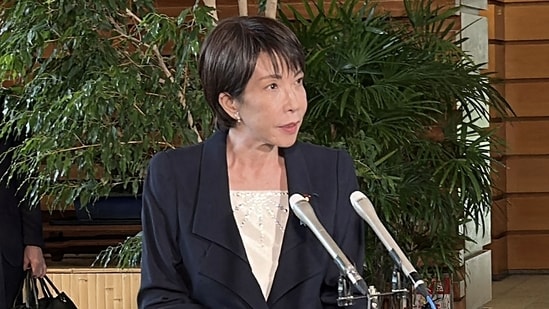
A former minister for economic security and internal affairs, Takaichi has been a prominent figure in Japanese politics for nearly 30 years. Often described as ultraconservative, she is a long-time admirer of Britain’s former prime minister Margaret Thatcher, whom she calls her “political hero,” and has openly expressed her desire to “become the Iron Lady.”
(Also read: Sanae Takaichi elected as Japan's first female prime minister after winning historic vote)
No work-life balance for Japanese PM
In her first speech after elected leader of the LDP, Takaichi dismissed the concept of work-life balance, urging party members to embrace hard work instead.
“I myself will throw out the term ‘work-life balance,’” Takaichi said. “I will work and work and work and work and work.”
{{/usCountry}}“I myself will throw out the term ‘work-life balance,’” Takaichi said. “I will work and work and work and work and work.”
{{/usCountry}}She also called on party lawmakers to “work like workhorses” – a statement that drew sharp criticism online.
“At this moment, rather than feeling happy, I feel the hardship that is to come. There is an overwhelming amount of work that we must do together. That is what I believe. There are many policies that need to be quickly implemented. Together, we will make the LDP a more spirited, positive, and energetic party. Efforts are also required to make LDP a party that can turn people's anxieties into hope,” PM Takaichi said.
Criticism over work-life remarks
Japan’s National Defence Council for Victims of Karoshi — a group addressing deaths caused by overwork — said her stance risked reviving a toxic overwork culture in a country already struggling with the issue. Families of victims of overwork-related suicides also condemned her remarks, calling for reflection and apology.