
 E-Paper



Xi Jinping was testing Biden admin. The answer is 2 American aircraft carriers
It is more, a China watcher in New Delhi suggested, underlining that the US used deployment of its strike groups as a show of force to deter adversaries.

 Prefer HTon Google


Two American aircraft carriers including USS Nimitz, which was pulled out from the Persian Gulf earlier this month, conducted military exercises in the South China Sea in a clear signal to Xi Jinping’s China that President Joe Biden would continue with the Trump administration’s tough approach to Beijing.
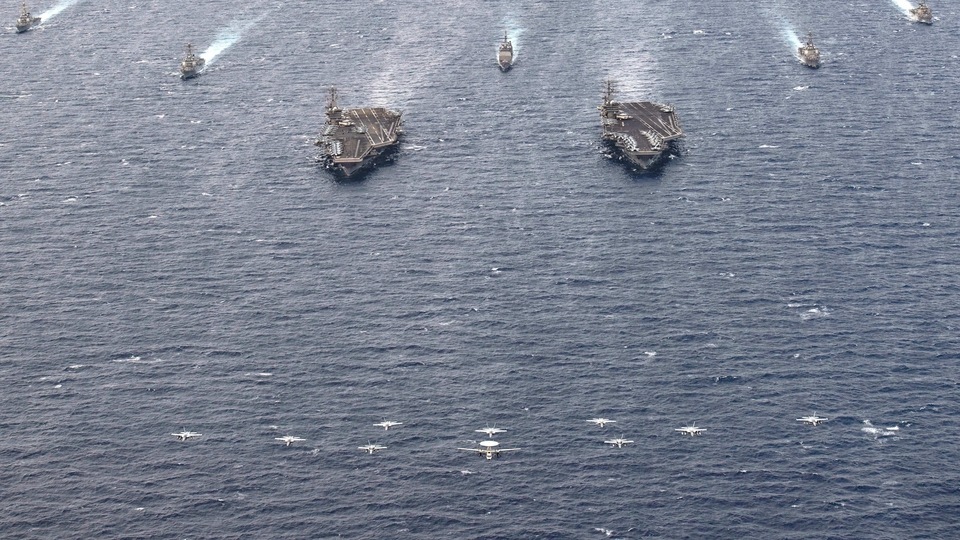
The coordinated operations, combining ships and planes of the two strike groups Theodore Roosevelt and Nimitz, were carried out in a highly-trafficked area to demonstrate the US Navy's ability to operate in challenging environments, the US Pacific Fleet said in a statement on Tuesday on the exercises that angered China. Beijing described the exercises as an effort by the US “to flex its muscles”.
It is more, a China watcher in New Delhi suggested, underlining that the US used deployment of its strike groups as a show of force to deter adversaries. The last time the US conducted dual-carrier operations in the South China Sea was in July 2020. That round of exercises had come after China’s People’s Liberation Army Navy conducted military drills in the contested waters, provoking a sharp and worried reaction from China’s neighbours.
Tuesday’s exercises came against the backdrop of multiple provocations over the past few weeks including flying nearly a dozen military aircraft including strategic bombers into the Taiwan Strait last month. Last week, Beijing responded aggressively to the presence of USS John S. McCain, claiming that it was able to drive away the US guided-missile destroyer from near Paracel island in the South China Sea region.
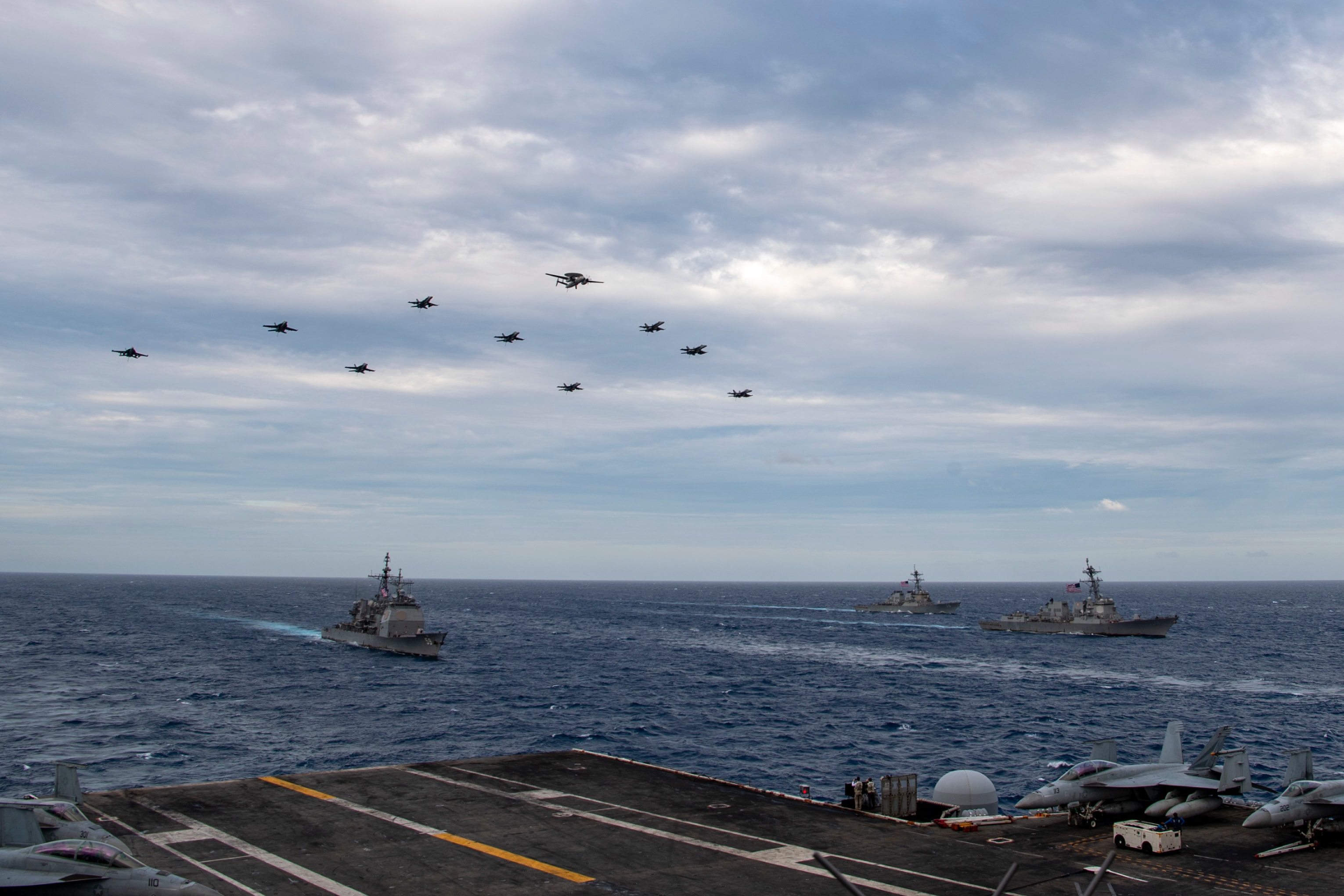
The China watcher cited above said that the US Navy deployed elements from three strike forces - USS John S. McCain had teamed up with USS Ronald Raegan last October - was indicative of the importance that the US was laying on its messaging to Beijing. Biden hasn't spoken to Chinese President Xi Jinping yet.
The news of the exercises by the supercarriers in China’s neighbourhood came a day after US President Joe Biden, in his conversation with Prime Minister Narendra Modi, made a pointed reference to the Quadrilateral Security Dialogue, the strategic dialogue between India, USA, Japan and Australia that mostly focuses on Beijing.
Biden and PM Modi, according to a White House readout of the conversation between the two leaders, “agreed to continuing close cooperation to promote a free and open Indo-Pacific, including support for freedom of navigation, territorial integrity, and a stronger regional architecture through the Quad.”
Yongwook Ryu, an assistant professor at the National University of Singapore’s Lee Kuan Yew School of Public Policy who focuses on East Asia, told Bloomberg that the US earlier emphasised its policy mainly verbally. But since the Trump administration, it has been promoting it much more explicitly with specific actions such as dispatching its two aircraft carriers to the South China Sea.
Biden is sending out a clear message to Beijing that it is not going to be soft toward China on certain issues, including the South China Sea disputes, despite its willingness to cooperate with China on some other issues such as climate change, Yongwook Ryu said.
Furious at Washington’s show of force in the South China Sea, the Chinese foreign ministry said: “This is not conducive to peace and stability in the region. China will continue to take necessary measures to firmly defend national sovereignty and security and work together with regional countries to safeguard peace and stability in the South China Sea.”
A new Chinese law that came into force on Monday allows its coast guard to fire at foreign ships in its waters and remove buildings constructed by foreign countries on what it believes are Chinese territories.


