A quick stop at an aquarium turned into one of the most studied invasive species stories in modern science. In 2006, Kouichi Kawamura and colleagues published a genetic study in the journal Molecular Ecology that found that almost all the bluegill fish swimming in Japan’s lakes and rivers today are descendants of just 15 fish. This is not an estimate. The study analyzed DNA from throughout Japan, Korea, and the United States and traced the lineage back to a section of the Mississippi River near Guttenberg, Iowa.
A gift at the Shedd Aquarium
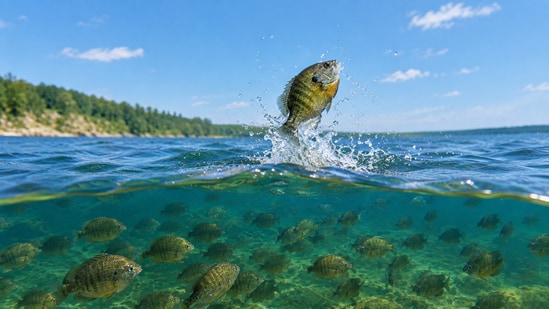
Crown Prince Akihito of Japan was in Chicago in October 1960 as part of a goodwill tour to mark 100 years of diplomatic relations between the US and Japan. He had about 21 hours in the city, and his one personal request was to see the Shedd Aquarium. He was 26, and a serious ichthyologist already. Richard J Daley, Chicago's mayor and an avid angler, gave him a gift: 18 bluegill, a fish common to Illinois's lakes and ponds. In some versions, Daley scoops them out of a tank.
Only 15 of the fish made it back to Japan on the long flight. Akihito gave them to Japan’s national Fisheries Agency to be bred, hoping that they could become a new food source.
How 15 fish turned into millions
The breeding project got off to a rocky start. Bluegills, it turned out, were not very good fish to raise at scale for food, and the idea was pretty much dropped by the late 1960s. But some fish were released into lakes and ponds, including Japan's largest and oldest, Lake Biwa.
{{/usCountry}}The breeding project got off to a rocky start. Bluegills, it turned out, were not very good fish to raise at scale for food, and the idea was pretty much dropped by the late 1960s. But some fish were released into lakes and ponds, including Japan's largest and oldest, Lake Biwa.
{{/usCountry}}American-style bass fishing took off in Japan in the '70s. Another US species, the largemouth bass, was stocked in ponds across the country, and bluegill often tagged along, riding the same stocking shipments to new lakes. The 2006 study's sampling covered populations spread this way too, and traced them to the same 15 founding fish. The bass trade explains how the fish physically got to new lakes, not where they genetically came from. Bluegill are hardy fish. They will eat just about anything and will tolerate the murky, developed shorelines that native fish struggle with. When they gained a foothold, they grew rapidly.
The 2006 study finds that the earliest-founded populations, in the 1960s, maintained the highest genetic diversity, while younger populations showed the effects of repeated genetic bottlenecks as fish were moved from lake to lake by anglers. A subsequent study by Kawamura's team showed that this pattern of spread corresponded with historical records of how people had transported bluegill across the country, with bottlenecks becoming more severe the farther a population was from Lake Biwa.
An emperor's rare public apology
By the 2000s, bluegill had spread to nearly every prefecture. Officials estimated the population of the species nationwide to be about 25 million fish in 2007. Native species, including the rosy bitterling, a small fish native to Japan, were badly affected. In 2005, Japan's central government banned breeding or releasing the species.
In November 2007, Emperor Akihito addressed the issue directly at a national fisheries convention. He said that it hurt him to think that the fish, which he had hoped, decades earlier, would become a promising food source, had caused such ecological havoc. It was an unusually candid remark from a monarch not known for straying from ceremony.
A problem people are trying to eat away
Shiga Prefecture, home to Lake Biwa, invests heavily in its removal projects each year and has encouraged the “catch and eat campaign,” urging fishermen to cook bluegill rather than release it back into the lake. There are also recipes that now range from fried bluegill all the way to bluegill burgers. One local manufacturer reportedly even tried fermenting bluegill following the same technique used for funazushi, a famous salted crucian carp from Shiga.
From being a desirable gift to becoming a national headache throughout the country, the bluegill serves as a reminder that sometimes even a seemingly small and well-meant introduction of a species can reshape an entire ecosystem.