
SAN FRANCISCO—A backlash against Anthropic is brewing in Silicon Valley, rooted in concerns about the company’s product launches that compete with existing software providers and its advocacy for a closed AI ecosystem.
Startup founders, software company executives and artificial-intelligence researchers said they began turning to cheaper AI models after seeing Anthropic release tools in the market that competed with those offered by other companies. One such release was Claude Design in April, which some saw as a direct competitor to
SAN FRANCISCO—A backlash against Anthropic is brewing in Silicon Valley, rooted in concerns about the company’s product launches that compete with existing software providers and its advocacy for a closed AI ecosystem.
Startup founders, software company executives and artificial-intelligence researchers said they began turning to cheaper AI models after seeing Anthropic release tools in the market that competed with those offered by other companies. One such release was Claude Design in April, which some saw as a direct competitor to offerings from design company Figma, one of Anthropic’s partners.
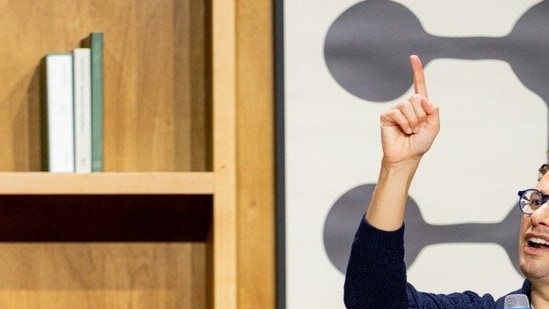
At an event shortly after the release, Figma Chief Executive Dylan Field said Anthropic hadn’t been “consistently candid in their communications,” according to attendees of the event.
“The whole industry learned a lot of lessons from how that dynamic played out,” said Sarah Sachs, head of AI at Notion, who attended the event. “Some companies might have been overly trusting.”
Anthropic also has drawn criticism for changes to its data retention policies and for releasing a powerful model that won’t answer AI research questions, prompting complaints from some researchers who advocate for more transparency in AI systems.
There is also skepticism about the warnings of Anthropic executives about the security risks of so-called “open weight” AI, models that are far cheaper and generally allow users to customize and install their own safeguards. Several such models that were produced in China have wowed users in recent months with capabilities that edged closer to frontier U.S. AI systems.
“Anthropic makes fantastic products,” said Vishal Misra, the vice dean of computing and AI at Columbia University’s engineering school. But the company also makes statements about security and AI risks that don’t hold up to scrutiny, he said.
“They create a scare in the general public around these models,” he added. Fear from the public “gives them leverage to get regulations done in their favor.”
A company spokeswoman defended the steps Anthropic has taken as necessary to ensure models are safe and that adversaries can’t use them to create severe risks.
Anthropic Chief Executive Dario Amodei and other company executives have repeatedly spoken about the risks of open-weight AI systems, which many AI researchers see as far more difficult to control, a worrisome possibility if models continue to advance in capability. Some don’t have the same security safeguards that leading U.S. models do, AI executives say.
A former OpenAI executive, Amodei co-founded Anthropic in 2021 with six other former OpenAI employees after he clashed with OpenAI Chief Executive Sam Altman over safety and other issues. Anthropic publishes voluminous research about AI safety risks and supports government AI regulation through endorsements and political donations.
On Monday, after a host of U.S. companies including Nvidia and Microsoft signed a letter showing their support for open models, Amodei published a letter clarifying his position on the heated debate. “Anthropic has never advocated for a ban on open-weights models,” he wrote. “Open-weights models that don’t have dangerous capabilities are a public good.”
Amodei’s main concern, he wrote in the letter, was the risk of authoritarian governments catching up with the U.S. in AI “to achieve permanent military superiority or perpetrate incredibly deep repression of their own people.”
Anthropic and OpenAI have accused some Chinese model-makers of ripping off their technology through a process called “distillation,” basically querying a model potentially millions of times in order to use its answers to train another model. Some Trump administration officials, including Treasury Secretary Scott Bessent, have raised concerns about distillation but have stopped short of taking action against Chinese companies.
Amodei urged policymakers to crack down on “industrial-scale distillation.”
Both companies have discussed the challenges posed by Chinese open-weight models and potential restrictions on the companies with Trump administration officials, people familiar with the matter said. OpenAI offers some open-weight models and Altman, its chief executive, said last year that he regrets the company’s past stance against the tools.
The Trump administration is considering adding Chinese companies to a trade blacklist that would effectively prevent many U.S. businesses from using the models.
Company critics including some administration officials see Anthropic’s warnings as part of an effort to hinder its competitors, given that many such open models could undermine its attempts to maximize revenue as it plans a public listing as soon as the fall.
Kevin Bryan, an associate professor at the University of Toronto specializing in innovation, defended Anthropic and said the fears about the risks of frontier intelligence being open source are real and widely shared. “Anything that is open source is immediately jailbroken,” he said. “Once the model’s out, that’s it.”
Some critics argue Anthropic itself has built models through a process that resembles distillation.
“It’s interesting they’re against distillation when they distill the entire Internet without paying royalties,” said Mark Suman, co-founder and chief executive of Maple, an AI productivity tool startup. “I just think it’s odd that they are now turning around and telling others not to do what they did.”
Hours after the letter from companies supporting open-weight models became public, OpenAI signed. Alphabet’s Google endorsed the letter shortly after, leaving Anthropic as one of the only notable AI companies not to back it. More than 70 Silicon Valley firms have now added their names.
Technologists and policymakers say they are also concerned about the AI race turning into a duopoly, with Anthropic and OpenAI essentially emerging as dominant players that control the market.
Concerns around a duopoly were top of mind during a pro-open-weights protest on Saturday in downtown San Francisco, the epicenter of the AI startup community. The protest was co-hosted by the chief executive of Hugging Face, an AI company that provides open source tools.
“The frontier labs are hoarding intelligence,” said Mahesh Lambe, an AI researcher who attended the protest. “It needs to be democratized.”
Some founders and startup executives said Anthropic’s release of Claude Design was a wake-up call across Silicon Valley. The product release led some founders to conclude that Anthropic might launch tools to compete with them and take their customers. They turned to cheaper, open-weight models in earnest after that, particularly ones that weren’t built by U.S. frontier labs.
The distrust grew in June when Anthropic released Fable 5, a safety-constrained version of its powerful Mythos model, with limitations.
Initially, the model degraded responses to some questions about AI development without notifying users. The research community immediately criticized the invisible safeguards, saying the decision was anticompetitive and made it harder to assess model capabilities.
Anthropic apologized and subsequently made those safeguards visible to users. But it still said it would refuse flagged requests.
A company spokeswoman said Anthropic took steps to restrict the model’s responses to prevent foreign adversaries from using the models in “ways that create severe safety risks.”
Fable 5 also wouldn’t support “zero data retention,” meaning the company would keep data from users for 30 days for what it said were trust and safety purposes. Companies balked at this change, particularly ones working in industries that handled sensitive data.
Some companies also generally have concerns that their data will be used to train new models that could further help Anthropic launch competing products.
The Anthropic spokeswoman said company personnel can’t read any retained conversations and the company has pledged it won’t use the data to train new models. The restrictions apply to Fable and Mythos, the company’s “most capable models,” but not other models.
Write to Angel Au-Yeung at angel.au-yeung@wsj.com, Tina Li at tina.li@wsj.com and Amrith Ramkumar at amrith.ramkumar@wsj.com
One Subscription.
Get 360° coverage—from daily headlines
to 100 year archives.
Archives
HT App & Website