
 E-Paper



Beijing court defers verdict at close of Australian journo Cheng Lei’s trial
The trial of Cheng Lei, a high-profile television anchor for Chinese state broadcaster CGTN, began in a heavily guarded Beijing court on Thursday, over 19 months after she was taken away by the police.


The one-day trial of an Australian journalist who worked for Chinese state media and faces charges related to sharing state secrets ended on Thursday with a Beijing court deferring the verdict and sentencing.
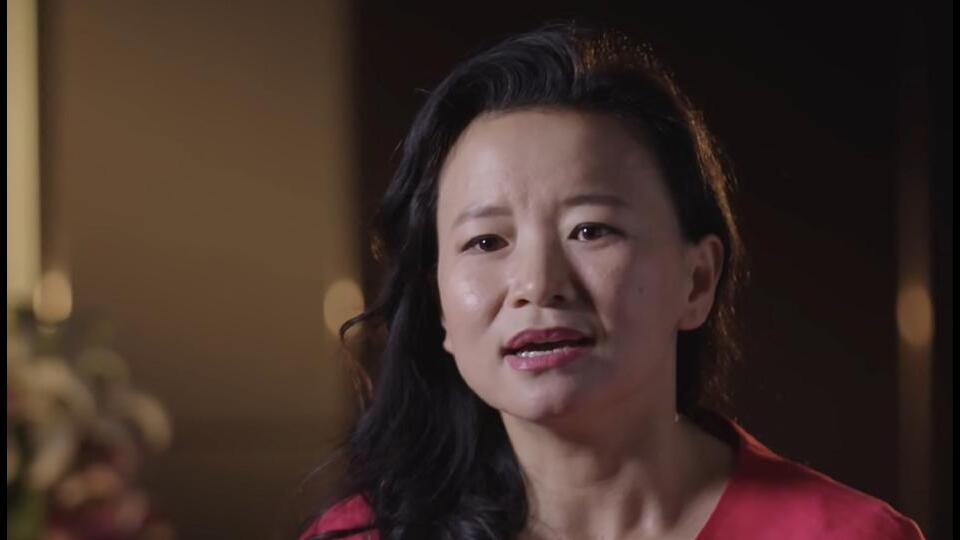
The trial of Cheng Lei, a high-profile television anchor for Chinese state broadcaster CGTN, began in a heavily guarded Beijing court this morning,over 19 months after she was taken away by the police.
The court didn’t say when a verdict would be handed down.
Cheng, 47, was detained in August 2020, and formally arrested much later on suspicion of illegally supplying state secrets overseas to unknown people.
ChengLei and her defence lawyer were present at the trial and a verdict will be announced at a later date, Chinese foreign ministry spokesperson Wang Wenbin said on Thursday.
“Australian citizen Cheng Lei is suspected of committing the crime of illegally providing state secrets to foreign countries, and the case involves state secrets, so the court held the trial in a closed session in accordance with the law,” Wang said.
“The parties concerned should earnestly respect China’s judicial sovereignty and refrain from interfering in the law-based handling of cases by Chinese judicial organs in any way,” he said.
A heavy contingent of uniformed police and plain-clothed security personnel were deployed outside the No 2 People’s Intermediate Court in Beijing where Cheng was to be tried on Thursday.
Australian Ambassador Graham Fletcher was barred from entering the court, according to Reuters. “This is deeply concerning, unsatisfactory and regrettable. We can have no confidence in the validity of a process which is conducted in secret,” he told journalists before leaving.
According to the Reuters report, a court official told Fletcher that he could not be admitted because the case involves “state secrets” so the trial cannot be public.
There had been no official word about Cheng’s detention for months after she was taken away in August, 2020.
The Chinese foreign ministry confirmed her arrest only in February, 2021, saying she had been arrested “…on suspicion of illegally supplying Chinese state secrets overseas”.
Cheng Lei’s family members have said they are convinced she is innocent. “Whilst a long time Australian citizen, Lei also has a great love for the country of her birth (China) and is highly respected across the globe,” the family statement had then said.
“We respect China’s judicial process and urge the authorities to bring this matter to a swift, compassionate and timely conclusion whilst at all times respecting her rights with the knowledge that she is the mother of two young and vulnerable children who need her.”
Both her children live in Australia.
Cheng Lei’s case had coincided with the deteriorating ties between China and Australia following Canberra’s vocal demand for an international investigation into the source of the Covid-19 pandemic; Beijing responded with trade restrictions.
A report by journalism advocacy group Reporters Without Borders had said in December that at least 127 journalists were then detained in China, calling the country the “world’s biggest captor of journalists”.
The report said President Xi Jinping had created a “nightmare” of media oppression worthy of the Mao Zedong-era.
The report quoted RSF secretary general Christophe Deloire as saying that China was a country in the midst of a “frantic race backwards” as Chinese citizens continue to lose press freedom.
Titled “The Great Leap Backwards of Journalism in China”, the Paris-based RSF said the report reveals the “…extent of the regime’s campaign of repression against the right to information”.
The report indicates how Beijing views journalism - not as a tool to provide information to the public to make informed decisions but as an instrument of state propaganda.


