In a major development, China's military has developed hypersonic glide vehicles (HGVs) that are capable of launching air-to-air weapons. With the country being a significant neighbour of India, Beijing's missile tech advancement could be crucial for regional and global security.
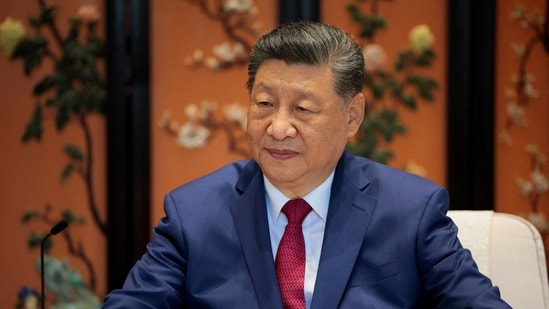
This advancement is designed to target aircraft like command-and-control planes thousands of miles away, according to a Bloomberg report. No other country is known to operate weapons that combine an HGV with air-to-air missiles.
Also Read | Shoulder-fired missile threat to Air Force One forced Trump's secret flight switch in Turkey: Report
Hypersonic glide vehicle: Range, interception, and more
Hypersonic glide vehicles deployed from DF-17 missiles can reach approximately 2,414 kilometres (1,500 miles).
DF-27 missiles feature a range of roughly 5,000 miles, placing areas as far as Hawaii within reach, the report added. HGVs are warheads that can maneuver while travelling in the atmosphere, complicating interception.
Earlier this year, a report from the US Air Force’s China Aerospace Studies Institute noted that China’s missile modernisation efforts prioritises inflicting coordinated, system-level damage across adversary operational architectures.
{{/usCountry}}Earlier this year, a report from the US Air Force’s China Aerospace Studies Institute noted that China’s missile modernisation efforts prioritises inflicting coordinated, system-level damage across adversary operational architectures.
{{/usCountry}}The Pentagon reportedly estimates that as of 2024, China had at least 300 ground-launched cruise missiles and 3,150 ballistic missiles.
Also Read | China missile test top of agenda as Pacific diplomats meet in Fiji
Challenges and risks
Using what is essentially a ballistic missile is costly, difficult, and risky, the Bloomberg report added.
The travel time of a ballistic missile, 20 minutes or more, means that targeting information must be precise. Ballistic missiles also can be mistaken for a nuclear attack, and this complicates their use.
Also Read | What is the Patriot missile system and why are supplies depleted worldwide?
What people familiar with the matter said
According to the report, an individual who is familiar with the matter noted that the development is part of a larger effort by China to use its missile arsenal for nearly every military task.
The person also said that Beijing added air-to-air capabilities to some hypersonic cruise missiles and built anti-ship capabilities into several types of missiles.
Crucial timing
This development comes during a period of high global anxiety, amid the US-Iran conflict in the Middle East.