
 E-Paper



Donald Trump invokes ‘presidential immunity’ for his official acts to dismiss Jan.6's Capitol riot indictment
Former President Donald Trump asks judge dismissal of Jan.6 Capitol riot indictment, claiming presidential immunity.

 Prefer HTon Google


Former President Donald Trump is seeking to dismiss his indictment related to the Capitol riot on Jan. 6, 2021, arguing that he has presidential immunity for his official acts, according to new court documents.
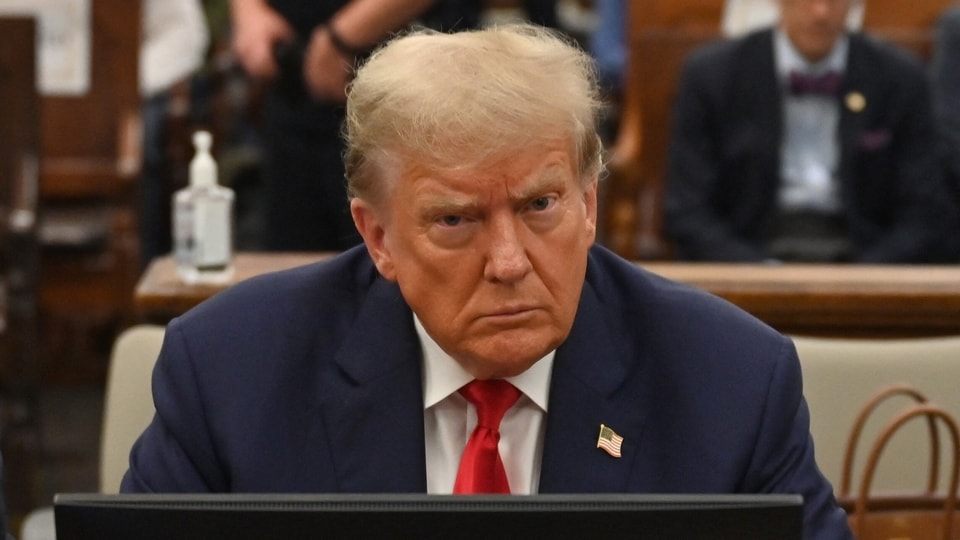
Trump’s lawyers filed a 46-page motion on Thursday asking US District Judge Tanya Chutkan in Washington, DC, to drop the four-count indictment with prejudice, citing constitutional provisions and federal court precedents.
The motion claims that Trump is entitled to absolute immunity “for acts within the ‘outer perimeter’ of [the President’s] official responsibility,” quoting from a previous Supreme Court case. The lawyers contend that Trump’s official acts include his statements, social media posts, and communications with the Justice Department and state officials about the 2020 election results and his authority to challenge them.
The lawyers also deny that Trump made “knowingly false” allegations of voter fraud, which is one of the charges in the indictment, despite former White House staff testifying otherwise. They say that the prosecution and the court have no right to judge Trump’s motivations for his actions as president.
“Breaking 234 years of precedent, the incumbent administration has charged President Trump for acts that lie not just within the ‘outer perimeter,’ but at the heart of his official responsibilities as President,” they wrote.
“In doing so, the prosecution does not, and cannot, argue that President Trump’s efforts to ensure election integrity, and to advocate for the same, were outside the scope of his duties.”
The motion also relies on the Impeachment Clause of the Constitution, which states that only a president who is convicted by trial in the Senate can be subject to criminal prosecution. Trump was impeached by the House, but acquitted by the Senate, for his role in inciting the Capitol riot.
ALSO READ| Speaker Trump - Can he become US House Speaker? Factors supporting and against Trump
“Because the Constitution specifies that only ‘the Party convicted’ by trial in the Senate may be ‘liable and subject to Indictment, Trial, Judgment and Punishment,’ id., it presupposes that a President who is not convicted may not be subject to criminal prosecution,” they said.
The motion cites several Supreme Court cases such as Nixon v. Fitzgerald, Marbury v. Madison, and Martin v. Mott that support the claim that the Constitution provides the exclusive means to prosecute a US president.
Trump, 77, is facing 91 counts across four indictments in different jurisdictions the first time a sitting or former president has been criminally charged. He could face up to 712 years and six months in federal prison if convicted on all counts.


