
 E-Paper



Donald Trump’s gift to Vladimir Putin
Russia’s leader is honoured, but offers little in return


 Prefer HTon Google


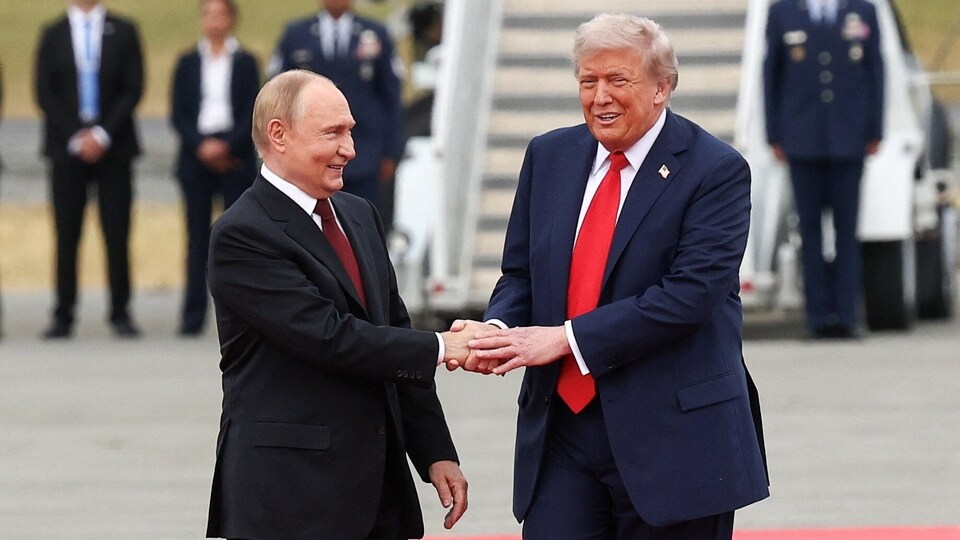
FROM THE moment he stepped off his plane onto the red-carpeted tarmac, Vladimir Putin’s trip to Alaska was a triumph. He was greeted with applause from his host, Donald Trump. The two men may have had nothing to announce after hours of talks—the first meeting between a Russian and American president since the invasion of Ukraine—but the encounter at the Elmendorf-Richardson military base in Anchorage transformed Mr Putin from a pariah of the West into an honoured guest on American soil.
“There is no deal until there is a deal,” declared a glum Mr Trump. He claimed there had been “many, many points that we agreed on”, but not on the central question of halting the war in Ukraine. It is a sign of the times that such failure may be a relief for Ukrainian and European leaders, who feared that Mr Trump would yield to Mr Putin’s demands to neuter Ukraine. Mercifully, Mr Trump did not repeat his earlier talk of “land swaps”.
The two leaders took no questions. Perhaps Mr Trump knew he would be asked about his pre-summit threats of “very severe consequences” if Russia did not end the conflict. Just before landing Mr Trump had told Fox News: “I won’t be happy if I walk away without some form of ceasefire.” There was no immediate sign of a three-way summit with the Ukrainian leader, Volodymyr Zelensky, that Mr Trump had previously floated. Nor was there a glint of a nuclear-arms-control deal, which Mr Putin had suggested. Both spoke about economic opportunities, but there was little that was tangible. Mr Trump said he would brief Mr Zelensky and European leaders, which may yield more indications of what happened.
Ever the showman, Mr Trump took care to impress Mr Putin. Their planes parked close to each other; the two men stepped out more or less simultaneously, shook hands warmly and walked towards a rostrum as a B-2 bomber, escorted by four F-35 fighters, passed overhead. Four F-22s on the ground formed a guard of honour. Mr Trump may have wanted to demonstrate America’s military power. Instead, he displayed its diplomatic weakness—having repeatedly set deadlines for Russia to cease fire, then done nothing when they were ignored.
It was a notable display, if only because the F-22 is America’s most capable fighter and remains protected from prying eyes. When your correspondent saw some of the jets from the same Alaskan wing on exercise in Tinian, thousands of miles away in the central Pacific, he had to submit all photographs for censorship by the US Air Force. The Russian delegation no doubt took every opportunity to scrutinise them as the motorcade made its way down the flight line.
In his first term Mr Trump often liked to speak to Mr Putin alone, without officials or note-takers. It was a relief, therefore, when it was announced earlier in the day that the planned one-on-one meeting in Anchorage had been expanded to include two other senior officials on each side. But as they stepped off the podium, Mr Trump invited Mr Putin to get into his limousine, known as “the Beast”—securing the private chat after all.
The honours for Mr Putin were in sharp contrast to the public humiliation that Mr Trump and his advisers inflicted on Mr Zelensky during his visit to the White House earlier this year. Since then relations with Ukraine have improved, but Mr Trump has often been quick to blame it for being invaded; and he has proved strangely indulgent with Mr Putin. Mr Trump told Fox you have to “weave and bob” to reach deals, but his constant shuffling in the run-up to the summit suggests indecision and frustration with a Russian leader who will not respond to his entreaties.
The Alaskan venue was rife with symbolism: the proximity of Russia and America across the Bering Strait, the sale of Alaska by Tsarist Russia to the United States in 1867; and the American lend-lease agreements that armed the Soviet Union to help it resist Nazi Germany (an important supply route ran through Alaska). Mr Putin recalled all this and recounted how, on the red carpet, he had greeted Mr Trump with “Good afternoon, dear neighbour.”
It surely makes sense for big nuclear powers, even geopolitical rivals, to talk to each other. Whether they need to roll out the honours at home for no gain is more doubtful. The only sop to Mr Trump came when the Russian leader said he was “sincerely interested in putting an end” to the war, and agreed that it would not have happened had Mr Trump been president in 2022.
Yet Mr Putin insisted that “we need to eliminate all the primary causes of that conflict”. Given that he thinks the primary cause is Ukraine’s independence and sovereignty, and its right to join European institutions including NATO, his formula is a recipe for continuing the war. Mr Trump did nothing to disabuse him. The Russian president left with a smile, and even tried a little English in public: “Next time in Moscow”, he told his host. To which Mr Trump replied, “I’ll get a little heat on that one, but I could see it possibly happening.”


