In a war-torn enclave where food is scarce, jobs have vanished and nearly the entire population has been displaced, some women in Gaza say desperation has made them targets of sexual exploitation by men linked to aid distribution.
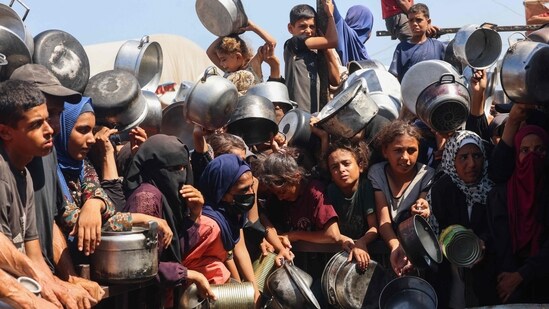
After weeks of struggling to feed her six children, one 38-year-old mother thought she'd found relief. A man promised her a job with an aid agency, she told the Associated Press. Instead, he drove her to an empty apartment.
“I had to play along because I was scared, I wanted out of this place,” the woman said. He later gave her 100 shekels - about $30 - and some food. The job never materialized.
She is among six women who shared their stories with AP, describing how men offered food, money, supplies or work in exchange for sexual favors. Some said the offers were direct: “Let me touch you.” Others were couched in cultural language: “I want to marry you.”
Aid groups and human rights advocates say such abuse is not new. Exploitation has been documented in conflicts from South Sudan to Haiti. “It’s a horrible reality that humanitarian crises make people vulnerable in many ways — increased sexual violence is often a consequence,” said Heather Barr, associate director of the women’s rights division at Human Rights Watch, in comments to AP. “The situation in Gaza today is unspeakable, especially for women and girls.”
{{/usCountry}}Aid groups and human rights advocates say such abuse is not new. Exploitation has been documented in conflicts from South Sudan to Haiti. “It’s a horrible reality that humanitarian crises make people vulnerable in many ways — increased sexual violence is often a consequence,” said Heather Barr, associate director of the women’s rights division at Human Rights Watch, in comments to AP. “The situation in Gaza today is unspeakable, especially for women and girls.”
{{/usCountry}}Four Palestinian psychologists told AP they had treated dozens of women who reported being pressured into sexual encounters for aid.
Some women became pregnant, they said. None of the patients wanted to speak directly to AP because of stigma in Gaza’s conservative society.
Six human rights and relief organizations - including the Palestinian group Women’s Affairs Center and the Protection from Sexual Exploitation and Abuse network (PSEA), which coordinates with UN agencies — confirmed they were aware of such reports.
“Israel’s siege on the Gaza Strip and the restrictions on humanitarian aid are what’s forcing women to resort to this,” said Amal Syam, director of the Women’s Affairs Center.
Israel denies restricting aid, saying Hamas diverts supplies and accusing the United Nations of failing to distribute food effectively. The UN denies there is widespread diversion.
One 35-year-old widow told AP she received a string of late-night phone calls after giving her number to a man in a UNRWA uniform at an aid site. The calls turned sexual, she said. She filed a verbal complaint with UNRWA but was told she needed recordings as proof - something her phone couldn’t provide.
UNRWA communications director Juliette Touma told AP the agency has a zero-tolerance policy for exploitation and does not require proof to file a complaint, but she would not discuss individual cases.
The PSEA network said it recorded 18 allegations of sexual abuse and exploitation linked to humanitarian aid in Gaza last year. “The data often shows just the tip of the iceberg,” said Sarah Achiro, the network’s coordinator.
Some women told AP they avoided reporting abuse because they feared being disbelieved or shamed. The mother of six who said she was lured to an apartment never filed a complaint. “I told myself that no one would believe it,” she said.
Psychologists and women’s advocates told AP such cases have risen sharply during the war, which has displaced more than 90% of Gaza’s population and left many dependent on humanitarian aid. “Before the war, exploitation reports happened once or twice a year, but now they’re up dramatically,” said Syam.
Despite stigma, women insist their stories must be heard. One 29-year-old mother described repeated calls from an aid worker asking her to marry him in exchange for nutritional supplements for her four children. She refused.
"I felt completely humiliated," she said. “I had to go and ask for help for my children. If I didn’t do it, who would?”