
 E-Paper



From graffiti to civil war: How a teen's act sparked 12 years of chaos in Syria
A 14-year-old's graffiti in Daraa sparked a nationwide uprising against Assad's government in 2011.

 Prefer HTon Google


A civil war that changed the course of Syria began in early 2011 when a youngster defied an “authoritarian” government in the streets of Daraa, southern Syria. Words that might have serious repercussions were spray-painted on a wall by 14-year-old Mouawiya Syasneh.
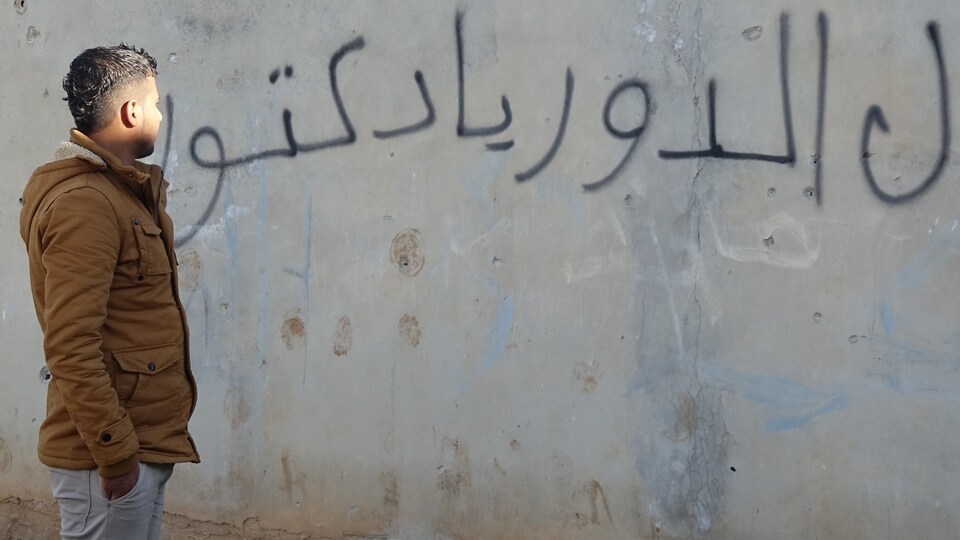
A nationwide revolt that turned into one of the most catastrophic civil wars of the 21st century was sparked by the graffiti "Ejak el door, ya doctor" (It's your time, Doctor), which was aimed at President Bashar al-Assad and made reference to his medical training.
Also read: Syria civil war LIVE: PM calls for 'free elections', Trump says Assad fled after losing Russia's support
The graffiti was an act of frustration committed by a teenager. When local police harassed Mouawiya and his companions, they chose to use the most obvious means possible to convey their concerns. However, the violent reaction to this act of revolt against Assad's administration was swift.
For 26 days, they were held captive by the Mukhabarat, the secret police. They were allegedly tortured and abused, and their final release only made the people of Daraa more irate.
Tear gas and gunshots were used on parents, neighbours, and activists who had demonstrated for their release.
Images of the beaten lads went viral, and the event became a focal point. Protests erupted not just in Daraa but all around Syria. On March 15, 2011, Syria saw its first organized "Day of Rage," turning regional disturbances into a national movement calling for independence and the overthrow of Assad's government.
Also read: Bashar Al Assad toppled: How Syrian govt fell in a matter of days
The Effect of Dominoes
A relentless and violent crackdown followed this. Numerous Syrians were tortured, dissidents were imprisoned, and security forces opened fire on nonviolent protesters.
The Arab Spring-inspired uprising swiftly turned into a violent clash when opposing factions retaliated with weapons.
When the Arab Spring broke out in nearby Egypt and Tunisia, overthrowing Hosni Mubarak and Zine El Abidine Ben Ali, respectively, Syria was a powder keg just waiting for a spark.
Defectors from Assad's military formed the Free Syrian Army (FSA) in July 2011, but it lacked the unity and funding to put up a united front. Extremist organisations like Jabhat al-Nusra and eventually the Islamic State, were able to flourish in this void by taking advantage of the instability and sectarian divisions.
Syria was in ruins twelve years after those destiny-changing graffiti strokes. More than 13 million Syrians were displaced, and more than 500,000 people died.
After a short thaw, a fresh civil war appears to be about to overthrow the Assad family's rule in Syria. Multiple rebel factions have seized control of important Syrian towns, including the capital Damascus, which is home to Assad's authority, under the leadership of a group known as Hayat Tahrir al-Sham (HTS).
Reports state that Assad departed Damascus for an unspecified location; there are rumours that he may have gone to Tehran. As Syria slips into uncertainty, Iran, a long-time ally of the Assad family, is said to be prepared to provide safe haven for them.


