Heavy U.S. engagement with the terrorists risks entrenching their power.
Published on: Jan 19, 2026, 12:47:32 IST
WSJ
Prefer HTon Google
Share via
Copy link
The opening of “phase two” of President Trump’s Gaza peace plan signals rising hopes but dimming ambitions. As the White House realizes how little an International Stabilization Force will do, its vision hinges more than ever on Hamas seeing the light.
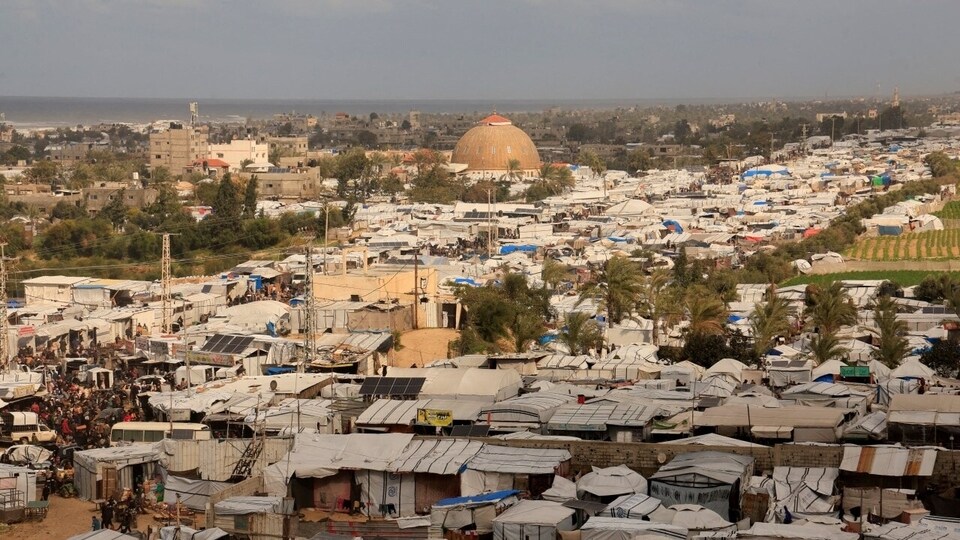
Displaced Palestinians shelter at a tent camp in Khan Younis, southern Gaza Strip, Jan. 14.
“We’ve talked to a number of Hamas people, and we’re hearing throughout the Arab world that people don’t want to be at war anymore,” a senior U.S. official briefed reporters on Wednesday. “They want what everybody else in this world wants: just a good life, and a good life doesn’t occur through military means.”
This is a case of what Israelis call the “Oct. 6 mind-set”—the pattern of thought common before the Hamas massacre on Oct. 7, 2023, exposed it as dangerous naivete. If Hamas simply wanted “a better economic future for their families,” as the U.S. official claims, it wouldn’t have sent death squads to slaughter some 1,200 Israeli men, women and children.
Qatari money failed to buy peace from Hamas before the war, but now it is supposed to work as part of Jared Kushner and Steve Witkoff’s “Project Sunrise” to rebuild Gaza. At least Mr. Trump, if no one else, seems to understand that Gaza will see no peace as long as Hamas wields power.
“We will secure a COMPREHENSIVE demilitarization agreement with Hamas, including the surrender of ALL weapons, and the dismantling of EVERY tunnel,” the President wrote Thursday on Truth Social. The U.S. officials briefing reporters spoke only of taking Hamas’s “heavy weaponry,” leaving out what would happen to the AK-47s on which Hamas’s power and ability to murder dissenting Gazans rests.
Either way, an International Stabilization Force is no longer expected to lead disarmament. Arab states and others have made clear they have no interest in challenging Hamas’s power, which carries risk.
Instead the U.S. is engaging and coordinating with Hamas on all matters of Gaza’s current and future governance, which legitimizes the terrorists. What happened to the point in Mr. Trump’s plan that said “Hamas and other factions agree to not have any role in the governance of Gaza, directly, indirectly, or in any form”?
For now, the Trump plan proceeds with a Board of Peace, including an executive committee with members representing pro-Hamas Turkey and Qatar, and another committee of Palestinian technocrats to administer Gaza. Reconstruction could begin in Israeli-controlled areas of Gaza, but Israel will need to see some movement from Hamas as well. The terrorist group still holds the body of one hostage, Ran Gvili, a continuing cease-fire violation.
Israel counts 78 violations by Palestinian terrorist groups since October, including shootings and infiltrations. But the biggest remains Hamas’s refusal to disarm. That’s what holds back progress for Gazans and Israelis.
Perhaps Hamas will hand over some weapons, but the Israelis expect to have to do the job themselves once U.S. officials realize no one else will. The smart move would be for the Board of Peace to impose a deadline on Hamas to disarm and let Jerusalem enforce it. Having received all the living hostages up front, Israel can no longer be blackmailed.
Get the latest World News, breaking headlines and global updates from the US, UK, Pakistan, Bangladesh, Russia and other countries. Follow major international events on Hindustan Times.

 E-Paper





 Prefer HTon Google