
 E-Paper



Hawaii’s Kilauea volcano spews lava in new eruption; latest update on tsunami warning | Watch
Webcam livestreams from the summit captured the fountains intensifying rapidly soon after the episode began.

 Prefer HTon Google


Fresh lava fountains erupted from Hawaii’s Kilauea volcano on Saturday, US vulcanologists said, nearly a year after one of the world’s most active volcanoes began its current eruptive phase.
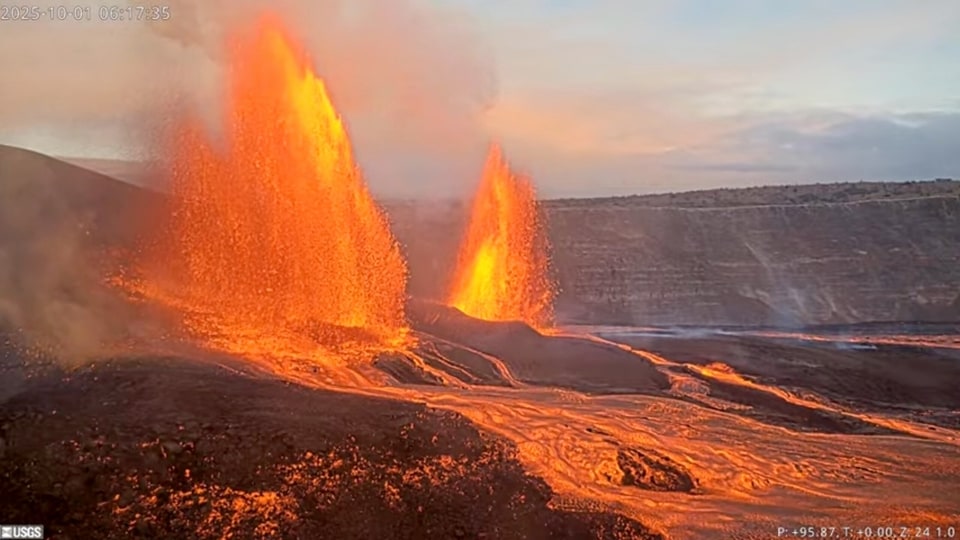
Webcam livestreams from the summit captured the fountains intensifying rapidly soon after the episode began.
One camera, positioned in a hazardous and closed area of Hawaii Volcanoes National Park, was buried by tephra from an inclined lava fountain between 9:55 and 9:57 am HST on December 6, according to the US Geological Services.
The damage occurred during episode 38 of the eruption, which started earlier that morning at 8:45 am RIP V3.
“Sustained lava fountains approximately 50–100 feet (15–30 meters) in height are currently erupting from the north vent,” the US Geological Services Hawaiian Volcano Observatory said in a statement, adding that “fountain heights are increasing rapidly.”
Also Read | Hawaii's Kilauea volcano erupts, spewing lava 100 metres into the sky | WATCH
More on the volcanic eruption
Eruptive activity at Kilauea has been intermittent since December 23, 2024, when the current eruption began, the agency said, noting that such episodes typically last “a day or less.”
“All the eruptive activity is confined to Halema‘uma‘u crater within the Hawaii Volcanoes National Park,” the service said, adding that local airports are not expected to be impacted by volcanic gas or ash.
Authorities are monitoring elevated volcanic gas levels and the potential spread of “Pele’s hair,” strands of volcanic glass “often produced by lava fountaining activity” that can be “carried well over 10 miles (15 kilometers) from the vent.”
Hot, glassy volcanic fragments “can fall on the ground within 1–2 miles (1–3 kilometers) of the eruptive vents,” officials said.
Kilauea has remained highly active since 1983 and erupts relatively frequently. It is one of six active volcanoes in the Hawaiian Islands, which also include Mauna Loa, the world’s largest volcano.
While far smaller than neighboring Mauna Loa, Kilauea is significantly more active and routinely draws tourists eager to witness its glowing lava displays from the air.


