
 E-Paper



Hawaii's Kilauea volcano erupts, spewing lava 100 metres into the sky | WATCH
The lava was seen first emerging from the north vent in Halemaumau Crater after midnight.

 Prefer HTon Google


Hawaii’s Kilauea volcano resumed erupting on Tuesday, firing lava 330 feet (100 meters) into the sky from its summit crater. The volcano was seen erupting orange molten lava in the sky, captured in a footage released by the US Geological Survey.
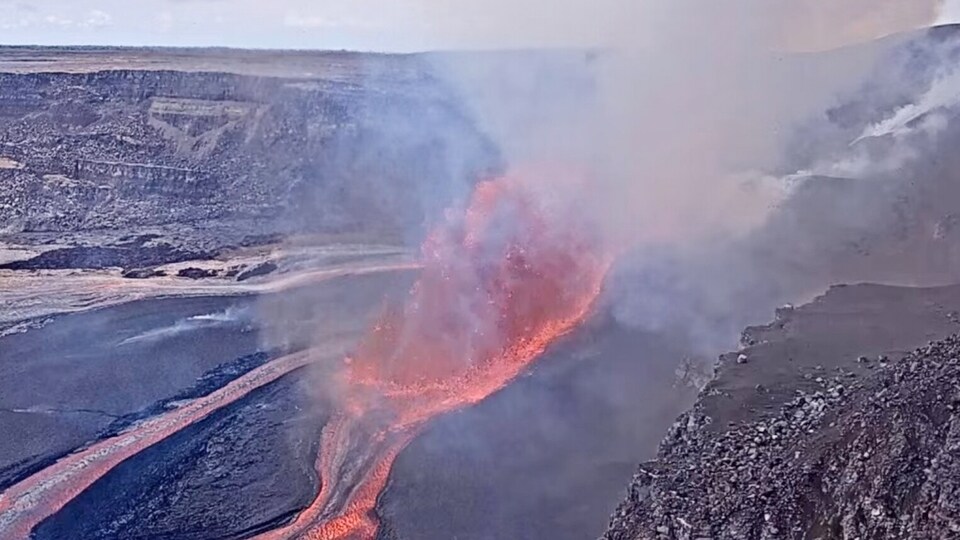
It's the 32nd time the volcano has released molten rock since December, when its current eruption began. So far, all the lava from this eruption has been contained within the summit crater inside Hawaii Volcanoes National Park.
The lava was seen first emerging from the north vent in Halemaumau Crater after midnight. The vent began shooting fountains of lava at 6:35 a.m., the US Geological Survey said. By mid-morning, it was also erupting from the crater's south vent and a third vent in between.
In the video released by USGS, Kilauea can be seen spitting glowing molten lava at high speed and clouds of smoke around it. Molten lava deposits can be seen along the active fountain and flow within.
The lava has been contained within the summit crater inside Hawaii Volcanoes National Park and hasn't threatened homes or buildings.
Kilauea is one of the world's most active volcanoes. Located on Hawaii Island, it is about 200 miles (320 kilometres) south of the state’s largest city, Honolulu, which is on Oahu. The eruption can be seen in person by the visitors, or people also have an option to watch a livestream of the volcano offered by the US Geological Survey. It offered a live footage of the volcano captured from three different camera angles.
Halemaumau Crater, where the eruption first began, has been receiving magma directly from the earth’s interior at about 5 cubic yards (3.8 cubic meters) per second, Ken Hon, scientist-in-charge at the Hawaiian Volcano Observatory, said. As the crater receives magma, the chamber blows up and forces magma into an upper chamber. From there, it gets pushed above ground through cracks.
There have been many eruption episodes since December, featuring molten lava soaring high into the sky. In some cases, the lava formed towers topping 1,000 feet (300 meters).


