
 E-Paper



How Brilliant Toddlers Became the Center of Attention in New York’s Mayoral Race
Zohran Mamdani’s proposal to scale back the city’s coveted gifted-and-talented program is sparking controversy in America’s largest school district.


 Prefer HTon Google


Patiwat Panurach was busy plotting his three-year-old’s future this month when New York’s smartest toddlers were thrust into the political spotlight.
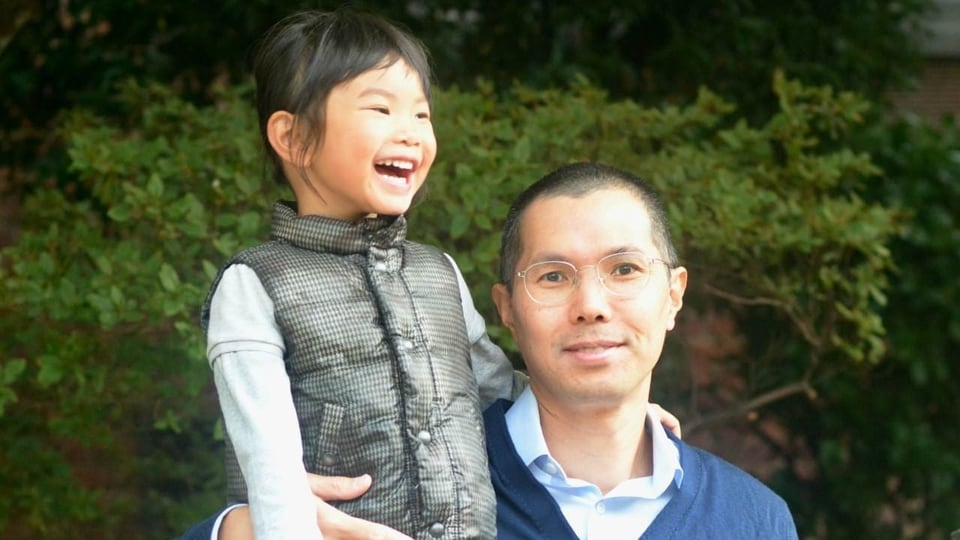
Panurach and his wife hoped to send their daughter to Anderson, an Upper West Side Manhattan public school that isn’t just any public school. It is one of the city’s highly sought-after programs that educate youngsters identified as gifted and talented from a very young age.
Anderson offers an accelerated learning environment to a select few 4- and 5-year-olds, who are admitted because they have shown an early aptitude that impresses an admiring preschool teacher or a district interviewer. The K-8 school touts a student body “with superior intellectual potential,” and is known for funneling pupils into the city’s most prestigious high schools.
While mulling the process, Panurach saw that Zohran Mamdani, the state assemblyman who is all but running away with the New York City mayorship, wanted to stop children like his daughter from entering gifted-and-talented programs at such a young age.
“Zohran knows that five-year-olds should not be subjected to a singular assessment that unfairly separates them right at the beginning of their public school education,” said a campaign spokeswoman.
The mayoral hopeful had hit a nerve.

In New York City, the subject of gifted education is sensitive enough to have helped spawn a task force, an activist group, social-media attacks and, at one point, a protest on the steps of City Hall. Mamdani, whose current proposal would affect only the kindergarten entry point, has joined the likes of former mayor Bill de Blasio and a host of progressive groups that argue the programs segregate students based on race and class.
He has also entered a political minefield, inviting a barrage of questions about how the 34-year-old Democratic socialist would run America’s largest school district.
Many states offer gifted-and-talented education. Close to three million students across the country were enrolled in such programs in 2021, according to data from the U.S. Department of Education. The system sparks debate nationwide: Seattle tried to phase out its gifted program recently, but protests pushed the sunset date back several years.
New York is unlike other cities in placing kindergartners into gifted learning—typically, second or third grade is the norm. Some research questions whether schools can accurately measure how smart a four-year-old is, making the city’s program particularly contentious.
‘Socialist ethos’
Every year, the gifted program enrolls roughly 4% of the district’s kindergartners. It has come to encapsulate the larger tensions in education around class, merit, access and opportunity—as well as parental rights and aspirations for their own children.
“The reaction to Mamdani’s proposal on kindergarteners represents a larger fear,” said Richard Kahlenberg, a researcher who advised former Mayor de Blasio on gifted education policy. “The socialist ethos applied to education is alarming to people who believe in merit.”
Critics say New York should focus on improving education for all students—not a few thousand. Defenders counter that general-education classrooms leave gifted students bored and understimulated.
Dina Brulles, the gifted program coordinator at Arizona State University’s teachers’ college, said maintaining the programs is crucial for meeting the needs of young students who come to school already knowing how to read. “What are you going to do?” she said. “Come and have them learn their letter sounds again?”
Under the current framework, students must receive a recommendation from a preschool teacher or excel in a private interview to be eligible for the kindergarten program. Nominees then enter a competitive lottery. A few thousand receive a placement, either in a designated gifted school or in a local school’s gifted program.
Although the Department of Education is the city’s largest agency, neither Mamdani nor his opponents—former Gov. Andrew Cuomo and Republican Curtis Sliwa—have spent much time on the campaign trail detailing their plans to shape a school district that enrolls more than a million students.
“It gets completely relegated in the campaigns,” said Johanna Miller, director of the New York Civil Liberties Union’s education policy center. “The candidates often, I think, don’t even really understand the magnitude of the school system that they’re going to be leading.”
So when Mamdani revealed, in response to a candidates’ questionnaire from the New York Times, his intentions to remove kindergarten entry to the program, fans and foes sprung into action. Soon after, Cuomo announced his own plan to expand the school system’s specialized high-school network, a different program that has attracted similar controversy.
Cuomo called Mamdani’s proposal “a political stunt” and doubled down on his support for the gifted programs.
“Eliminating opportunities for excellence doesn’t help underserved kids,” Cuomo said. “It perpetuates the problem. It creates a false equality, by eliminating any opportunity to excel.”
‘Tender, young age’
José Luis Vilson, a sociologist, former teacher and father of a New York middle-schooler, welcomed Mamdani’s plans. Vilson opted against trying to get his son on the gifted track. He wanted him to socialize with an array of students, not just those whom the district deemed a league above the rest. During his teaching years, Vilson said he noticed former gifted students were sometimes socially isolated.
“The notion that our children have to start competing with each other very early on in order to make or break their lives is a struggle point for so many of us,” he said. “Why are we doing that at such a tender, young age?”

In 2019, a task force commissioned by then-Mayor de Blasio concluded the city should abandon gifted-and-talented programs. Two years later, de Blasio announced he would adopt that recommendation, months before leaving office. That same year, 13 public-school students sued the city, calling for the elimination of the program and claiming that gifted classes had contributed to a local “caste structure.”
When Eric Adams took office, he reversed de Blasio’s proposal, announcing he would add even more seats to the program. Soon after, a state Supreme Court judge dismissed the lawsuit, which has since been resurrected by an appellate court.
De Blasio’s education policy inspired a gifted activist movement in New York, led by parents like Yiatin Chu, an immigrant who arrived in the U.S. at the age of eight and attended Bronx Science, one of the city’s specialized high schools.
Chu’s daughter didn’t win a spot in the gifted-and-talented program, but Chu remained a supporter. When the de Blasio task force proposed cutting it, she joined forces with other parents and founded Place NYC, a volunteer group.
The organization has allies across the city. Noah Harlan, a tech executive whose daughters attend a gifted-and-talented school on Manhattan’s Lower East Side, is among them. At Harlan’s daughters’ school, students complete four years’ worth of education in three. He likes that the kids do homework on the bus together, and that absentee rates are low.
Harlan has never been a fan of Mamdani. He thinks the Democratic nominee will pick up the baton from de Blasio, who “took those programs away from communities that desperately needed them and wanted them.”
Nationally, white and Asian students accounted for roughly half of all public school enrollment in 2021, but occupied almost two-thirds of gifted and talented seats, according to data from the U.S. Department of Education.
Miller, of the NYCLU, pointed to research indicating that talented Black students are less likely to be identified as gifted by their teachers, and said that doubling down on the program would hurt the city’s minority population.
Panurach, unlike Harlan, likes Mamdani. He’s a fan of the candidate’s proposal to expand no-cost, universal child care through the city’s “3-K” program.
But the latest news is a hard sell for him. Panurach, who works as a market researcher, is weighing his options: Should he move his family to another nook of the city, in search of a well-regarded public school? Stay put and hope for the best? Shell out $60,000 yearly for private school and plan on a late retirement?
“He’s taking opportunities for a better education away from New York’s kids,” Panurach said. “I would find it very frustrating to vote for Mamdani when one of his policies is going to reduce opportunities for my child.”
Write to Owen Tucker-Smith at Owen.Tucker-Smith@wsj.com


