
 E-Paper



How Pakistan is using deportation of Afghan refugees as a political weapon against Taliban
This is the same Taliban that the Pakistani establishment had propped up to occupy Afghanistan and use it for its own strategic depth against India.

 Prefer HTon Google


More than 1,70,000 Afghan nationals have left Pakistan since the Anwar-ul-Haq Kakar government issued an ultimatum to all unregistered foreign nationals to leave the country by November 1, following which action would be taken against them as per the law.
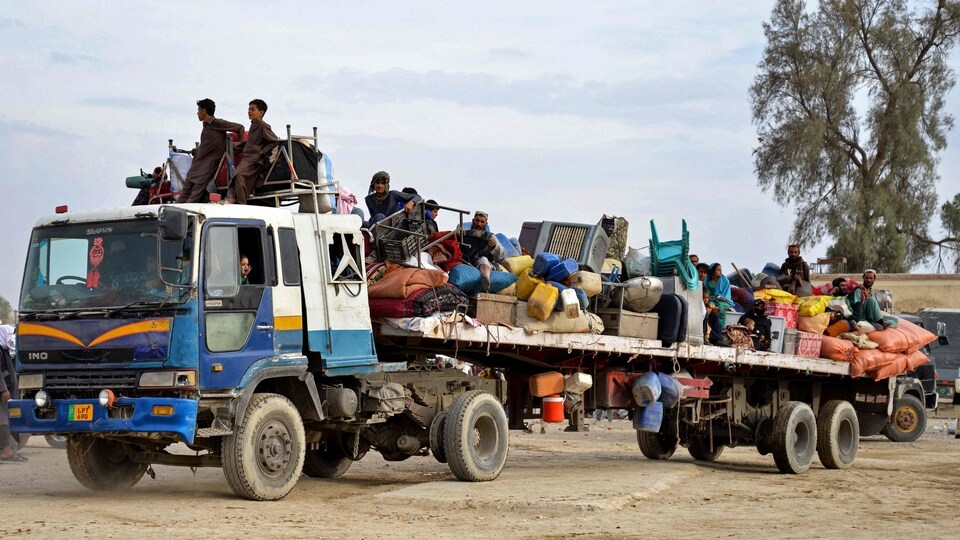
What's behind this Pakistan crackdown on Afghans?
The deportation of Afghans is basically a political weapon used by Islamabad against Kabul, currently ruled by the Taliban. This is the same Taliban that the Pakistani establishment had propped up to occupy Afghanistan and use it for its own strategic depth against India.
Why are they doing it? Firstly, the Pakistan establishment has serious problems with the current Taliban government who do not recognise Durand Line as the international border because it divides the Pashtun community. The Durand Line was made in 1893 by a British official named Sir Mortimer Durand.
Secondly, Pakistan was thinking that once the Taliban takes over Kabul, they would ensure that the terrorist group Tehreek-i-Taliban Pakistan (TTP) which is operating against the Pakistan Army, would be put under leash. But that has not happened. The Taliban government says that TTP is one of the 46 terrorist groups that operate in Pakistan, as a result it is their internal issue.
The Pakistani establishment decided that the Afghan refugee community in Pakistan's Balochistan, Khyber-Pakhtunkhwa, Sindh and parts of Punjab, suddenly became harbours of terrorists and were responsible for terror attacks in the country. Now, the Afghan refugees have been branded as terrorists and Pakistan wants to throw them out of the country.
As for TTP, it fully operates within Pakistan. It just shares the same Pashtun ethnicity as the Taliban. They are operating across the Torkham border. The Pakistani Deep State has been playing various groups for its own purposes, be it TTP, Lashkar-e-Toiba and the list goes on. When the things are hitting back at them, Pakistan have decided to take a counter action. As a result the actions on TTP and the Afghan refugees are being carried out to keep them at bay.
ALSO READ: Afghans return to Taliban rule after facing expulsion from Pakistan
Why is Pakistan acting against Afghan refugees now?
The timing of the entire episode is to be noted. The United States is tied up with Israel in Gaza. Russia is tied up with Ukraine in the Ukraine war. The world is looking towards Gaza and not the 1.7 million Pashtun refugees who are being forced back across the border into a country which witnesses -20 degrees celsius temperature.
The houses of these refugees have been destroyed and they have been forced to flee. The UN secretary general Antonio Guterres, once the UN commissioner for refugees, recently praised Pakistan for helping out Afghan refugees. He is quiet. The Organisation of Islamic Cooperation (OIC) states don't have a word to say about the Pashtuns. China is taking all sorts of actions against Uyghurs in Xinjiang, but does not utter a word.
Afghanistan was thrown under the bus by US in 2021. Now, Pakistan is doing it. These were the same refugees used by Pakistan to ensure that insurgency takes place in Afghanistan. They were called the ‘Great Mujahids’ by the Europeans. It is a farcical thing happening in Afghanistan and Pakistan.


