
 E-Paper



How US airman hid behind enemy lines in Iran: A beacon, a 7,000-ft climb, and nearly two days before rescue
As the weapons officer, he was one of two crew aboard the downed F-15E Strike Eagle; pilot was already rescued, while he hid in mountains in southwestern Iran

 Prefer HTon Google


When a fighter jet of the United States military, a two-seater F-15E Strike Eagle, went down over Iran in the early hours of Friday, both crew members ejected. The pilot was found within hours. The weapons systems officer (WSO) was not.
What followed was nearly 48 hours of evasion, deception and pursuit, ending in a daring rescue operation that will go down in US Special Forces history — the kind on which Hollywood movies are made.
The rescued officer has been identified by President Donald Trump as a colonel.
The colonel landed somewhere in mountainous terrain in a part of Iran where, according to US officials, there is significant opposition to the Islamic Republic regime that faced protests in the weeks before US and Israel launched this war on February 28.
Iranian military said the crash and rescue took place by using an abandoned airstrip in Isfahan province, which is in central Iran. Unnamed US officials mentioned southwestern Iran to NYT, not mentioning the exact area.
Wherever he fell after ejecting from the jet, the colonel had a handgun, a beacon, and a secure communications device besides survival ration supplies. That was largely it.
His first move was to get away from the wreckage, according to a report by Reuters citing unnamed US officials.
Follow: Live updates on the US-Iran war
Military training for downed aircrew — Survival, Evasion, Resistance and Escape, or SERE — tells pilots to put some distance between themselves and the crash site. Enemy forces would usually head to the site first.
The colonel moved to elevated ground, taking cover in a mountain crevice.
But this meant, at this point, neither US forces nor Iranian forces knew precisely where he was.
Climb and survival
At some stage during his evasion, the officer hiked up a ridgeline that rose to 7,000 feet, said US media reports. A senior American military official described to NYT the terrain as a significant factor in what made the rescue “one of the most challenging in US special operations history”.
The mountains offered cover for the officer, but also made any rescue far harder to execute for those who went in for him.
Throughout this period, Iranian forces, including units from the Islamic Revolutionary Guard Corps (IRGC) and the Basij paramilitary force, were actively searching for him.
The Iranian government put out a public call for citizens to help locate the "enemy pilot" and offered a reward. Tribesmen in the area reportedly opened fire on US helicopters during the search, CNN reported.
The officer used his beacon sparingly because Iranian forces could detect the same signal. He also carried a secure communications device, which allowed him to coordinate with US forces without broadcasting openly. US officials have not specified the exact equipment, but military aircrew in combat zones are typically equipped with devices that combine GPS positioning, encrypted radio communications and a satellite beacon. This allows them to transmit their location digitally without relying on open radio frequencies.
Also read | A colonel, seriously wounded, taken to Kuwait: What we know on rescued US airman
Deception as cover
While the officer evaded on the ground, the US Central Intelligence Agency (CIA) ran a separate operation at a psychological level too, NYT reported. The agency launched a deception campaign aimed at convincing Iranian forces that the search by US forces had already found the airman, and that he was being moved out of the country in a ground convoy.
The aim was to redirect Iranian attention away from his actual location, officials told NYT. At the same time, the CIA used "unique capabilities" to track the officer's position. A senior administration official, who told news outlet Axios about these “capabilities”, did not share further details.
Once the colonel was located, the CIA shared his exact coordinates with the Pentagon and the White House. Trump ordered an immediate rescue mission.
US attack aircraft were already operating in the area and dropped bombs on Iranian convoys moving towards the zone where the officer was hiding. This kept them at bay while rescue forces moved in.
Extraction, and lost planes
The rescue mission involved hundreds of special operations personnel, dozens of aircraft, and what officials described as cyber, space and intelligence capabilities working in coordination. The Navy SEAL Team Six — the same unit that conducted Operation Neptune Spear, in which Al Qaeda leader Osama bin Laden was killed in Abbottabad, Pakistan, in 2011 — carried out the extraction. The SEALs were supported by US Air Force men and multiple layers of combat support for cover and evasion.
US commandos converged on the officer while firing their weapons to hold the Iranian forces back. Reports on whether there was direct gunfight were not yet conclusive. Iranian media reported five people were killed in strikes during the US rescue operation.
The airman was put on a plane and flown out, and Trump announced within hours on Sunday that US forces had conducted "one of the most daring Search and Rescue Operations in U.S. History", as per his post on Truth Social.
"This brave Warrior was behind enemy lines in the treacherous mountains of Iran, being hunted down by our enemies," Trump wrote on his social media account, "He sustained injuries, but he will be just fine.”
The US lost at least two aircraft in the process. These were two US transport planes that “malfunctioned” at the staging base inside Iranian territory, officials told the Wall Street Journal.
To keep the rescue going, US commanders flew in three replacement aircraft, extracted all personnel, and destroyed the two disabled planes on the ground to not leave any evidences or signals. The officer was flown to Kuwait for medical treatment.
Iran's Revolutionary Guards claimed they shot down two C-130 military transport aircraft involved in the operation. It was not clear if these were the same two that US officials mentioned, or in addition to them. Also, they claimed to have hit two Black Hawk helicopters too in the initial hours of the US search operation.
Trump sounded triumphant in his response even as the war, largely an air operation so far, has stretched into its sixth week with no clear win in sight. He had claimed it would be “swift and decisive”.
"We will never leave an American warfighter behind," he wrote on Sunday.
From Iran's side, Ebrahim Zolfaghari, spokesperson for Iran's Khatam al-Anbiya Central Headquarters of the IRGC, said: "Trump tries to justify the bitter defeat of his feeble army by creating confusion for public opinion.”
Where the conflict stands
The conflict, which the US and Israel launched on February 28 with one stated objective being “not allowing Iran to make a nuclear weapon”, has killed 13 US military service members and wounded more than 300, according to the US Central Command.
US intelligence assessments suggest Iran still retains large quantities of missile and drone capability, with only around a third of its missile arsenal confirmed destroyed.
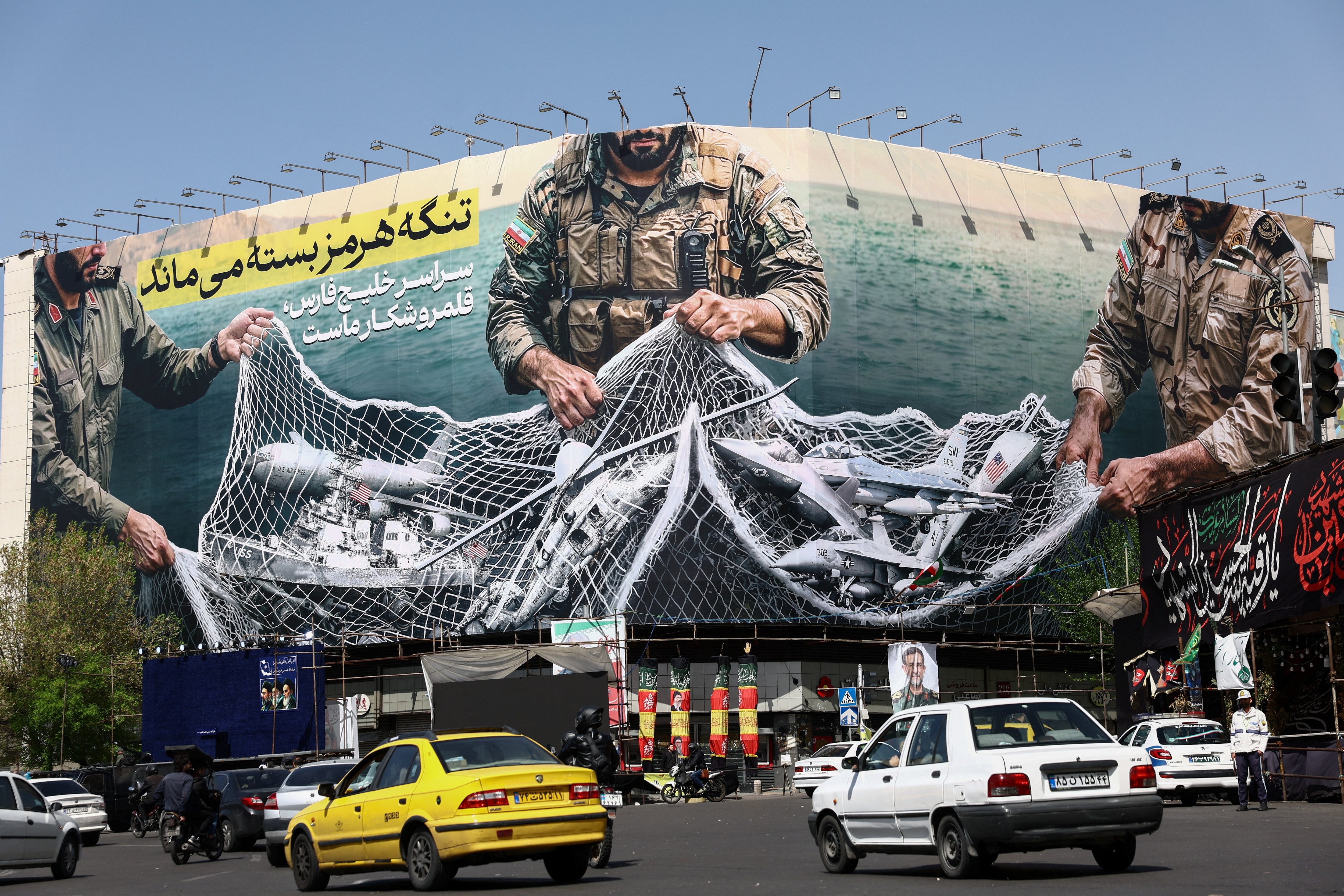
Global economic pressure is Iran’s other, main tactic. It shut the Strait of Hormuz early in the conflict, cutting off a waterway that normally carries around a fifth of the world's oil and liquefied natural gas.
Trump has given Tehran a deadline to reopen it by April 6, which he repeated with an “or all hell” warning on Saturday. The US and Israel have been striking Iranian infrastructure, such as bridges, while Tehran alleges war crimes. Over 4,000 people are reportedly dead in Iran.


