
 E-Paper



ICE agents need body cameras
Universal body cameras would bring the truth to light and prove innocence more often than guilt.


 Prefer HTon Google


Immigration and Customs Enforcement’s decision to deploy body cameras after two controversial shootings is welcome—and, let’s hope, not too late. Local law enforcement learned a lesson the technology’s champions never expected: The cameras that activists demanded to catch cops in the act have more often cleared them of wrongdoing.
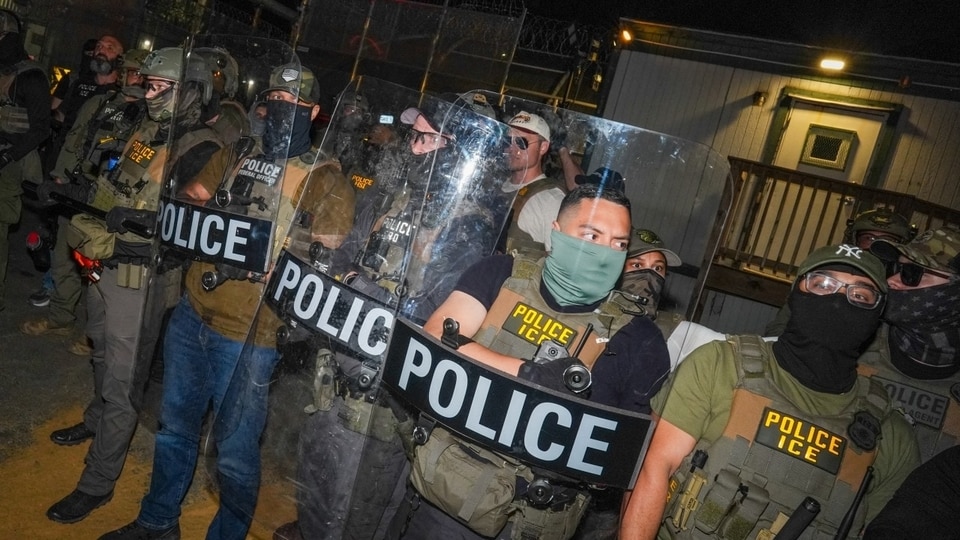
The latest fatal shootings, in Houston and Maine, provoked outrage. Activists paint ICE agents as rogues who shoot first and cover up later. Homeland Security officials say the agents fired in self-defense. We can’t be certain, because the evidence in both incidents is murky. The agents on the scene attest to one set of facts; some witnesses swear the opposite. Real-time footage offers only snippets of the encounters—distant, obstructed views that mainly confirm whatever the viewer already believed.
Body cameras, which are deployed by nearly every major state and local law-enforcement agency, could help settle the question. Worn on officers’ chests, the devices record a first-person view of every encounter in real time and upload it to the cloud for later review.
After the 2014 death of Michael Brown in Ferguson, Mo., and other high-profile police killings, activists demanded that departments adopt the cameras. They framed the technology as fostering accountability and transparency, confident it would expose widespread misconduct and excessive force. They were right about the transparency. They were mostly wrong about the rest.
Less than half of general-purpose law-enforcement agencies had acquired body cameras in 2016, and many hadn’t equipped front-line officers with them. Adoption was more widespread in big cities, but rules and deployment were uneven. Progressive politicians and activists pushed for the cameras, and their calls grew louder after George Floyd’s death in 2020. Some in law enforcement resisted the devices as unnecessary and expensive, but lawmakers and public pressure won out. By 2023, a survey found that 82% of police departments used them. Most major cities now require them under clear rules governing activation, storage, review and release.
Body-camera footage hasn’t produced evidence of systemic misconduct or racial abuse. In some cases, it held officers accountable in ways once impossible, supplying indisputable evidence of wrongdoing. But in far more cases—especially controversial shootings—it captured the chain of events clearly enough for investigators to exonerate officers.
In Columbus, Ohio, the 2021 police shooting of 16-year-old Ma’Khia Bryant sparked protests—until the department within hours released body-camera footage showing that she was armed with a knife and lunging at a bystander when the officer fired. The video ended the controversy and established that the use of force was justified. The speed of the release mattered as much as the footage itself.
The cameras also make everyday policing better. Researchers have described a “civilizing effect” on officers and civilians alike, who know their conduct is being recorded and can be reviewed. Studies have found that camera-equipped officers make more arrests and draw fewer complaints than their unequipped colleagues, while other research suggests they use force less often. The relationship isn’t necessarily causal, but increased use of body cameras has tracked rising public confidence in law enforcement.
ICE is neither moving fast enough nor going far enough. After the two fatal encounters, congressional Democrats demanded body cameras be mandated for all agents as part of an ICE reform package. The Trump administration agreed but still hasn’t fully deployed the equipment. The Department of Homeland Security announced it will distribute body cameras more widely, but committed to equip only one agent on each arrest team, at least initially. That won’t silence critics or yield definitive evidence. More angles give the public and investigators a comprehensive view of events—and confidence that they have all the available facts.
DHS should equip every front-line agent with a body camera. It should also adopt a clear policy requiring the timely release of footage, subject only to legitimate safety, privacy and investigative concerns. Doing so would strengthen public confidence, improve accountability and ensure that misconduct claims are measured against objective evidence rather than dueling narratives.
Body cameras are an indispensable law-enforcement tool, and the public rightly views them as essential to transparency and accountability. But a decade of footage has taught an unexpected lesson: The cameras protect officers from false allegations more often than they expose real wrongdoing. ICE agents deserve that protection—and the public deserves the truth.
Mr. Johnson is president of the Law Enforcement Legal Defense Fund.


