
 E-Paper



Is Chinese ship Yuan Wang 5 exploring a new sea route from China to Africa ?
The strategic ship has become a bone of contention between India and China after the former voiced its concerns over the vessel being allowed to berth at Hambantota port by the Ranil Wickremesinghe regime under pressure from Beijing.


The Chinese marine research, satellite and ballistic missile vessel, Yuan Wang 5, is currently mapping Indian ocean bed 2000 kilometers (1100 nautical miles) south of Sri Lanka giving rise to the possibility of Beijing exploring a new sea route to Africa’s eastern seaboard by bypassing contested Malacca, Sunda, and Lombok Straits.
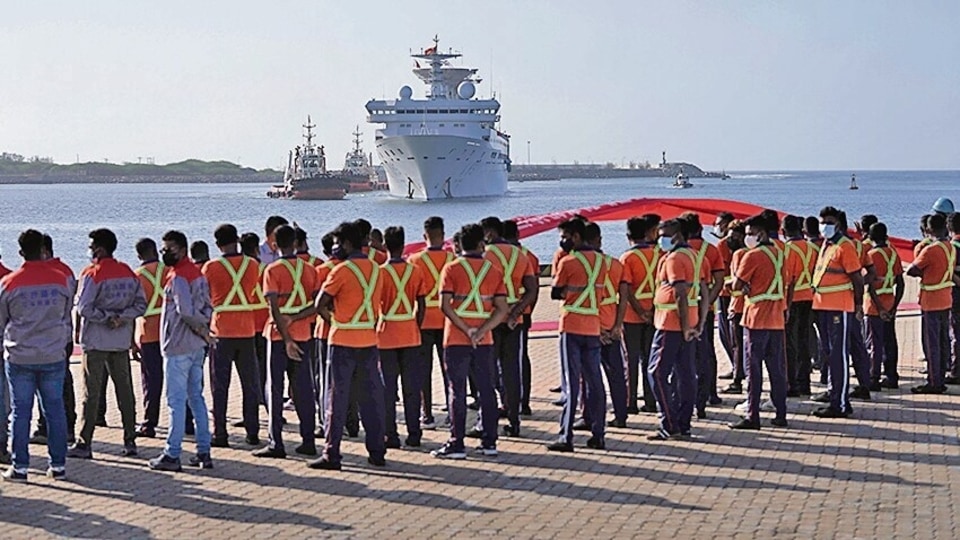
According to available information, the 11000-ton vessel is moving deep into the Indian Ocean and will proceed towards its homeport Shanghai via the Ombai-Wetar Straits near East Timor and north of Australia.
The strategic ship has become a bone of contention between India and China after the former voiced its concerns over the vessel being allowed to berth at Hambantota port by the Ranil Wickremesinghe regime.
The Hambantota Port was leased to China for 99 years in 2017 by the then Prime Minister Ranil Wickremesinghe in a debt for equity swap as Sri Lanka had defaulted on the Chinese loan. The vessel left Hambantota on August 22 after Sri Lankans replenished the ship with food, diesel, oil, and lubricants.
ALSO READ: We monitor all developments: Jaishankar on Chinese vessel in Lanka
With Malacca, Sunda and Lombok Straits of Indonesia all monitored by India through ships and Predator UAVs as they are in close proximity to Andamans and Nicobar Islands, naval experts believe that Yuan Wang 5 may be charting a new route to East Africa that does not allow the Indian Navy to exercise leverage on Chinese ships.
The new route will completely avoid the shortest sea lanes of communication from South China sea to Persian Gulf and Gulf of Aden and take a longer route through Ombai Wetar Straits.
The new route will allow Chinese ships unhindered access to eastern seaboard of Africa, where Beijing has heavily invested under the Belt Road Initiative (BRI) and has also established a base in Djibouti. The new route will be deep south of Sri Lanka and will allow easy access to Chinese ships to ports like Mombasa in Kenya, Tanzania, and Mozambique.
The ocean bed mapping also helps in anti-submarine operations as the equatorial waters are tricky due to significant differences between the surface and sub-surface temperatures.


