Indian-American candidates had mixed results in Tuesday’s US midterm elections, with Democrats securing key victories even as prominent Republicans, including Vivek Ramaswamy, were defeated amid a broader Democratic wave across battlegrounds.
Pia Dandiya, an educator, won Florida’s 22nd Congressional District, defeating Republican Casey Askar 51.9% to 48.1%, with 99% of the vote counted. Her victory will expand the “Samosa Caucus”, a group of congressional representatives of Indian origin, as Democrats won despite Republican efforts to redraw Florida’s congressional boundaries.
Indian-American doctor-turned-politician Amish Shah was also poised to win Arizona’s 1st Congressional District. After narrowly losing in 2024, Shah held a seven-point lead over Republican Jay Feely, with 85% of the vote counted.
Veteran Democratic lawmakers Ami Bera and Pramila Jayapal won re-election comfortably. Suhas Subramanyam, who entered the House in 2024, secured a second term, while Ro Khanna, widely expected to be a potential 2028 presidential candidate, decisively defeated fellow Indian-American Ritesh Tandon by 40 points.
Democrat Nithya Raman remained locked in a close contest with incumbent Karen Bass in the Los Angeles mayoral election. After initially trailing, the 45-year-old democratic socialist moved ahead by nearly 17,000 votes, with almost 63% counted.
{{/usCountry}}Democrat Nithya Raman remained locked in a close contest with incumbent Karen Bass in the Los Angeles mayoral election. After initially trailing, the 45-year-old democratic socialist moved ahead by nearly 17,000 votes, with almost 63% counted.
{{/usCountry}}A Raman victory would put her alongside New York City Mayor Zohran Mamdani among the most prominent local-level politicians in the US and create the possibility of the country’s two largest cities being led by Indian-Americans.
Aruna Miller, Maryland’s lieutenant governor, also won re-election to a second term.
Indian-American Democrats made gains at the state level as well. Nabeela Syed flipped a Republican-held seat in the Illinois state legislature, while Jyot Singh became the first Indian-American elected to the Georgia House of Representatives.
Indian-Americans face defeat
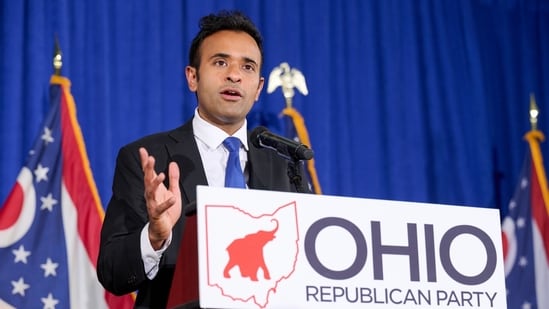
Republican candidates, however, suffered prominent defeats. Ramaswamy lost in Ohio, despite President Donald Trump’s endorsement and expectations that he could become the state’s first Indian-American governor.
His Democratic rival, Amy Acton, benefited from anger over Trump’s handling of the economy and the war in Iran. She also attacked Ramaswamy over his wealth, portraying the entrepreneur-turned-politician as an out-of-touch Trump ally. Ramaswamy faced criticism over an attack advertisement featuring Acton’s estranged mother, which drew condemnation from Republican party members.
Saritha Komatireddy’s bid to become New York’s attorney general also fell short. Despite drawing attention for her debate performances, she lost to incumbent Democrat Letitia James, 60% to 40%, in a state dominated by Democrats.
Also Read I Trump defends Iran war after JD Vance blames it for Republicans' midterm losses: 'We had to do it'
The results came amid indications of a shift in Indian-American voting preferences towards Democrats. A poll by the Carnegie Endowment for International Peace and YouGov ahead of the election found that 62% of Indian-American citizens intended to vote for Democratic candidates in their House districts, compared with 19% for Republicans. In states holding Senate elections, Democrats led 63% to 21%.
The shift comes amid sustained concern in the Indian-American community over rising racism targeting Indians in the US, including from some factions of Trump’s coalition.