E-Paper



Pak okays law to ban Hafiz Saeed and other UN-listed terrorists, seize assets
The moves came days ahead of a plenary meeting of the Financial Action Task Force (FATF) to be held in Paris during February 18-23 that will assess whether Pakistan has complied with the body’s recommendations to curb terror financing and money laundering.


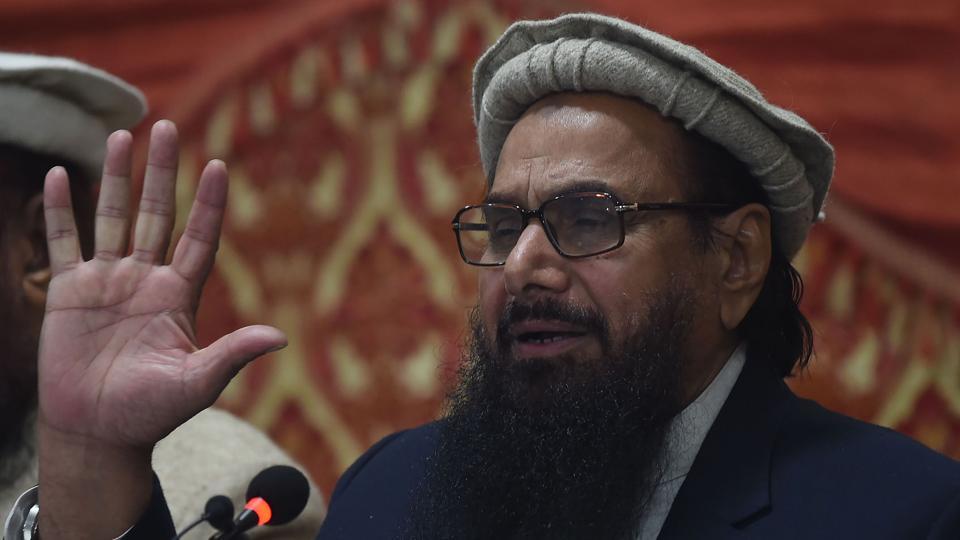
Pakistan has quietly amended its anti-terror law to ban those listed as terrorists by the UN, including Hafiz Saeed and the JuD, and framed new regulations to seize their assets in a bid to stave off a US move to put the country on the watch list of the Financial Action Task Force.
On Friday, President Mamnoon Hussain promulgated an ordinance to amend the Anti-Terrorism Act of 1997 so that individuals and groups listed as terrorist entities by the UN Security Council would be proscribed within the country.
A meeting of the cabinet chaired by Prime Minister Shahid Khaqan Abbasi on Tuesday gave in-principle approval to the Anti-Terrorism (Freezing and Seizure) Rules 2018, an official statement said.
Sources in Islamabad said this was a step towards formal action to freeze bank accounts and seize assets of groups such as the Jamaat-ud-Dawah and Falah-e-Insaniyat Foundation that have been sanctioned by the UN Security Council under Resolution 1267.
The moves came days ahead of a plenary meeting of the FATF to be held in Paris during February 18-23 that will assess whether Pakistan has complied with the body’s recommendations to curb terror financing and money laundering.
The US and Britain put forward a motion several weeks ago to place Pakistan on the FATF’s watchlist, the country’s de facto finance minister Miftah Ismail told Reuters on Tuesday. The US and Britain also persuaded France and Germany to co-sponsor their move.
“We are now working with the US, UK, Germany and France for the nomination to be withdrawn,” Ismail said. “We are also quite hopeful that even if the US did not withdraw the nomination that we will prevail and not be put on the watchlist.”
If Pakistan fails to clear the review, it could be placed in the FATF’s “grey list”, which would result in stringent checks on international transactions, foreign investments and commercial lending. Pakistan was on the grey list from February 2012 to February 2015, when all financial transactions were monitored by FATF.
The ordinance promulgated by the Pakistani president amended Section 11B of the Anti-Terrorism Act (related to bans on groups) and Section 11EE (related to bans on individuals). The amendments state that entities sanctioned by the UN Security Council will be proscribed in Pakistan on an “ex parte basis”.
The move will bring the Pakistani law in line with the UN sanctions list and remove ambiguities on the status of Hafiz Saeed, the founder of the Lashkar-e-Taiba. Though the UN Security Council listed the Jamaat-ud-Dawah in December 2008, shortly after the Mumbai attacks, it was never banned in Pakistan and only placed in a “watch list”.
Similarly, the Falah-e-Insaniyat Foundation, another front for the LeT, was listed by the UN Security Council in 2012 but it too was not banned by Pakistan.
“The amendment means that all individuals and entities listed by the UN also stand banned under Pakistani laws now,” a senior government official told AFP.
However, it could not immediately be ascertained what action, if any, the Pakistan government would take against Saeed, the alleged mastermind of the Mumbai attacks who was placed under house arrest for 10 months last year before being freed on the orders of a panel of judges. His release angered the US, which warned that there would be “repercussions” if Saeed was not re-arrested and prosecuted.
Saeed, who has a $10 million US bounty on his head, operates freely in Pakistan and has repeatedly backed the actions of terrorists in Kashmir.