E-Paper



Pakistan prepares for peace talks that may not happen; confusion clouds Iran, US participation
Donald Trump said his envoys would arrive in Islamabad on Monday evening, just a day before the current ceasefire is set to expire.

 Prefer HTon Google


Pakistan appears to be preparing for high-stakes talks that may ultimately not take place, even as uncertainty deepens around the next phase of US-Iran negotiations.
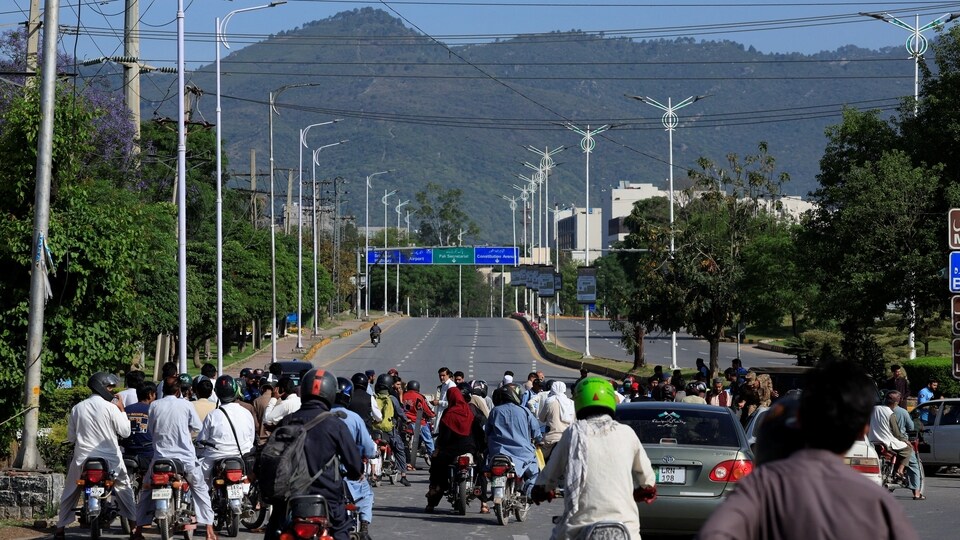
In Islamabad, security measures have already been ramped up. The capital is effectively in lockdown in the red zone and several surrounding areas, reported news agency Reuters, adding that the roads are sealed and movement is tightly controlled. Track US-Iran war live updates.
The preparations suggest Pakistan, which has been acting as the main mediator, is bracing for another round of diplomacy as the temporary ceasefire deadline ends on April 22.
Pakistan on edge
Islamabad municipal authorities have halted public transport and heavy-goods traffic across the city, the report added.
The venue for last week’s talks, Serena Hotel, is wrapped in barbed wires. The hotel has also asked all guests to vacate.
Meanwhile, two US C-17 cargo planes reportedly landed at a Pakistani air base on Sunday, carrying security equipment and vehicles in preparation for the delegation’s possible arrival, Reuters reported citing Pakistani security sources.

Confusion over US delegation
The uncertainty extends to Washington’s plans as well. US President Donald Trump said his envoys would arrive in Islamabad on Monday evening, just a day before the current ceasefire is set to expire. However, there has been conflicting messaging over who will lead the delegation.
A White House official told Reuters that the team would be headed by Vice President JD Vance, who led the first round of peace talks, along with Trump’s envoy Steve Witkoff and his son-in-law Jared Kushner.
But Trump later told ABC News and MS Now that Vance would not be part of the visit, adding to the confusion around the trip.
Iran signals it may skip talks
Even as US has signalled its potential team of delegation, Tehran has indicated it may not attend.
Iranian state media reported that the country has rejected a second round of negotiations planned before the ceasefire deadline, citing the ongoing US blockade, “threatening rhetoric,” and Washington’s shifting positions and “excessive demands.”
"One cannot restrict Iran's oil exports while expecting free security for others," Iran's first vice president Mohammadreza Aref wrote on social media. “The choice is clear: either a free oil market for all, or the risk of significant costs for everyone.”
However, during the earlier round of talks, too, conflicting signals had emerged over Iran’s participation. While Iranian state media denied that any delegation would attend the Islamabad-hosted meeting, senior Iranian leaders were present.
Parliament Speaker Mohammad Bagher Ghalibaf, Foreign Minister Abbas Araghchi and other top officials had attended the negotiations.
The discussions were face-to-face and lasted for over 21 hours, Vance has said in a press conference afterwards.
Ceasefire under strain
The fragile ceasefire between Washington and Tehran is now under increasing pressure. Concerns escalated after the US said it had seized an Iranian cargo ship attempting to breach its blockade, prompting a sharp warning from Iran.
The US military said it fired on the Iranian-flagged vessel as it approached Bandar Abbas port.
"We have full custody of their ship, and are seeing what's on board!" Trump wrote on social media.
Iran, however, said the ship had been travelling from China and condemned the action. "We warn that the armed forces of the Islamic Republic of Iran will soon respond and retaliate against this armed piracy by the US military," a military spokesperson said, according to state media.