
 E-Paper



Putin’s sickening statistic: 1m Russian casualties in Ukraine
Russia’s staggering losses are a testament to Ukraine’s stubborn defence against a far stronger power.


 Prefer HTon Google


JUNE IS turning into an ill-fated month for Russia’s armed forces. It started with a daring Ukrainian drone attack on airfields stretching from Siberia in the east to Murmansk in the north that Ukraine claims destroyed 41 large planes, or about one-third of Russia’s strategic bomber fleet. But another, more momentous, statistic looms. Before the month ends Russia will probably suffer its millionth casualty since its full scale invasion of Ukraine in February 2022, based on current trends of about 1,000 soldiers killed or injured per day.
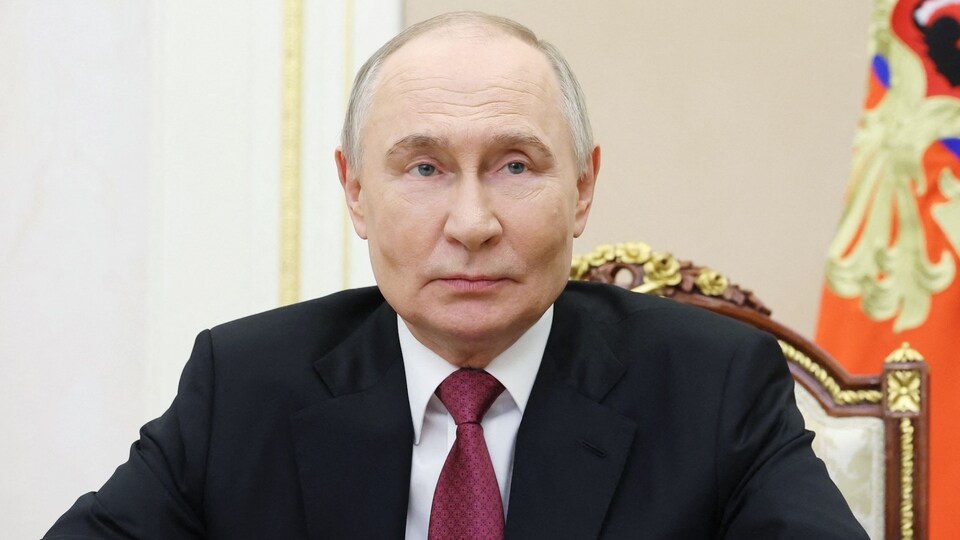
Russia’s staggering losses—which far exceed those it suffered in all its wars since the second world war—are a testament to Ukraine’s stubborn defence against a far stronger power. Yet Russia’s ability to shrug them off and to keep recruiting men to throw into meat-grinder attacks ought to also pose sobering questions for NATO’s European members: how can democracies that value the individual deter an adversary so unconcerned about the lives of its soldiers that it will sacrifice them, year after year, in a punishing war of attrition?
Russia’s human-wave attacks are “largely useless, grinding stuff” says Sir Lawrence Freedman, a leading British strategist. “But there are no signs of exhaustion, they are just carrying on.”
The grim tally of losses comes from figures compiled by the Ukrainian general staff, leaving it open to question. But the number is not far out of line with estimates by Western intelligence services.
It also roughly tallies with attempts by Russian independent media, such as Meduza and Mediazona, to count the bodies. By this time last year, Meduza reckoned that between 106,000-140,000 Russian soldiers had died. Much of their analysis was based on inheritance records and obituaries on social media and in other outlets.
An estimate of excess mortality among Russian men based on probate records gave a figure of 165,000 by the end of 2024 with 90,000 having been added in the previous six months. Given the intensity of Russian operations for much of the past year it would not be hard to reach a figure of about 250,000 killed by now. The ratio of severely wounded to killed is thought to be about four to one, a reflection both of the severity of injuries in Ukraine and the low priority Russia gives to medical evacuation and the prompt field hospital treatment that saves lives.
Another reason to attach relative fidelity to the casualty figures is that, to an unusual degree, they are attributable to those sustained by soldiers in action. In most wars, a high proportion of deaths, even among combatants, are the result of disease, famine, accidents and deliberate persecution of people in occupied territories, which inherently defy the best attempts at statistical accuracy.
A good example is the Second Congo War from 1998 to 2003. By far the most lethal conflict of the 21st century, it is believed to have been responsible for 5.4m deaths, most of which were from disease and hunger. In the second world war, out of the nearly 27m Soviet citizens who died, some 6.3m were killed in action or died from their wounds.
Ukraine does not publish its own combat losses in any detail. However, in December last year, Ukraine’s president, Volodymyr Zelensky, said that 43,000 have been killed and 370,000 wounded since the invasion. That is probably an underestimate. But the relatively smaller number of Ukrainian deaths compared with their enemy reflects a number of different factors.
Apart from its ill-fated counter-offensive two years ago, Ukraine has been fighting a largely defensive war. Advances in drone technology have thus far favoured defence over offence. Racing drones packed with explosives, known as First Person View (FPV) drones, that are flown into tanks or soldiers, are playing a similar role to the machinegun in the first world war. That innovation made infantry attacks so costly that neither side could break the stalemate of trench warfare until the development of new tactics and the invention of tanks. FPV drones have made these vulnerable, too. Russia has lost nearly 11,000 tanks and almost 23,000 armoured infantry vehicles since the war began. Now it depends largely on infantry attacks by small groups of men, sometimes on foot, sometimes on motorcycles.
Another reason why Russia’s casualties are much higher than Ukraine’s is that the latter is a democracy and has only about a quarter as many people to draw upon. Thus it has to be seen to be concerned for the welfare of its troops. Its ratio of wounded to killed is thought to be about eight to one. When Ukraine’s army has appeared to be indifferent to its troops, its struggles with mobilisation have intensified.
Even so, it is remarkable how Russia continues to absorb such staggering losses (it needs to recruit 30,000-40,000 new soldiers each month to fill the lines). To put them into context, Russia’s losses to date are on a par with the entirety of Britain’s losses in the second world war. They are approaching America’s losses in the same conflict, when its population was a similar size to Russia’s today. The numbers killed in Ukraine are probably more than four times those suffered by America in the eight years of its direct involvement in the Vietnam war, a toll that led to mass protests. Russia’s losses are also about ten times higher than the total number of casualties suffered by the Soviet Union in Afghanistan.
Whereas Ukraine is fighting a war of national survival, Vladimir Putin, Russia’s president has choices. Yet he appears to be under little domestic pressure to call it a day. Having lost most of the mainly professional army that set out to defeat Ukraine over three years ago, the Kremlin has come up with an almost entirely novel way of replenishing manpower at the front without risking social destabilisation. It combines the ideological militarisation of society, by convincing most Russians that they are engaged in a war against an imperialistic NATO and that there is glory in death, with increasingly lavish contracts for those willing to sign up.
“Putin believes that the Afghan War is one of the main reasons that the Soviet Union collapsed,” says Aleksandr Golts of the Stockholm Centre for Eastern European Studies. “He has come up with a revolution in Russian military thinking. I call it ‘market mobilisation’, others have called it ‘deathonomics.’”
The sums being paid to soldiers, the majority of whom come from poorer provincial towns and are in their thirties and forties, are genuinely life-changing for many families. By the end of last year, according to Elena Racheva, a Russian former journalist who is now a researcher at Oxford University, the signing on bonus had reached 1.19m roubles ($15,000), while the average annual pay for a contract soldier was between 3.5m and 5.2m roubles, or up to five times the average salary. If a contract soldier is killed, his family will receive between 11m and 19m roubles.
According to a survey last October by the Levada Centre, an independent polling organisation, 40% of Russians would approve of a family member or close friend signing up. Reporting by another journalist, Olesya Gerasimenko, from a recruiting centre in Moscow last summer found that many middle-aged fathers were accompanied by their wives and children when they came to sign on, determined to improve their family’s fortunes. Mr Golts says that the impact can be seen in small towns across Russia where recruitment has been most brisk. New houses are being built, smarter cars are turning up on the streets, and nail bars and gyms are opening.
For now, believes Ms Racheva, Russian society accepts that the system is an alternative to full mobilisation. There is 88% approval of contract soldiers receiving money and benefits for going to war “instead of us”. For the families of the dead and injured, huge payouts “alleviate…their grief, such as feelings of injustice … and allow society to avoid moral responsibility for the casualties and injuries they endure,” Ms Racheva wrote. In other words, the contract is not just between the soldier and the state. The question which nobody can answer is how long that contract will hold.


