Leading artificial intelligence companies have agreed to “self-police” their AI development under a voluntary White House ‘Super Intelligence’ accord, US President Donald Trump has said.
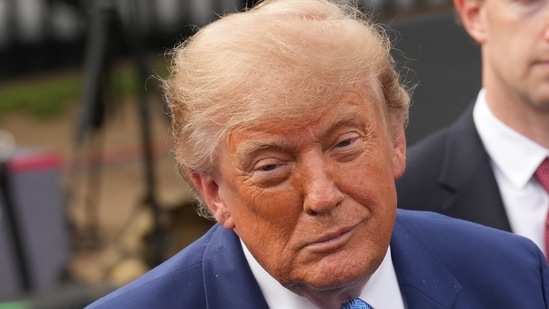
Trump made the remarks after meeting top technology executives in Washington on Tuesday. The agreement calls for companies to put their own safety controls in place and subject them to internal and independent external reviews.
“I think I’m seeing tremendous self-policing. And they understand that they have to self-police,” Trump told reporters outside the White House.
‘The White House Accord on Super Intelligence: A Joint Commitment on Frontier SI Responsibilities’ is a one page document signed by Trump and six executives -- Google CEO Sundar Pichai, Anthropic CEO Dario Amodei, Meta CEO Mark Zuckerberg, OpenAI President Greg Brockman, Nvidia CEO Jensen Huang and xAI founder Elon Musk.
What the accord says
The agreement sets out four layers of voluntary oversight for companies developing advanced AI systems.
{{/usCountry}}The agreement sets out four layers of voluntary oversight for companies developing advanced AI systems.
{{/usCountry}}First, companies are expected to create strong internal controls to monitor their AI models during training and deployment. These controls would cover risks such as cybersecurity, biosecurity and chemical threats.
Second, companies would have internal teams to check whether those controls are working and ensure problems are addressed.
ALSO READ | AI is now SI: Trump makes 'Super Intelligence' official alongside top AI bosses
Third, they would work with independent external auditors or evaluators. These outside reviewers would assess whether the companies' safety controls and monitoring systems are working as intended.
Fourth, each company would establish an independent board committee to review reports from internal teams and external auditors.
The companies also agreed to meet regularly to develop safety standards and best practices.
The accord is voluntary. Trump described it as “morally binding”, but it does not create a new legal regulatory system. The document says the measures could eventually be written into laws or regulations.
Deep Dive
What are the key components of the White House Accord on Super Intelligence?
Why did Trump replace the term 'artificial intelligence' with 'super intelligence'?
How will the voluntary accord impact future AI regulations?
ALSO READ | Multiple AI CEOs met Trump. Only 6 signed his ‘super intelligence’ accord. Who are they?
Trump renamed AI to ‘SI’
The US President has officially replaced the term “artificial intelligence” with “super intelligence”.
“The name has been officially changed by the biggest, the smartest, the greatest people anywhere in the world at this,” Trump said in a post-lunch appearance with attendees. “We’re using the word super because the other word is a fake word.”
Reliance on self-regulation
Anthropic CEO Dario Amodei, who attended the White House meeting, also acknowledged that AI carries “very real risks”. He said the way to address those risks remains under discussion.
ALSO READ | ‘This guy is a monster and nobody knows him’: Sundar Pichai reacts to Donald Trump’s unusual compliment
Trump, however, has strongly backed continued AI development. He said earlier Tuesday that the US should not “stifle” the technology with restrictions, as per Reuters.
The administration has framed AI development as a major economic and strategic competition, particularly with China.
Trump also separately talked about creating a roughly 10-member committee to oversee the overall AI sector.