During the bilateral meeting in Kabul last week, the Taliban top leadership assured India that it will not allow terrorism against third country from its soil but also act against terrorists of Pak-based groups on basis of pin-pointed intelligence.
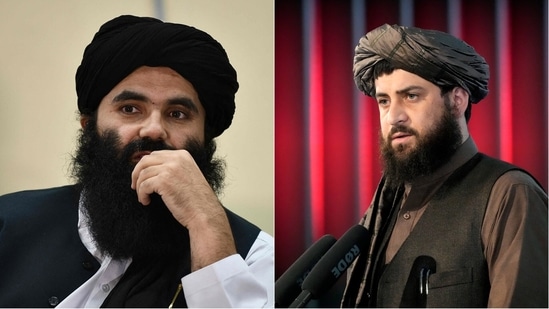
It is learnt that India’s delegation leader and Af-Pak expert J P Singh met Defence Minister Mullah Yaqoob and Interior Minister Sirajuddin Haqqani apart from Foreign Minister Amir Khan Muttaqi at Kabul on invitation from the Taliban government. The meeting came after National Security Advisor Ajit Doval at a Regional Security Summit in Dushanbe asked fellow NSAs of Russia, China, Iran, and Central Asian Republics to enhance the capability of Afghanistan to counter terrorism and terrorists who pose a threat to regional peace and security.
According to information available from Kabul and New Delhi, the Taliban leadership not only promised action against India specific groups based in Pakistan like Jaish-e-Mohammed, Lashkar-e-Toiba and Hizbul Mujahideen but also terrorists from Al Qaeda in the Sub-Continent (AQIS) provided specific information was provided.
The Indian perception from the bilateral meeting is that relationship of the Taliban regime with Al Qaeda is not the same as during Osama bin Laden days in past decades but there is a question mark on the Taliban foot-soldiers commitment and capability to take on the Salafist terrorist group. The AQIS has been trying to take credit for terrorists attacks in the sub-continent with the objective of enhancing its foot-print in the region. On June 5-6, it threatened both Bangladesh and India with suicide bomb attacks for trying to defame Islam and the Prophet.
{{/usCountry}}The Indian perception from the bilateral meeting is that relationship of the Taliban regime with Al Qaeda is not the same as during Osama bin Laden days in past decades but there is a question mark on the Taliban foot-soldiers commitment and capability to take on the Salafist terrorist group. The AQIS has been trying to take credit for terrorists attacks in the sub-continent with the objective of enhancing its foot-print in the region. On June 5-6, it threatened both Bangladesh and India with suicide bomb attacks for trying to defame Islam and the Prophet.
{{/usCountry}}Intelligence inputs indicate that AQIS and the so-called Islamic State of Khorasan Province (ISKP) are also branded products of terror factories based in Pakistan with the involvement of its deep state. India has already informed stake-holders in the region and in the west that any terror attack in Indian hinterland would be met with strong retaliation.
While the top Taliban leadership is committed to act against terror against India, the Modi government has decided to continue with humanitarian aid and revival of infrastructure projects and power stations in the strife torn country. With New Delhi directly engaging the Taliban on shared interests and stability in Afghanistan, the salience of Central Asian republics like bordering Tajikistan in the context of Kabul has gone down a few notches below in priority. Fact is that India no longer needs to operate a hospital across Amu Darya or have a presence at a military base in Tajikistan, which is opposed to the Taliban regime and is virtually caught in a Chinese debt trap.
The direct dialogue with Taliban will not only take care of India’s strategic interests in the region but also keep Pakistan and its Middle-East allies like Turkey on tenterhooks and also act as a deterrent to any mischief against New Delhi.