A WEARY world may not want to hear it, but the war in Ukraine is intensifying, not ending. As it deepens, the conflict is also expanding. Increasingly, serious-minded governments across northern Europe are planning to defend themselves against Russia for decades to come.
Prosperous, prudent Sweden is a case in point. It is only a couple of years since the Nordic country joined NATO, driven by Mr Putin’s aggression to abandon a two-centuries-old policy of neutrality, bordering at times on
A WEARY world may not want to hear it, but the war in Ukraine is intensifying, not ending. As it deepens, the conflict is also expanding. Increasingly, serious-minded governments across northern Europe are planning to defend themselves against Russia for decades to come.
Prosperous, prudent Sweden is a case in point. It is only a couple of years since the Nordic country joined NATO, driven by Mr Putin’s aggression to abandon a two-centuries-old policy of neutrality, bordering at times on wide-eyed pacifism. As Swedes head to the polls on September 13th, support for Ukraine is such a consensus that the war has barely featured in debates. All major parties, including those on the populist-right and -left that once flirted with sympathy for Russia, endorse financial and military help for Ukraine, deep distrust of President Vladimir Putin and the need for strong national defences.
In Stockholm it is striking how often senior figures use the word “naive” to describe what was their country’s approach to Russia as recently as the late 2000s. Bigwigs on the right and left are at pains to show how coldly realistic they now are.
Under its current, conservative coalition government, Sweden has been outspoken in calling Russia weaker than it pretends to be, accusing Mr Putin and his aides of using dodgy statistics to hide the parlous state of its finances while using repression to silence public dissent. Yet the prime minister, Ulf Kristersson, does not claim that Mr Putin’s war-fever is about to break. Instead, in an interview on August 27th with The Economist, Mr Kristersson says he sees “no signs at all that Russia has changed its basic logic behind this war. They want to conquer Ukraine basically and we don’t know what kind of aims or goals they have after that.”
Mr Kristersson concedes that Ukraine is feeling increasing pain, too, as Russian missiles and jet-powered drones bring terror to cities left vulnerable by a growing shortage of interceptor missiles—a problem that he notes has been made worse by war in the Middle East, which has burned through stocks. But in the next breath, he warns Russia not to expect Ukrainian resistance to crack, calling the country extremely resilient.
Seen from Stockholm, the collision of two unstoppable forces—Russian neo-imperialist ambition and Ukrainian patriotism—has generated a stalemate. The costs of conflict are rising, but both sides consider defeat still more agonising. The prime minister admits that he has no idea when the war might end. “But how it ends will define the security situation in our part of the world for at least a generation to come,” he says.
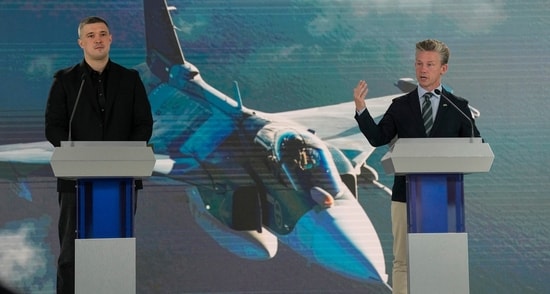
To prepare, his government has sought to bind Sweden to Ukraine as a long-term defence and industrial partner, donating and selling Gripen fighter-jets to Ukraine’s air force. It is expanding military conscription and deepening defence and security ties with its Nordic and Baltic neighbours, as well as with Britain, France, Germany, the Netherlands and Poland.
The line on Russia is every bit as tough on the centre-left, which polls suggest is likely to win this month’s elections. Leading figures in the Social Democratic Party, which spent the cold war loudly opposing NATO membership, now describe a consensus across the political spectrum that Russia poses a “long-term existential threat” for the foreseeable future, requiring Sweden to make a 50-year commitment to strengthening its national defences, both military and societal.
In Stockholm an end to Ukraine’s war is both longed for and feared. Senior figures worry that European unity, which has hitherto held up impressively, will be challenged as countries farther away from Russia demand warmer, more normal ties with Mr Putin. The foreign-affairs spokesman for the Social Democrats and potential future foreign minister, Morgan Johansson, worries that a ceasefire will lead only to a frozen conflict in Ukraine, not a durable peace. Asked whether Sweden will ever be able to trust Russia, he imagines a far-off future in which a change of regime brings to power a Gorbachev-like reformer. Even then, says Mr Johansson, Swedes “would have to keep our guard up” and avoid mistakes made 25 years ago, when political leaders stopped fearing Russian aggression and shrank the country’s defences.
Sweden is one of the most vocal advocates for Ukraine to be given a credible path to EU membership, as soon as Ukraine can show progress on corruption and governance, to anchor it to the West and shore up its democracy. Other big players, such as France, are backers of Ukraine but wary of EU enlargement. Some EU members with lots of farmers worry about competition from Ukraine’s arable industry.
No optimism, but no palatable alternatives, either
These differences make Sweden an unusually good place to ponder the fragility of Western unity around the war, especially if Donald Trump tries to force Ukraine to settle for an unfair, insecure peace. Sweden has sought to maintain good relations with Mr Trump. Privately, officials fret about what would happen if America—bent on achieving peace at any cost—were to forbid allies from sending American-made weapons and parts to Ukraine, cut off vital battlefield intelligence or threaten to pull its troops out of the Baltics or Poland. Politicians in Stockholm express hopes that America knows it would pay too high a political price. A senior figure suggests that Mr Trump may now have lost interest in Ukraine, preferring to focus on Iran and China.
Ukraine’s allies cannot easily see a path to the war ending well. They fear a bad peace, for Ukraine and for their own security. They distrust Russia absolutely, and expect to do so for years to come. A stalemate, then: a bad outcome better than all others.
One Subscription.
Get 360° coverage—from daily headlines
to 100 year archives.
Archives
HT App & Website