
Beijing is building nuclear weapons at a “hot and heavy” pace, President Donald Trump said Friday, a day after he met Chinese leader Xi Jinping and Russian President Vladimir Putin and the three countries agreed to talks on preventing nuclear proliferation.
While Russia and the U.S. lead the world by each possessing thousands of nuclear weapons, China is rapidly expanding its nuclear arsenal. In its annual review of China’s military buildup, the Pentagon said China’s stockpile of nuclear warheads remained in the low 600s through 2024, but the country was on track to have more than 1,000 warheads by 2030.
Suggested For You
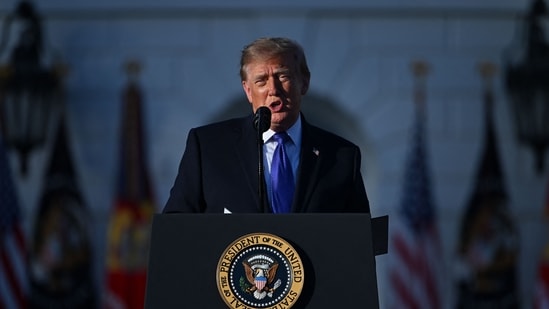
“They'll catch us within 10 years,” Trump said of China's nuclear buildup during a news conference at the White House. “They're going at it hot and heavy, but they have a lot.”
Deep Dive
What did the US, China and Russia agree to discuss at their summit?
Why was China’s agreement to trilateral nuclear talks notable?
Did the summit agreement require China to reduce its nuclear arsenal?
Trump's public remarks were his first since his controversial summit with Xi and Putin, leaders of countries long considered U.S. rivals, in the southern Chinese city of Shenzhen on Thursday. Secretary of State Marco Rubio, who spoke to reporters alongside Trump on Friday, said it was imperative for the three nuclear powers to talk.
“These three countries possess the overwhelming majority of nuclear weapons on this planet," Rubio said. “The idea that these three leaders should not engage on a regular basis is not just absurd, it’s dangerous.”
Also read: Trump says Iran deal will be on terms that are ‘acceptable’ to him: ‘We want a real deal’
After the trilateral meeting, the leaders issued a joint statement, saying they “affirmed that a nuclear war cannot be won and must never be fought" and “will conduct a dialogue on reducing nuclear risks and preventing the proliferation of nuclear weapons.”
Prior to the meeting, observers had doubted if China would agree to nuclear talks. With a much smaller nuclear arsenal, Beijing had resisted joining nuclear arms control talks with the U.S. and Russia.