
 E-Paper



US denies threat to Imran, his own advisors let Pak PM down
While victimhood may fetch Imran Khan electoral votes in future, that the US is going to use a junior level State Department official to threaten Islamabad is rather unfathomable.

 Prefer HTon Google


Beaten by electoral calculus conjured up by a combined Opposition in the National Assembly, Pakistan Prime Minister Imran Khan is trying to gain public sympathy by portraying himself as a victim of a US-hatched conspiracy to oust his government. The so-called threat letter in all probability is a crash telegram by the Pakistan Ambassador to the US about an informal conversation with an Assistant Secretary-level officer of the State Department.
Even though news reports indicate that the threat letter is covered under Official Secrets Act and cannot be disclosed in full to the Pakistani public at large, the US State Department has categorically denied that any government agency or official sent such a so-called threat letter to the Imran Khan government.
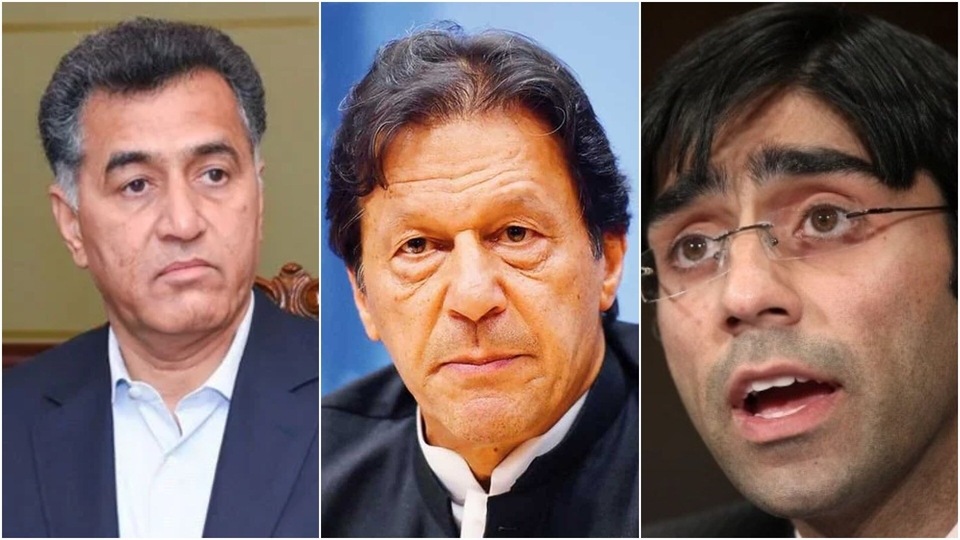
While victimhood may fetch Imran Khan electoral votes in future, that the US is going to use a junior level State Department official to threaten Islamabad is rather unfathomable. Fact is that Imran Khan has been let down by his own macho arrogance and immaturity of his two key advisors—National Security Advisor Moeed Yusuf and former DG (ISI) Lt Gen Faiz Hameed.
Within three months of his being appointed at Pak NSA, Yusuf in an interview to Financial Times in August 2021 virtually threatened US President Joe Biden for not having made so much as a telephone call to Prime Minister Imran Khan since his appointment in January 2021. He said that Pakistan had other options (read China and Russia) if US President Joe Biden continued to ignore Pakistan’s leadership.
This was the same Yusuf who scuttled the meeting of Shanghai Cooperation Organization (SCO) NSAs by deliberately projecting a fictitious map of India in September 2020 because of which Indian NSA Ajit Doval walked out of the meeting. Yusuf may have scored a point with his political masters by showing part of Jammu and Kashmir and Junagadh as part of Pakistan as part of cartographical jugglery, but he blocked a vital channel of communication with NSA Doval. Yusuf may have studied strategy and political affairs as a scholar and as part of US-funded think tank circuit on the east coast, Doval has worked on Pakistan on the ground for more than 50 years of his celebrated life.
Yusuf thought that Pakistan would become indispensable to the US after the withdrawal of its troops from Afghanistan and after ISI under Lt Gen Faiz Hameed foisted the Haqqani Network in Kabul. What the Pak NSA and the then DG ISI did not realize was that after the Afghan withdrawal, the US had taken its eyes off the Af-Pak region (except for terror activities) and started focusing on Indo-Pacific till the Russian invasion of Ukraine.
Simply put, Pakistan was not that relevant to policymakers in the Biden administration and the entire ISI strategy rebounded on Islamabad itself with Kandahar Taliban under Mullah Yaqoob totally at loggerheads with the Haqqani gang led by Sirajuddin Haqqani in Kabul. But this was not all. The Pakistani plan that the Taliban in power at Kabul would force their ideological brothers across Durand Line, the Tehreek-e-Taliban Pakistan (TTP), to settle with Islamabad also got junked with the Islamist group refusing to tow the line of their brothers in arms and continuing to attack the Pakistan army.
While the Yusuf-Hameed combination floundered on Kashmir and Afghanistan moves, their master, Imran Khan, committed political hara-kiri by taking on powerful Pakistan Army Chief Gen Qamar Jawed Bajwa by not accepting his choice for replacing Gen Hameed as ISI Chief. Much as he wanted to keep Hameed as DG (ISI), Imran Khan had to eat crow and tow the line of Gen Bajwa and appoint Gen Nadeem Anjum as the present head of the intelligence agency.
Unlike the cowboy tactics of PM Khan, Gen Bajwa was clear that Pakistan could not be turned into Islamic Emirate like Afghanistan under the Taliban and found hardly any tactical or strategic returns in a continuous war-like situation with India on the Line of Control with both armies firing at each other.
However, Bajwa’s erstwhile protégé took international diplomacy to a new level by calling Prime Minister Narendra Modi “Hitler” and using the Beijing Winter Olympics platform last month to launch a tirade against the US. While being subservient to Beijing leadership, Khan committed a diplomatic blunder by reaching Moscow on the day President Putin ordered the Red Army to invade Ukraine. He subsequently criticised the EU for pressurizing Islamabad to vote against Russia on the UNSC resolution on the Ukraine war. Rather than explaining Pakistan's own stand on the Ukraine war, he questioned both the US and the EU for not putting pressure on India for abstaining at the UNSC. The same man later praised the Indian foreign policy for being independent and the Indian Army for not being corrupt and indirectly hinting that the Pakistan Army was corrupt.
PM Khan does not need a foreign hand to oust him, he is his own worst enemy.


