The jury that heard the high-profile trial of Lindsay Clancy, the Massachusetts mother accused of killing her three children, has begun speaking publicly after the case ended in a mistrial. Several jurors described emotional deliberations, heated disagreements and a nearly unanimous panel that remained deadlocked because of one holdout juror.
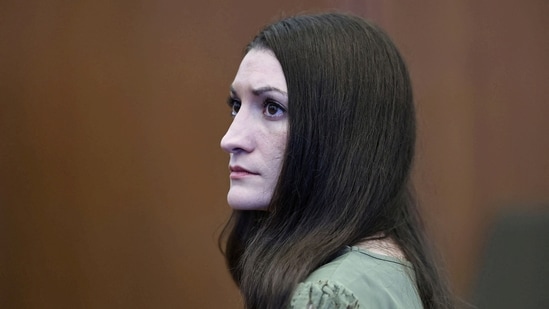
Juror interviews aired by NBC10 Boston and WBZ-TV have offered the first detailed look inside the jury room. Three female jurors, including the foreperson, told NBC that the panel was ready to rule that Clancy was not guilty of murdering her three children due to insanity, but one juror disagreed.
Prosecutors have not yet announced whether they will seek a retrial. A status hearing is scheduled for September 29.
Five things jurors have said about Lindsay Clancy's mistrial
1. Most jurors believed there was too much “reasonable doubt.” An anonymous juror, No. 5, who spoke to WBZ-TV, said the prosecution never eliminated reasonable doubt. “At the end of the day, there was so much doubt. The prosecution didn't have a figurative smoking gun,” the juror said.
{{/usCountry}}1. Most jurors believed there was too much “reasonable doubt.” An anonymous juror, No. 5, who spoke to WBZ-TV, said the prosecution never eliminated reasonable doubt. “At the end of the day, there was so much doubt. The prosecution didn't have a figurative smoking gun,” the juror said.
{{/usCountry}}The juror added that there was never a moment during the trial when the evidence made guilt certain beyond a reasonable doubt.
“There was not a single moment throughout the presentation of that case where you could say 'Yup, 100% I'm certain she did it.' There was too much gray area,” the juror said.
The foreperson in the jury said, “Everything proved that she loved her children so she had to have snapped and not known what she was doing.”
2. Jurors believed Clancy suffered a severe mental health crisis. The same juror described Clancy as someone experiencing a profound psychiatric crisis. They concluded that Clancy was not acting with a clear state of mind.
“This is a woman who was not mentally healthy. She was someone who was in the throes of a significant mental health crisis.”
The defence also argued Clancy met the legal standard for not guilty by reason of insanity. Prosecutors disputed that claim during the trial.
The foreperson who interviewed with NBC also said, “We weren't trying to figure out if she murdered the children. She did and she's admitted that. We're trying to figure out - did she know right from wrong at that time.”
3. A lone holdout juror prevented a verdict. Multiple jurors told NBC that the panel was split 11-1 during deliberations. According to the foreperson, the holdout juror admitted there was reasonable doubt but still refused to vote for an insanity verdict.
The foreperson said she had begun filling out the verdict forms before the juror changed course, leaving the panel deadlocked. The holdout juror has not publicly responded to those claims.
A fellow juror said, “So, I'm going to kind of defend that individual in a sense. There were some big personalities in that room. But at the end of the day, it just came down to an inability to move past your convictions.”
They further added, “It's not simply because of the fact that he had an opposing view or this person felt like she was guilty. It was the inability to back that up with any logic.”
4. The jury room was filled with arguments, tears and frustration. The foreperson described the deliberations as an "emotional roller coaster." She said jurors cried, hugged and struggled with the weight of the case.
According to NBC, the discussions became so heated that shouting could occasionally be heard outside the jury room.
5. Reasonable doubt and the vote for conviction question whether Clancy received a fair trial. Juror No. 5 argued that acknowledging reasonable doubt while still voting to convict would violate constitutional principles.
The juror told WBZ-TV, “To not follow that reasonable doubt and to acknowledge that it's there, you morally and legally cannot convict somebody for that.”