Millions of acres of the Everglades look the way they do today because of a decision made well over a century ago, one whose effects on the region's fire and water cycles have outlasted the tree's own historic peak. In the early 1900s, Florida was racing to turn its swampland into farms and towns, and a fast-growing tree from Australia looked like just the tool for the job. The tree, Melaleuca quinquenervia, was planted along canals and levees to soak up standing water and keep soil from blowing away. In fact, a 2006 study in the journal Castanea by researchers F. Allen Dray Jr., Bradley Bennett and Ted Center has traced the tree's true arrival in Florida to 1886, through more than a dozen individual introductions from six different source populations, not all of which came directly from Australia. Some of them arrived from nurseries and collections elsewhere where the species had already taken hold. By 1906, it was given an official role to help the land managers with the drainage work.
How a landscaping idea spiraled out of control
The study explains that these introductions continued for decades, as nurseries and government agencies added the tree to their collections and test plots. The paper mentions USDA records of one of the earliest shipments logged in the agency's own paperwork, in 1900, misidentified under a different species name, but still successfully grown out in Florida nurseries, adding yet another source population to the mix. By the 1920s, the researchers say, melaleuca had become naturalized in southern Florida, meaning that it was reproducing and spreading in the wild without further help from people. Once established, it could spread its windblown seeds to new ground far from its origin. The study notes that gaps in the historical record make it difficult to pinpoint when this spread accelerated.
A tree that rewrote fire and water in the Everglades
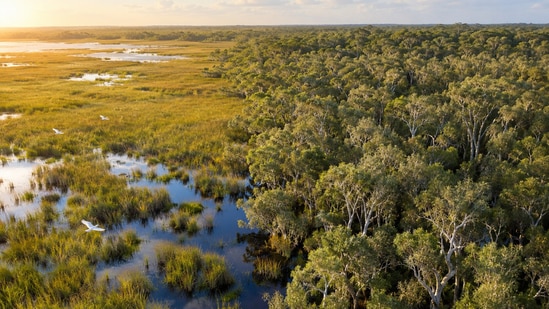
In the decades that followed, as the tree spread on its own, land managers estimated melaleuca had spread to cover 500,000 acres of south Florida wetlands, including much of the Everglades. In a 2012 review article in BioControl by Ted Center along with six co-authors, the authors state that melaleuca has been shown to alter fire regimes, hydrology, and surface water flow, and that years of management have reduced the amount of habitat under melaleuca. This is important because the native sawgrass marsh requires slow fires in shallow waters that remove old plant material without damaging the moist ground beneath. The review notes that melaleuca's thick bark helps it survive fires that might normally kill native plants. That protection, however, applies to the trunk and bark alone; it doesn't extend to the crown. When melaleuca stands do burn, the paper explains, flames can leap explosively into the treetops as the oil contained in the leaves catches fire, creating a different kind of fire from the traditional marsh fire.
{{/usCountry}}In the decades that followed, as the tree spread on its own, land managers estimated melaleuca had spread to cover 500,000 acres of south Florida wetlands, including much of the Everglades. In a 2012 review article in BioControl by Ted Center along with six co-authors, the authors state that melaleuca has been shown to alter fire regimes, hydrology, and surface water flow, and that years of management have reduced the amount of habitat under melaleuca. This is important because the native sawgrass marsh requires slow fires in shallow waters that remove old plant material without damaging the moist ground beneath. The review notes that melaleuca's thick bark helps it survive fires that might normally kill native plants. That protection, however, applies to the trunk and bark alone; it doesn't extend to the crown. When melaleuca stands do burn, the paper explains, flames can leap explosively into the treetops as the oil contained in the leaves catches fire, creating a different kind of fire from the traditional marsh fire.
{{/usCountry}}The same review adds that dense melaleuca stands alter the layers of plant life in the marsh, blocking light and crowding out native vegetation as open sawgrass habitat becomes closed forest. The co-authors note that the change also alters the way nutrients move through the ecosystem and the ability of native plants and animals to bounce back after disturbances such as fire or flooding.
Lessons for today
The 2012 review shows how scientists have released insects like a specialized weevil and a sap-feeding psyllid that attack only melaleuca, as part of a broader effort that has measurably shrunk the tree's range since the 1990s. That reduction is why the acreage figure belongs to a past peak rather than melaleuca's footprint today; what has persisted, even as the tree's own range has shrunk, are the shifts it caused to the marsh's fire behavior and water flow. But the larger lesson still holds: a plan to fix one problem, by draining a swamp, created a new one that has outlived the people who planted the first tree.