
 E-Paper


New York Has Cut Violent Crime. Making Residents Feel Safe Is Trickier.
The NYPD commissioner is looking to tackle disorderly conduct and other nuisances that dampen New Yorkers’ perceptions about the city’s quality of life


 Prefer HTon Google


New York Police Department Commissioner Jessica Tisch has driven down violent crime in her first nine months on the job, with the nation’s largest city hitting a record low in shootings in 2025.
The next challenge: Making New Yorkers feel safe.
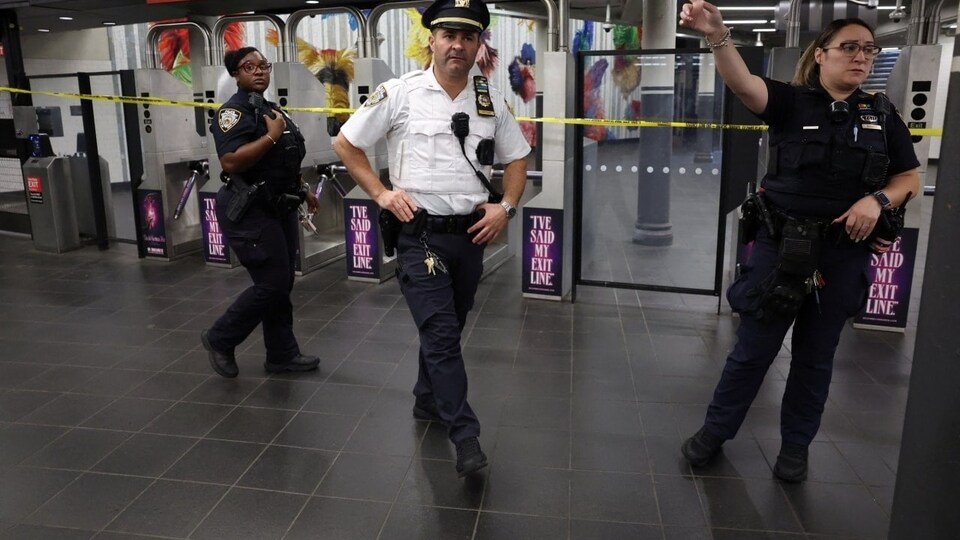
The department is placing a new emphasis on quality-of-life issues that contribute to a persistent feeling of unease. Police precincts around the city now have teams of officers dedicated to responding to nonemergency complaints, including about disorderly conduct, drug use, homeless encampments and abandoned vehicles. The move comes as President Trump looks to paint a dark picture of life in liberal metropolitan areas, with an eye toward asserting a larger federal role.
The NYPD’s goal is to address “everyday concerns that people have that may not rise to the level of a crime, but nonetheless erode the sense of order in our streets and in our neighborhoods,” Tisch said in an interview.
In addition to everyday New York concerns, Tisch is operating against the backdrop of two high-profile shootings that attracted national attention, jarring both residents and visitors.
An out-of-state gunman recently walked into a Midtown Manhattan office building and killed an NYPD officer and three other people, placing public safety at the forefront of a closely watched mayoral race. And just blocks away, UnitedHealthcare Chief Executive Brian Thompson was fatally shot last year outside a hotel by alleged gunman Luigi Mangione, who prosecutors say had a grudge against the medical insurance industry.
Trump, meanwhile, has suggested he would seek greater federal control over cities due to public-safety concerns. He has deployed National Guard troops to Washington, D.C., claiming the city had been overrun by criminals, an assertion city leaders say is untrue. While the president has unique powers in the nation’s capital, on Friday he said he plans to focus next on crime in Chicago. “Then we’ll help with New York,” he said.
Tisch said she is confident that the NYPD can handle crime without federal intervention.
Adam Gelb, president of the Council on Criminal Justice, a nonpartisan think tank, said the NYPD and other police departments are wise not to ignore public perception. While crime may be going down on paper, people form their opinions from what they see on their streets, in their social-media feeds and on the local news, he said.
“If you’re running a city and you’re not deploying strategies to directly combat fear, then you’re going to face more pressure to crack down, simply make arrests and move away from the comprehensive and balanced strategies we know can work,” Gelb said.
Brian McGinn, vice president of security for the 34th Street Partnership, a business-improvement district covering parts of Midtown Manhattan, credited Tisch with crime reductions this past year, but said quality-of-life issues remain a priority in Manhattan. An area near his district is home to a methadone clinic and needle-exchange locations, which have attracted people who openly use drugs on the streets.
“If tourists and shoppers see people shooting up on the streets, that gives a negative perception,” McGinn said. Officers in the new unit, he said, have been in place in the area for about eight weeks, addressing drug use and other concerns such as public drinking, urinating and illegal vending.
Tisch said her initiative, which began citywide this summer, isn’t a return to the “broken windows” concept popularized in the 1990s by then-Mayor Rudy Giuliani. That approach favored a strict crackdown on lower-level offenses, on the belief that letting petty crime fester created an environment for more serious lawlessness. The mayor’s strategy had its champions, but he also faced accusations of overpolicing and racial profiling.
Officers have been given broad discretion on the way they address an issue, Tisch said. “Not everything has to be an arrest or summons,” she said. “It’s a completely different approach and different goals.”
A Manhattan-raised Harvard graduate and longtime public servant, Tisch became the commissioner last year during a tumultuous time for New York City Mayor Eric Adams, who was facing a federal corruption case. Adams, who is running for re-election, had his criminal case tossed earlier this year after the Justice Department sought the dismissal of the charges, saying they hindered his cooperation with Trump’s immigration-enforcement efforts.
The NYPD has also created zones in the city with historically high crime, flooding those streets with additional officers and using data to pinpoint the hours and days of the week when a police presence is most needed. A resident walking in one of the zones can expect to see patrol officers throughout the trip, said Michael Lipetri, the NYPD’s chief of crime control strategies.
The strategy has proven effective in the city, he said. NYPD records showed that as of Aug. 17, violent crime has fallen across nearly all categories, including an almost 20% drop in the number of murders to 201, from 250 during the same period last year.
Write to James Fanelli at james.fanelli@wsj.com


