Our conspiracy-minded, deep-state-vigilant president has suggested that there is no great scandal surrounding the life and death of Jeffrey Epstein, but there is a Jerome Powell scandal.
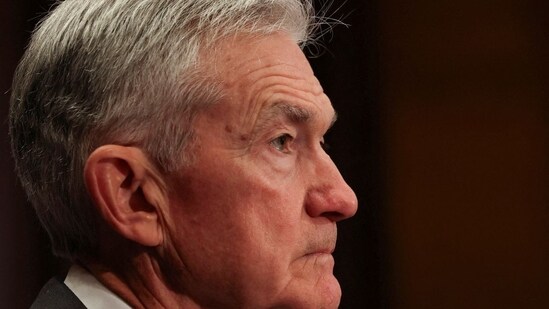
Federal Reserve Chair Jerome Powell in June.
While we are assured that Mr. Epstein’s long history of ties to politicians, royals, Wall Street figures and others stemmed only from the man’s generous hospitality, magnetic personality and promise of evenings of Socratic interlocution, Mr. Powell’s sin is to be the first bureaucrat in history to oversee large overruns in a construction budget. It seems renovations to the Federal Reserve’s new headquarters in Washington are on the lavish side, and the chairman might even have been a little economical with the truth in his public accounting for them.
Scandals, like beauty, are in the eye of the beholder. They play an instrumental role. We choose to believe a conspiracy because it suits our larger narrative and discount another when it doesn’t. My conspiracy is your screw-up.
So it must be that the “Epstein Files,” whatever they are, aren’t as helpful to Donald Trump and his conspiracy sniffer dogs as they’d hoped. Perhaps even unhelpful.
Mr. Powell’s architectural transgressions, however, are very helpful. It is no secret that Mr. Trump wants the Fed chairman gone. Just last week he was complaining again about the man he calls “Too Late Powell,” telling reporters he was doing a “terrible job” and that interest rates should be “3 points lower” than the current target 4.25% to 4.5% fed-funds rate.
I shall refrain from the pearl-clutching of much of the media about Mr. Trump’s efforts to pressure the Fed to be more accommodating. Since the Fed gained true independence in the 1950s, almost every president has complained that the central bank was holding back the economy with high interest rates.
What’s more, there are reasonable grounds for thinking Mr. Powell has gotten things badly wrong. Even the Fed agrees it was too slow in responding to the inflationary surge that followed the Covid-19 pandemic. You don’t have to believe the theories that a politically partisan Mr. Powell worked to help President Biden and harm Mr. Trump to think he erred repeatedly on the side of easy money in the past four years and may now be overestimating the inflationary risk today.
The problem, though, is that replacing him with someone committed to doing Mr. Trump’s bidding would make things much worse.
If it’s true that Arthur Burns, Fed chairman under President Richard Nixon, said that the Fed’s independence is “so precious that we dare not risk exercising it,” it is also true that the central bank’s incompetence is so proprietary that a president dare not risk trying to correct it.
However bad Fed policy is, if markets think the central bank is run according to the president’s priorities, the likely consequence will be tighter, not easier, money. If Mr. Trump could really find a person on the planet who thinks rates should be “3 points lower” than they are—pushing the policy rate down to 1.25%, a negative real rate of about 1.5% in an economy the president himself touts as “booming”—yields on everything from Treasurys to corporate bonds would surge on confident expectations that the Fed was lighting an inflationary bonfire.
Central-bank independence isn’t divinely ordained. The Fed’s policymaking framework was largely set by the Treasury until 1951. Most countries have had independent central banks only in the past 50 years—in the post-Bretton Woods global monetary regime. There are lots of reasons—from gold to crypto to artificial intelligence—to think our current model of monetary-policy management may need an overhaul.
But there’s one important sense in which independence is more important now than ever. The crisis of democracy on display in Washington—in which fiscal prudence has been completely sacrificed to immediate political objectives—is precisely why we need a monetary-policy architecture that constrains rather than amplifies politicians’ desires.
There’s another sense in which Mr. Trump should be careful what he wishes for. History suggests the propulsive logic that makes central banks lean against political preferences is hard to shake, even by a determined president.
Ronald Reagan tangled repeatedly with Paul Volcker in the 1980s and eventually replaced him with Alan Greenspan. Five years later his Republican successor, George H.W. Bush, blamed Mr. Greenspan in part for his re-election defeat after the Fed kept policy tight during the 1992 recession.
In his epic history of the Fed, the late Allan Meltzer recounts the case of Harry S. Truman and William McChesney Martin. In 1951 the Fed was chafing under the Treasury’s monetary control, forced to cap bond yields at 2.5% to assist in the Korean War effort. Martin was the Treasury official running point, and when Truman forced out Fed chairman Thomas McCabe, he replaced him with his favorite at Treasury. The new Fed boss promptly became one of the most famously hawkish central-bank governors, royally infuriating a succession of presidents, starting with Truman himself, who, it is said, later called Martin a “traitor.”
Surely that would never happen to Mr. Trump?
Stay updated with US News covering politics, crime, weather, local events, and sports highlights. Get the latest on Donald Trump and American politics along with Horoscope 2026.

 E-Paper