Nearly three decades after Tupac Shakur was gunned down in a drive-by shooting in Las Vegas, a Nevada jury has found Duane "Keffe D" Davis guilty of first-degree murder. The verdict, delivered on September 1, closes a chapter that remained open despite countless investigations and conspiracy theories.
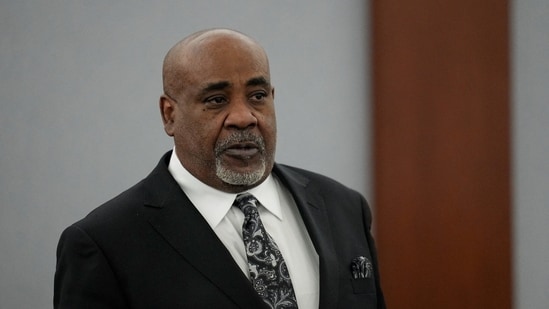
Also read: Tupac Shakur murder trial: Ex-gang leader Duane 'Keffe D' Davis found guilty
Davis is convicted of Tupac Shakur's murder
Davis, 63, was convicted of first-degree murder with a deadly weapon, committed to promote or assist a criminal gang. His sentencing is scheduled for October 13, and he faces a potential life sentence.
Deep Dive
What evidence led to Duane 'Keffe D' Davis's conviction in Tupac Shakur's murder?
Why did the investigation into Tupac Shakur's murder take nearly 30 years to conclude?
How did Tupac Shakur's altercation with Orlando Anderson lead to his murder?
After the verdict, Davis told the judge he planned to appeal before raising his fist as he was escorted from the courtroom.
Prosecutors argued that Davis did not fire the fatal shots, but he did orchestrate the killing following a confrontation between his nephew, Orlando "Baby Lane" Anderson, and members of Death Row Records. Tupac was with the co-founder Marion "Suge" Knight on the night he was shot.
Davis became the first and so far only person convicted in connection with the rapper's killing. Davis's own statements, in which he openly and again admitted to being inside the white Cadillac from which the fatal rounds were fired, were the primary piece of evidence in the case.
{{/usCountry}}Davis became the first and so far only person convicted in connection with the rapper's killing. Davis's own statements, in which he openly and again admitted to being inside the white Cadillac from which the fatal rounds were fired, were the primary piece of evidence in the case.
{{/usCountry}}Prosecutor Binu Palal urged the jury to believe Davis and convict him during final statements.
He argued that Davis had been telling people "that he is responsible for Tupac Shakur's murder" for years through police interviews, movies, podcasts, and his memoir.
In a secret 2008 police interview regarding the killing of fellow rapper Notorious B.I.G., actual name Christopher Wallace, he admitted to authorities his involvement in Shakur's demise.
In his 2019 memoir, Compton Street Legend, Davis went into further detail about his involvement.
However, a protection arrangement he had made with authorities that had prevented any criminal charges from being brought was nullified by his book and media appearances, and the court decided that his police interview could be used in the murder prosecution against him.
Throughout the trial, Davis' defense team made an effort to convince the jury that his remarks were fabrications, bravado and exaggeration used to generate revenue and sell books.
Michael Sanft, his attorney, encouraged the jury to condemn his client as a liar. “There's no proof,” he told the jury.
Palal told the jury, “He's [Duane Davis] the shot caller - in every instance in every iteration he's the leader of the South Side Crips. When you have the shot caller sitting shotgun when shots are fired, there's no doubt he's responsible.”
Prosecutors later dropped a gang enhancement allegation, citing witness logistics.
Tupac's sister, Sekyiwa "Set" Shakur, was present when the verdict was announced. She was seen embracing prosecutors and crying after the jury's decision.
September 7, 1996: the night Tupac Shakur was shot
The events leading to Tupac's death began on September 7, 1996. His night started with him attending the Mike Tyson-Bruce Seldon heavyweight boxing match at the MGM Grand in Las Vegas.
After the boxing match ended, security cameras captured Tupac, Suge Knight and several members of Death Row Records assaulting Orlando Anderson in a hotel corridor.
Anderson, who is a member of the South Side Compton Crips, had earlier been accused of stealing a Death Row medallion from one of Tupac's associates. Investigators at the time had identified this very assault as the immediate trigger for the retaliation that followed.
In his memoir, Davis wrote, “We couldn’t let no record company studio gangsters do us like that.”
Later that evening, Tupac and Knight drove east on Flamingo Road in a black BMW toward Club 662, where Tupac was scheduled to perform.
According to Davis's memoir, he and three other men, his nephew Anderson, DeAndre “Dre” Smith, and Terrence “T-Brown” Brown, eventually spotted Shakur on the street in Las Vegas that night. All three members have died since the incident.
At around 11:15 pm, a white Cadillac pulled alongside the BMW at a red light near the intersection of Flamingo Road and Koval Lane. Gunfire erupted from the Cadillac and struck Tupac multiple times. Knight also suffered minor injuries from shrapnel.
Davis wrote about handing a handgun to the rear of the Cadillac as they got closer to Shakur's car, but he did not specify who fired the lethal bullets. Which of the two people in the backseat, Smith or Anderson, shot Shakur is still unknown.
Davis, in his book, wrote, “No words exchanged, the time for talking had passed.”
Tupac was rushed to University Medical Center in Las Vegas. Doctors performed several surgeries where his right lung had to be removed as well. However, his injuries proved fatal.
Tupac died on September 13, 1996, at the age of 25 after spending six days in intensive care.
Why did the case remain unsolved for decades?
Despite one of the most high-profile murder investigations in modern American history, no arrests were made for nearly three decades.
Several factors complicated the investigation.
Many potential witnesses refused to cooperate with police because of gang affiliations or fears of retaliation. Investigators also faced a culture of silence surrounding both Death Row Records and rival gang members in Compton.
Orlando Anderson repeatedly denied involvement in the shooting. He was never charged in the case and died during an unrelated gang shooting in 1998. The deaths of the other two members in the Cadillac left Duane Davis as the only surviving person believed to have been inside the vehicle.
Over time, the investigation slowed and was widely regarded as one of America's most notorious cold cases.
The conspiracy theories that never disappeared
The absence of arrests created fertile ground for conspiracy theories.
For years, some fans insisted Tupac had faked his death to escape fame. Theories claimed he was living secretly in Cuba, New Zealand, Malaysia or elsewhere under a new identity.
One of the driving forces of these theories was his last album. When Tupac's posthumous album Makaveli was being promoted in November 1996, with billboards that read "Listen very carefully" and a music video for the lead single "Hail Mary," which showed Tupac literally rising from the earth to kill all of his enemies.
Knight continued to promote this hypothesis from behind the bars in 2017, telling Ice-T in a TV interview, "With Pac, you never know." His son Jacob also claimed that Tupac is currently residing in Malaysia and is working on a new record.
Others pointed to alleged sightings, digitally altered photographs and unverified social media posts as "proof" he remained alive.
None of those claims were ever supported by credible evidence.
Also read: Who really shot Tupac Shakur? Timeline of the 1996 murder as Duane 'Keffe D' Davis is found guilty
Duane Davis is arrested
In 2023, Davis was taken into custody on suspicion of acquiring a firearm "for the purpose of seeking retribution against" Shakur and Knight. The gun Davis acquired the night of the shooting, according to the prosecution, was specifically meant to exact revenge.
Following Davis's arrest, Las Vegas police admitted at a press conference that they were able to "reinvigorate" the case by using his public appearances to promote the memoir.
The Las Vegas Metropolitan Police Department said, “We knew at this time that this was likely our last time to take a run at this case to successfully solve this case and bring forth a criminal.”
In an effort to distance himself from the book's contents, Davis's defense has argued that co-writer Yusuf Jah added incorrect information and exaggerated events in an effort to sell copies. His attorneys contend that the book was just meant to be entertaining.
However, at the initial hearing on June 30, Clark County District Judge Carli Kierny declared that the memoir would be acceptable evidence, stating that Davis had not advertized the book as a work of fiction but rather “encourages people to buy it to get the real truth.”