
 E-Paper


US court denies Donald Trump's immunity in Capitol police lawsuit
Federal appeals court rejects Trump's immunity claim in Capitol Police officers' lawsuit over Jan. 6, allowing the case to proceed.

 Prefer HTon Google


A group of U.S. Capitol Police officers who sued former President Donald Trump over his role in the Jan. 6, 2021, insurrection at the U.S. Capitol won a legal victory on Friday.
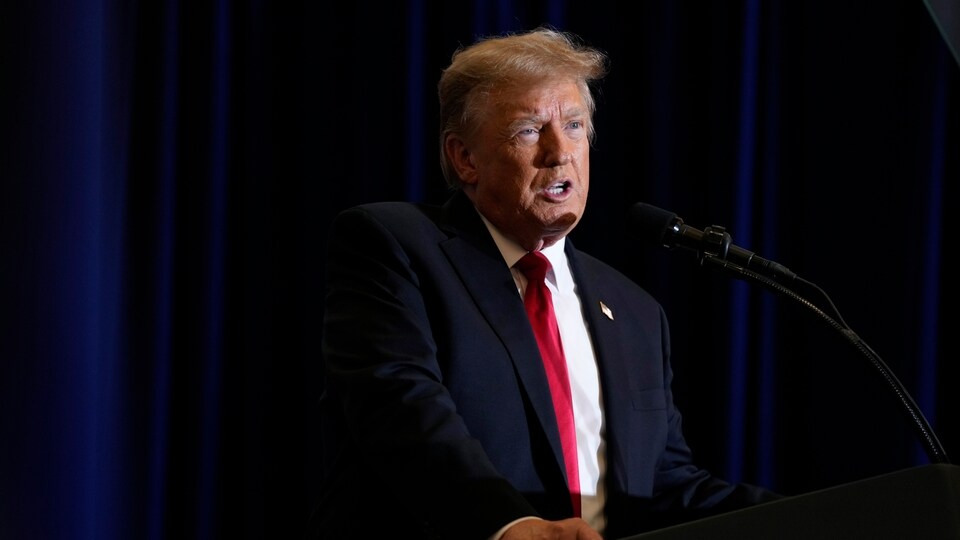
A federal appeals court ruled that their lawsuit can proceed, rejecting Trump’s claim that he has absolute immunity from civil lawsuits. The suit accuses Trump of inciting the violent mob that attacked the Capitol and injured the officers.
The U.S. Court of Appeals for the District of Columbia Circuit based its decision on a similar case that was decided earlier this month.
In that case, two Capitol Police officers and a group of House Democrats also sued Trump for his alleged conduct on Jan. 6. The D.C. Circuit upheld the lower court’s ruling that Trump is not shielded from civil liability because his alleged actions were not part of his official presidential duties.
The three-judge panel in the latest case said the two cases are “indistinguishable” and that Trump’s immunity argument “fails.”
“‘Whether [President Trump’s] actions involved speech on matters of public concern bears no inherent connection to the essential distinction between official and unofficial acts,’” the judges wrote in their opinion, quoting from the previous case. The judges were Chief Judge Sri Srinivasan and Judges Bradley Garcia and Judith Rogers.
Mehta's reasoning on Trump's alleged role in Riot
The lawsuit was filed in August 2021 by seven Capitol Police officers who were on duty on Jan. 6 and faced physical and verbal assaults from the rioters, who they said were acting on Trump’s “unlawful actions.”
The officers are seeking civil damages for the injuries and trauma they suffered as a result of the attack.
The officers also sued more than a dozen other defendants, including members of the far-right extremist groups the Proud Boys and the Oath Keepers, and Roger Stone, a longtime Trump ally. The defendants are accused of conspiring with Trump to disrupt the certification of the 2020 presidential election results.
The former president tried to get the case dismissed, arguing he is absolutely immune from being sued for the alleged acts. But in January, U.S. District Judge Amit Mehta denied his motion and allowed the case to go forward.
Mehta used the same reasoning as in the other case involving the Democratic lawmakers and the two police officers. He ruled in February 2022 that Trump is not entitled to broad immunity from civil lawsuits that seek to hold him responsible for the Jan. 6 riot.
Mehta cited Trump’s speech outside the White House before the Capitol was stormed, in which he urged his supporters to “fight like hell” and “stop the steal.” Mehta said the speech was not part of the president’s official duties. Rather, the speech was “an implicit call for imminent violence or lawlessness” that is not protected by presidential immunity or the First Amendment.
ALSO READ| Los Angeles activist pushes for Donald Trump’s star removal from Hollywood Walk of Fame
The D.C. Circuit agreed with Mehta’s ruling and rejected Trump’s argument that he was performing an official function of the presidency when he spoke outside the White House on Jan. 6.
“When a first-term president opts to seek a second term, his campaign to win re-election is not an official presidential act,” Srinivasan, who presided over both cases, wrote for the three-judge panel.
“The Office of the Presidency as an institution is agnostic about who will occupy it next. And campaigning to gain that office is not an official act of the office.”
Trump can seek a review of the unfavourable rulings in both cases from the full D.C. Circuit or the U.S. Supreme Court.


