E-Paper



US revokes 2018 waiver, hits India’s plans to develop Iran’s Chabahar Port
Chabahar Port was seen in New Delhi as a way for Indian goods to bypass Pakistan and reach markets in Afghanistan and Central Asia.

 Prefer HTon Google


WASHINGTON: The United States will revoke a 2018 sanctions waiver that allowed India to develop the Chabahar Port in Iran, a strategically important facility that is seen as providing vital access to Afghanistan and Central Asia.
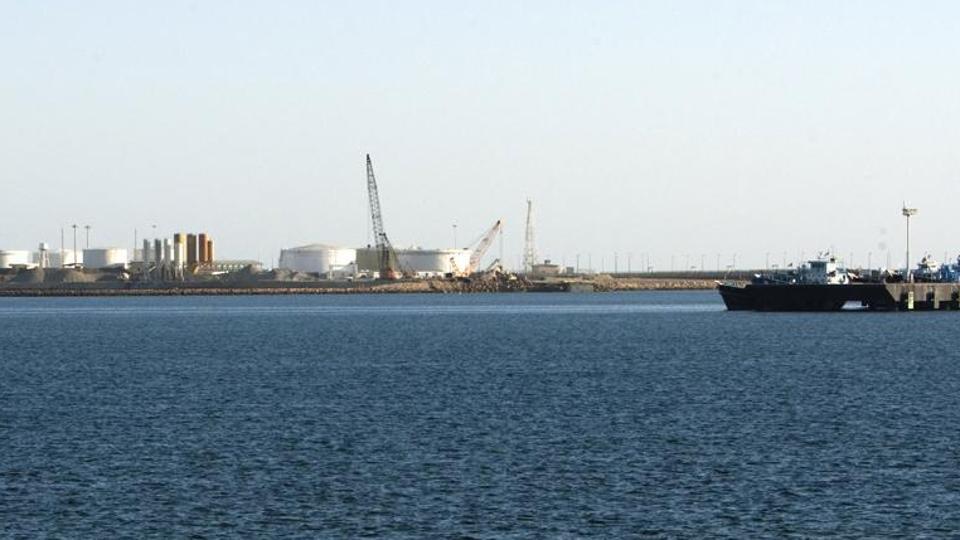
The US State Department said in a statement that starting September 29, persons operating the Chabahar Port and engaging in other related activities will face sanctions under the US Iran Freedom and Counter-Proliferation Act (IFCA). The move comes as a fresh setback to India’s plans to develop Chabahar Port, which is already facing significant delays due to broader US sanctions on Iran.
In 2024, New Delhi and Tehran signed a 10-year contract which allowed India to equip and operate a cargo terminal in the port with a financial commitment of $120 million. In addition, India agreed to provide a $250 million credit window for the further development of infrastructure around the port. Chabahar is a crucial link in the International North South Transport Corridor (INSTC), an ambitious project to connect India’s economy to markets in Central Asia and Europe.
“This development puts the 10-year contract to develop Chabahar in jeopardy. It’s important for India to keep Chabahar Port in play because without it, the India-Iran relationship comes down to its bare bones. India has already stopped buying oil from Iran some years ago to assist America with the Iran nuclear deal process. That whole process didn’t work out and left India with burnt fingers,” said Kabir Taneja, deputy director of the strategic studies programme at the Observer Research Foundation.
India had been in talks with Iran to develop the Chabahar Port since at least 2003. The two sides eventually signed a Memorandum of Understanding in 2015 under which India agreed to develop the Shahid Behesti Terminal in the port. In 2016, a tripartite agreement was signed between India, Iran and Afghanistan to develop the port as a hub with rail links connecting the economies of the three countries. Chabahar was seen as a way for Indian goods to bypass Pakistan and reach markets in Afghanistan and Central Asia.
New Delhi initially pledged to invest $85 million in the development of the Shahid Behesti terminal by providing equipment such as rail mounted gantry cranes, tack masters, fork lifts, trailers and tractors. In 2018, India Ports Global Limited (IPGL), a state-owned firm, took over operational control of the terminal.
However, the re-imposition of Western sanctions on Iran for its nuclear weapons program made procuring the equipment difficult for India. According to a statement by Shipping Minister Sarbananda Sonowal, India spent just 201.51 crore rupees on the development of the Shahid Behesti terminal.
In 2018, America agreed to provide a sanctions waiver that allowed India to develop Chabahar, given its importance as a source of economic development for Afghanistan. The fall of the US-supported Afghan government in 2021 and the rise of the Taliban weakened the logic behind the 2018 sanctions waiver, which was subsequently revoked this week.
Earlier this year, HT reported that New Delhi and Tehran were planning to expand the port’s capacity and link it to the broader Iranian railway network through a 700 km rail line to the city of Zahedan. The projects were expected to hit completion by the middle of 2026.
“I don’t think India will renege on the 10-year contract with Iran to develop Chabahar. They will keep developing the port as slowly as they have so far. But any large-scale plans to develop the port with Iran will not happen now. India has communicated to Iran in the past that sanctions will have to go for the economic relationship to develop properly,” Taneja aded.
According to the Ministry of External Affairs, India has used the Chabahar port to ship 2.5 million tons of wheat and 2000 tons of pulses to Afghanistan. This included shipping 75,000 metric tons of wheat as humanitarian assistance in 2020. IPGL handled 215 vessels, 16,000 TEUs and 4 million tons of bulk and general cargo at Chabhahar Port between 2018 and 2022.