
 E-Paper



US Senators agrees on bipartisan $118 billion immigration, Ukraine and Israel package deal
Both Trump’s faction on the Right and progressives on the Left oppose it; passage uncertain despite President Joe Biden’s support

 Prefer HTon Google


Washington: The Democratic and Republican leadership of the US Senate, with the support of President Joe Biden, have agreed on a historic and bipartisan deal on immigration that will make illegal immigration tougher, including granting the executive the authority to close the border when a certain threshold is crossed, and open up additional pathways for legal migration, including provisions for additional green cards and spousal work visas.
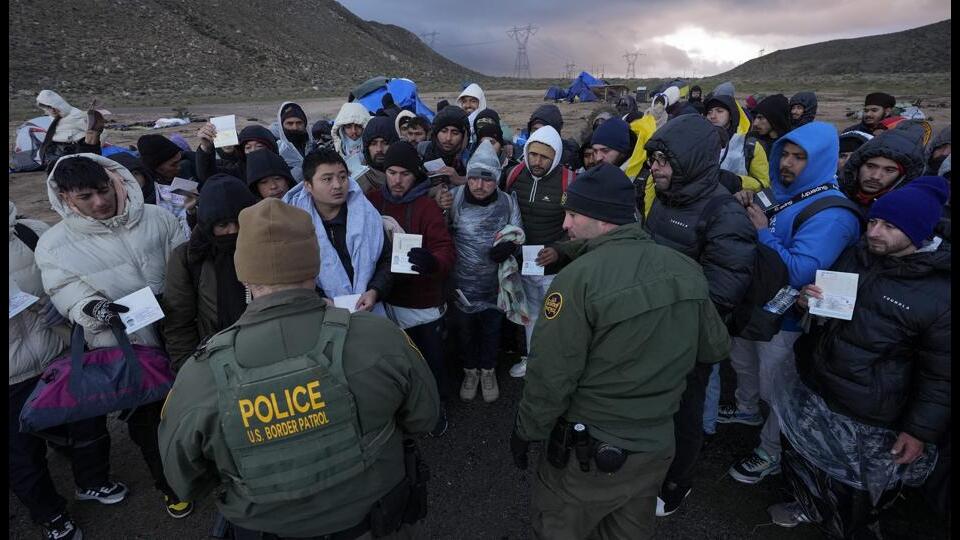
The $20 billion funding to step up border controls is a part of a broader $118 billion national security supplemental that also includes funding for military assistance of over $60 billion to Ukraine and $14 billion to Israel, and to beef up security footprint in the Indo-Pacific.
But the passage of the deal is uncertain. From the Right, former US president Donald Trump, whose campaign is based on Biden’s record on immigration and who doesn’t want to hand the administration a win on the issue, and the Republican House leadership including Speaker Mike Johnson, who called the deal “dead on arrival”, have pledged to block it arguing that immigration restrictions don’t go far enough. From the Left, progressive legislators in the Democratic Party and many immigration advocacy groups have opposed the deal, on the grounds that it goes too far in imposing restrictions and doesn’t represent comprehensive immigration reform.
A fair deal: Biden
In a statement, Biden, whose team has been closely working with Senators in drafting the text, called the deal the “toughest and fairest set of border reforms in decades”.
Biden said that the deal will give him authority to “shut down” the border when it gets overwhelmed; make the asylum process “fairer and more efficient”; expedite work permits for those already in the US; create more opportunities for families to come together through short-term visits as well as increased permanent lawful pathways; ensure that unaccompanied young children, had paid legal representation; and provide him resources to add border patrol agents, immigration judges, asylum officers, and cutting-edge inspection machines to help detect and stop the flow of fentanyl. For the administration, the fact that the deal includes funding for Ukraine is significant, for Ukraine’s ability to defend itself against Russian aggression rests largely on American support.
Indian immigrants
For Indian immigrants, the proposed bill has several possible implications. Given the surge of illegal Indian immigrants crossing the southern border, it will lead to more strict enforcement but for those already in the US, it allows more expedited work authorisation. For those who are legally in the US, it potentially offers relief in three respects. One, it raises the cap on the number of immigrant visas available annually by adding an additional 250,000 immigrant visas over 5 years (50,000/year). Two, it provides relief to over 250,000 individuals who came to the United States as children on their parents’ work visa and have now “aged out” by allowing work authorisation to those who had been a dependent child for eight years before they turned 21. Three, for the purposes of family unity, it allows non citizens to travel to US on a visitor visa.
Trump rejects the deal
But Trump, who wields substantial influence among Republicans in the Congress, has rejected the deal. And so have a set of Republican Senators loyal to him, despite the fact that Senate minority leader and Republican stalwart Mitch McConnell has thrown his weight behind the deal — in a sign that the civil war within the Republican Party between the anti-Trump older establishment faction and the “Make America Great Again” pro-Trump faction may imperil the passage of the bill. Speaker Johnson posted on X, “I’ve seen enough. This bill is even worse than we expected, and won’t come close to ending the border catastrophe the President has created. As the lead Democrat negotiator proclaimed: Under this legislation, ‘the border never closes’. If this bill reaches the House, it will be dead on arrival.”
The challenge to the bill also comes from progressives, with the House progressive caucus chair Pramila Jayapal saying that the bill was constructed under “Republican hostage-taking and refusal to fund aid for Ukraine”. She said that the text included poison pill provisions such as Title 42 that would “close the border and turn away asylum seekers without due process”, it would subject migrants to “unrealistic standards and timelines under which to present their asylum claims”, and it limited parole at land ports of entry “which will only disincentivise people coming to ports to be processed in a safe and orderly way”.
She said that “minor visa tweaks in exchange for shutting down the asylum system and exacting further harm on the vulnerable people seeking refuge in the United States is not serious reform”.


