Two deadly strikes hit Nasser Hospital in Gaza’s Khan Younis on Monday one after the other in quick succession, killing 20 people, out of which, five were journalists. This comes just weeks after five Al Jazeera journalists, including Anas Al-Sharif, were killed in an Israeli strike on a tent housing media personnel near the Al-Shifa hospital in Gaza City on August 10.
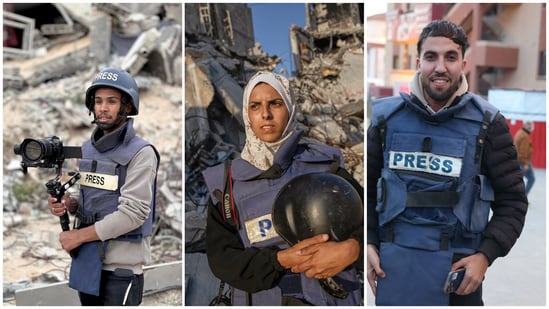
So far, 246 journalists have been killed in the Gaza war that erupted on October 7, 2023, according to Gaza’s government media office. However, according to an Al Jazeera tally, the number is at least 273.
Soon after the strike on Monday on Nasser Hospital, the Israeli Defence Forces (IDF) said that they have launched a probe and that they “regret any harm to uninvolved individuals” and that the IDF “does not target journalists as such”. However, the Israeli forces continued to argue that Hamas uses civilian infrastructure, including hospitals, as shields and they have operated from the Nasser hospital as well.
Also read: On cam: Moment Israeli ‘double-tap’ strike hit Gaza hospital
Israeli Prime Minister Benjamin Netanyahu termed the attack a “tragic mishap” and his office said that “Israel values the work of journalists, medical staff, and all civilians.”
{{/usCountry}}Israeli Prime Minister Benjamin Netanyahu termed the attack a “tragic mishap” and his office said that “Israel values the work of journalists, medical staff, and all civilians.”
{{/usCountry}}Also read: Gaza hospital strike that killed 20 'a tragic mishap': Israel PM Netanyahu
Who were the five journalists killed in strike on Nasser Hospital
According to Gaza’s government media office, the five journalists killed in Israeli strikes on Nasser Hospital on Monday include Hossam Al-Masri, who worked as a photojournalist with news agency Reuters; Mohammed Salama, who worked as a photojournalist with Al Jazeera; Mariam Abu Daqqa, who worked as a freelance journalist with several news outlets including Associated Press; Moaz Abu Taha, who worked as a freelance journalist with several news organisations including Reuters; and Ahmad Abu Aziz, who also worked on freelance basis for several news outlets including Quds Feed Network.
According to Associated Press (AP), Mariam Daqqa frequently stationed herself at the Nasser Hospital and reported from there. Recently, she covered how medics were struggling to save children from starvation. She was herself displaced several times due to the war and her 13-year-old son was evacuated from Gaza earlier in the war, the network reported.
Mariam also used to post frequently on Facebook while covering the war in Gaza, and said, in one of her recent posts, “When you see the soil covering the most precious thing you have, only then will you realize how trivial life is.”
According to Al Jazeera, its cameraperson Mohammed Salama was about to get married to a fellow Palestinian journalist Hala Asfour. They were planning a wedding together, “hoping to celebrate their nuptials after a ceasefire,” the report said.
Apart from the five journalists killed in the strike on Nasser Hospital, another journalist Hassan Douhan, who worked with Al-Hayat Al-Jadida newspaper, was also killed in a separate incident. According to Gaza’s government media office, he was shot by Israeli occupation forces in the Mawasi Khan Younis area of southern Gaza strip.
How did media organisations react to the deadly attack
A Reuters spokesperson said that the news agency was “devastated” to learn about the killing of its cameraman Hussam al-Masri and another freelance journalist Moaz Abu Taha and demanded urgent medical assistance for its photographer Hatem Khaled who was wounded in the attack.
"We are devastated to learn that cameraman Hussam al-Masri, a contractor for Reuters, was killed this morning in Israeli strikes on Nasser hospital in Khan Younis in Gaza. Moaz Abu Taha, a freelance journalist whose work had been occasionally published by Reuters, was also killed, and photographer Hatem Khaled, a Reuters contractor, was wounded," the Reuters spokesperson said.
"We are urgently seeking more information and have asked authorities in Gaza and Israel to help us get urgent medical assistance for Hatem," the spokesperson added.
The Associated Press said, “We are doing everything we can to keep our journalists in Gaza safe as they continue to provide crucial eyewitness reporting in difficult and dangerous conditions.”
Al Jazeera condemned the attack and said in a statement, “The blood of our martyred journalists in Gaza has not yet dried before the Israeli occupation forces committed another crime against Al Jazeera cameraman Mohammed Salama, together with three other photojournalists.”
“Despite relentless targeting, Al Jazeera remains resolute in providing live coverage of the Israeli genocide in Gaza for the past 23 months, with occupation authorities barring international media outlets from entering to report on the war.”
(With inputs from Reuters, AP)