Among the dozens of offshore companies that figure in the Panama Papers leaks is one incorporated in the Bahamas in the name of four relatives of disgraced Pakistani nuclear scientist AQ Khan at a time when his proliferation activities were at their peak.
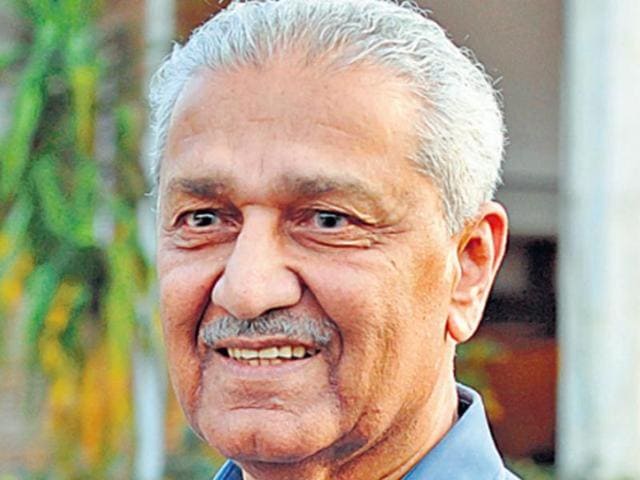
Wahdat Limited was registered in the Bahamas on January 21, 1998 and its owners are listed as Abdul Quiyum Khan of Karachi, and Hendrina Khan, Dina Khan and Ayesha Khan of Islamabad.
Abdul Quiyum Khan is the elder brother of 80-year-old Khan. He died in Karachi after a prolonged illness in February 2010.
Hendrina is the South Africa-born Dutch woman who married Khan in 1964. Dina and Ayesha are their two daughters who were born when the couple lived in the Netherlands.
According to the database of papers from Panama-based law firm Mossack Fonseca, Wahdat Limited became inactive nearly two years after its incorporation. Its address is listed as ILS Fiduciaries, Milennium House, Victoria Road, Douglas, Isle of Man.
There has been speculation for long that Khan used a string of front companies and offshore firms to handle the millions of dollars he allegedly received as payment from countries such as Libya, Iran and North Korea for clandestine transfers of nuclear equipment and know-how.
{{/usCountry}}There has been speculation for long that Khan used a string of front companies and offshore firms to handle the millions of dollars he allegedly received as payment from countries such as Libya, Iran and North Korea for clandestine transfers of nuclear equipment and know-how.
{{/usCountry}}Reports have also suggested that these front companies were used by Khan to move around the money that was given to him by the Pakistan government to procure components to be used in centrifuges and other gear that propelled the country’s nuclear weapons programme.
Wahdat Limited was incorporated at a time when Khan was allegedly involved in proliferating nuclear technology to Iran and Libya. A lengthy expose by Time magazine in 2005 said a key member of Khan’s network had told investigators that Iranian contacts had once dropped off two suitcases containing $3 million in cash in the scientist’s apartment as a payment.
Khan also used Dubai gold dealers in the late 1990s to launder the profits from his network. According to the Pakistan government’s admission, Khan travelled to Dubai 41 times from 1999.
According to reports, Khan never made much effort to hide his wealth. He reportedly acquired dozens of properties in the United Arab Emirates and Pakistan, and once invested in a hotel in Timbuktu that was named after his wife.
Hendrina, also known as Henny, reportedly played a key role in Khan’s initial efforts to acquire nuclear know-how for Pakistan while he was studying metallurgical engineering in the Netherlands and Belgium in the early 1970s.
According to testimony in a Dutch court that gave Khan a four-year prison term in absentia in 1983 after convicting him for espionage, the scientist hastily left the Netherlands in 1975 when he realised officials had found out he was stealing centrifuge designs and technical literature from Urenco, the nuclear company he was working for.
Khan had Hendrina collect blueprints of the Dutch centrifuge technology and bring them back to Pakistan, according to the court testimony.
Since Khan confessed on Pakistan’s state-run television about his clandestine proliferation ring in 2004, the government has refused to allow investigators from the US or the International Atomic Energy Agency to question him. Khan was placed under house arrest after confession.
The restrictions imposed on Khan by the government were eased from 2008 onwards and the scientist subsequently retracted his confession, saying he had acted on the orders of the military.