
 E-Paper



After Headley’s deposition, all proof is on Sharif’s table
Following the Headley deposition, the Pakistan PM must act against those responsible for 26/11 and the Pathankot attack

 Prefer HTon Google


The deposition of David Coleman Headley aka Daood Gilani, an American terrorist of Pakistani origin, before a Mumbai court dealing with the 26/11 attack trials this week through video link from a Chicago prison, is damning for Islamabad, to say the least. The picture that comes through the deposition is that Pakistan in 2008 was a rogue state, with banned terrorist groups like the Lashkar-e-Taiba (LeT) in bed with the Inter-Services Intelligence (ISI), the army, a weak state and drug dealers, all in league to kill innocents in India. Cut to 2016, this core group in Pakistan, with its visceral hatred towards India, has not changed, as is evident from the Pathankot air base attack last month. Only the attackers belonged to a different brand called the Jaish-e-Mohammed (JeM), which, though, is from the same ISI-army stable. Based on this evidence, one could safely assume that the mindset of the Pakistan State towards New Delhi has not changed and hence there is no need for any dialogue with a country that was running a bloody, covert campaign against India through jihadists. But it is also true that this would be a simplistic assessment on the part of India and could lead to wrong decisions.
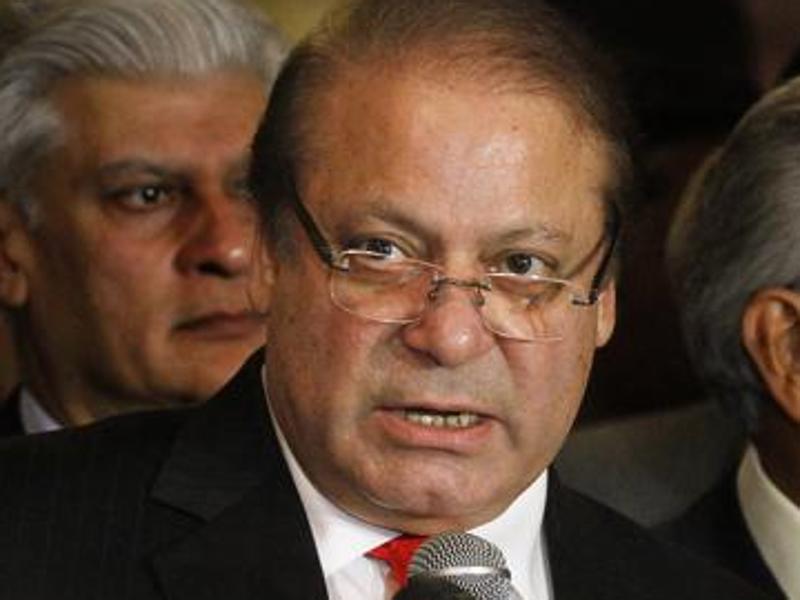
In the seven years since the 26/11 attacks, Pakistan itself has been a victim of horrendous terror attacks with young school children and the college-going youth being massacred by terrorist groups like the Tehreek-e-Taliban Pakistan and the Lashkar-e-Jhangvi, as has been seen in the Peshawar school and the Bacha Khan University attacks. While the Pakistan army has been forced to fight terror groups on its western borders, it is fighting shy of taking on Punjab-based terror outfits like the JeM and LeT, which are often used as coercive arms of the State to target India. The other notable change is that within 11 days of the Pathankot attack, Pakistan PM Nawaz Sharif himself admitted to the role of the JeM in the terror strike and promised action against the Deobandi group. One must remember that then Pakistan NSA Mahmud Ali Durrani had been sacked by then PM Yousuf Raza Gilani, a distant relative of Headley, for just admitting that 26/11 gunman Ajmal Amir Kasab was a Pakistani national, nearly 40 days after the Mumbai attacks. With the threat of the Islamic State confronting the international community, there is little patience with Pakistani jihadi operations of the Pathankot type against India as far as the western countries, particularly the US, are concerned. Islamabad too has no option but to take on the Punjab terrorist groups amid reports of the LeT cadre gravitating towards the ideology of the Islamic State (IS) and the so-called Caliphate vastly increasing its footprint in Afghanistan’s Nangarhar province, bordering Pakistan. This is the reason why 26/11-accused Hafiz Saeed of the LeT and his Kashmiri comrade-in-arms Syed Ali Shah Geelani have gone out of the way to paint the IS as a dark force. The fact is that after Headley’s deposition Pakistan will be under pressure to take action against Punjab terrorist groups or invite sanctions under international law as this legally admissible evidence will strengthen the case against Saeed, who carries a bounty of $10 million on his head, and his gang of murderers.
Adding to Islamabad’s worries is the growing security relationships between India, Saudi Arabia and Gulf countries, which will lead to the choking of funding for these terror groups in the name of Islamic charity and confining their movement only to Pakistan. Both Saudi Arabia and the United Arab Emirates have warned the cadres and supporters of these groups to stay out of their respective countries or face legal action, including deportation, if they are found to be of Indian origin. The Pakistani jihadi space will be further restricted in the coming days with India and the UAE setting up a multi-million joint cyber security centre to counter the terror threat as well as share real time intelligence.
Countries like Saudi Arabia and Jordan, once powerful backers of Pakistan, are now on the same page as India on terror. The India-Pakistan political scenario has also undergone a change since 26/11 with Prime Minister Narendra Modi leading a full majority government just like Sharif in Pakistan. While Sharif’s decision-making is circumscribed by the army and non-State players, Modi has both the party core and international community on board in engaging Islamabad. Whether it was inviting Sharif for his swearing-in ceremony in May 2014, or the SAARC yatra, or the surprise visit to Lahore on December 25 last year, Modi has shown his bona fides in reaching out to Pakistan with last-minute initiatives, keeping the media deliberately off the diplomatic play. The fact is that the international community has nothing but praise for Modi’s brave Lahore initiative and now wants reciprocation from Sharif in terms of action against the JeM leadership for the Pathankot attack. Even though the BJP’s core has been riled by the Headley disclosures and the Pathankot attack, the sangh parivar believes that the way out with Pakistan is only through talks. This is also helped by the internal security establishment, which is on the same page as diplomats on engaging Pakistan rather than wasting precious ammunition in duels across the borders.
Under the present circumstances, it is for Sharif to stand up to the army or ISI and ensure legal action against the perpetrators of 26/11 and the Pathankot attacks, using the evidence provided by Headley and the Indian establishment, respectively. The time has also come for Pakistan to take on Saeed and Masood Azhar, another jihadi terrorist, who constantly spew venom against India and virtually hold the bilateral relationship to ransom through their terrorist acts.
India has still kept the door open for talks with Pakistan provided Islamabad acts on terror. But then Modi has always been unpredictable when it comes to dealing with Pakistan.


