
 E-Paper



India’s military leaders must understand the value of actionable intelligence
When Prime Minister Modi meets all police chiefs and intelligence heads at the Border Security Force Academy at Tekanpur near Gwalior on January 6, he should drill into them the need to make commanders more accountable and insist on the use of technology to protect security installations

 Prefer HTon Google


Actionable intelligence is the key to the success of any counter-terrorist operation. A combination of strong intelligence with command and control improve the chances of neutralising a terror strike with minimum collateral damage. If any of these elements is lacking, though, such strikes could succeed. When aimed at security forces, such strikes, if successful, could result in significant casualties, even lower the morale of the unit attacked and national security planners. The attack by Pakistani terrorist group Jaish-e-Mohammed (JeM) on the Central Reserve Police Force (CRPF) camp at Lethpora on December 31, in which five security personnel lost their lives, indicates weak command and control despite specific actionable intelligence. This isn’t new.
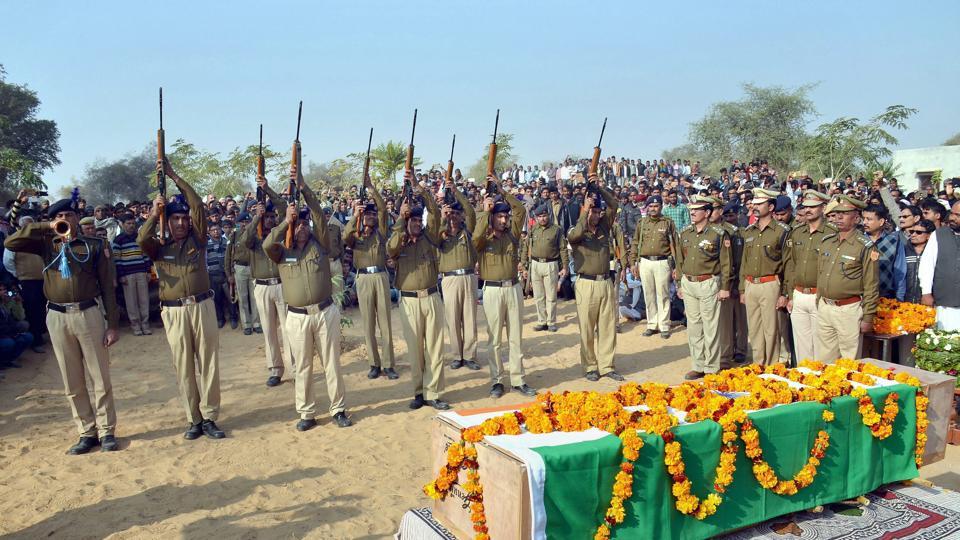
Over the past two years, there have been several such instances in Jammu and Kashmir where Indian security forces have been lethargic or slow to respond to real-time intelligence provided by hard-pressed state police and security agencies. This has not only forced the Narendra Modi government to militarily react, like it did with the surgical strikes after the September 18, 2016, Uri attacks but also close the option of any future diplomatic initiative with the civilian government in Pakistan. This is exactly what Pakistan based jihadist groups want.
Consider the January 2-5, 2016, Jaish-e-Mohammed terrorist attack on the Pathankot air base, during which seven Indian security personnel lost their lives. By 3 pm on the day before, January 1, National Security Adviser Ajit Doval had briefed the three military chiefs as well as the National Security Guard chief that the Pathankot air base could witness an attack. His warning was on the basis of communication intercepts. Counter-terrorist commandos were flown in to engage the suicide attackers. Doval also firmly suggested to his Pakistani counterpart Naseer Janjua the same night that Islamabad should force Bhawalpur based Jaish-e-Mohammed emir Masood Azhar to stop the attack. The alternative was an escalation of hostilities, he warned. Yet, Jaish-e-Mohammed attackers managed to enter the premises by merely cutting concertina wires. The same happened at Uri. And, most recently Lethpora.
Sure, there was no specific intelligence before the September 18 Uri attack apart from the fact that the brigade headquarters is a stone throw from the active Line of Control (LoC). Still, it is significant that the terrorists managed to surprise security forces.
Under the previous UPA regime too, there have been instances where the command-and-control infrastructure of the security forces failed to build on intelligence. On June 24, 2013, a day before former Prime Minister Manmohan Singh visited Srinagar to inaugurate the Banihal-Qazigund railway line in Kashmir, a terror attack took place at nearby Hyderpora despite actionable intelligence from the then home secretary and Intelligence Bureau chief.
When Prime Minister Modi meets all police chiefs and intelligence heads at the Border Security Force Academy at Tekanpur near Gwalior on January 6, he should drill into them the need to make commanders more accountable and insist on the use of technology to protect security installations. At a time when high-end technologies such as ground sensors, which detect, even target the intruders are available, it is a shame that the Indian Army and security forces are using concertina wires for protection against jihadists who are using Pakistan Army issue armor-piercing ammunition. The defence ministry has repeatedly asked the Indian Army to procure sensor technology to protect at least its bases near the Line of Control after Uri, the procurement is still work in progress. Meanwhile, concertina wires are at mercy of Rs 1000 cutter in the hand of a brain-washed jihadist.
Even though the Opposition has questioned the reasons behind the meeting between national security advisers of India and Pakistan on December 27 in Bangkok, the Modi government is under no illusion when it comes to Pakistan and its sponsored jihadist groups. Like United State’ President Donald Trump, the Indian prime minister is aware of the duplicitous nature of Pakistan and that it will continue to target India and Afghanistan through home-bred jihadists. It is for Indian security forces not to foreclose diplomatic options by letting down their guard. Actionable intelligence kills the element of surprise that terrorists thrive on. It is now for the commanders of security forces who now have to live up to expectations.
shishir.gupta@htlive.com


