
 E-Paper



Nepal-India ties remain stuck on constitution
No joint statement was signed between India and Nepal during KP Oli’s six-day visit due to differences over the constitutional process in the neighbouring country

 Prefer HTon Google


Nepalese Prime Minister KP Oli’s six-day visit to India ended on Wednesday evening, but no joint statement was signed between the two sides due to differences over the constitutional process in the neighbouring country.
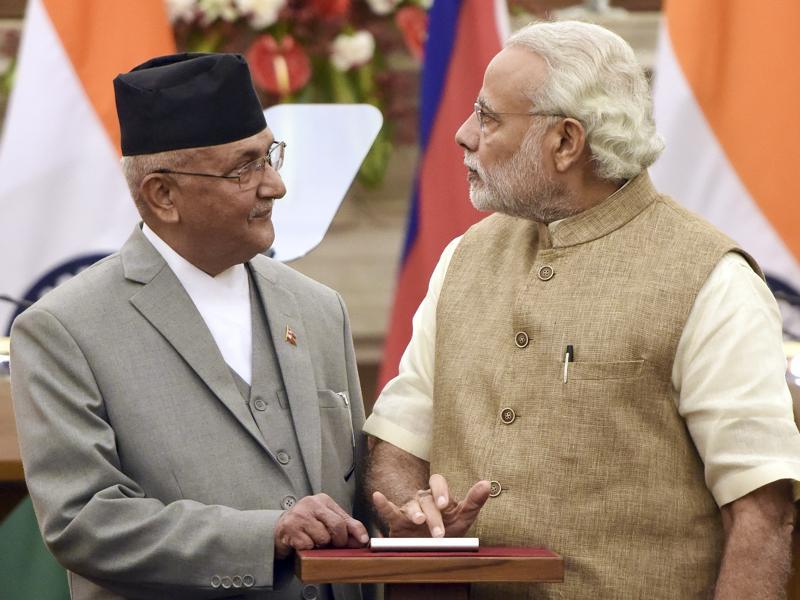
Delhi ensured no stone was left unturned in matters of hospitality and optics during Oli’s state visit – the Nepalese premier stayed at Rashtrapati Bhavan and made a joint press appearance with Prime Minister Narendra Modi. However, through it all, India stuck to its line that Nepal’s constitution should be based on a broader consensus.
Oli’s visit came in the backdrop of the Madhesi unrest, which – according to India – could blow up again and affect bilateral ties between the two countries. India has been advising Nepal to find an inclusive solution to its political problem in the Terai region.
Through the visit, Oli’s government continued to put all its energy into selling its new constitution as a historic and progressive achievement – barely acknowledging any resultant grievances. His team wanted Delhi to welcome the statute. But Modi, in a carefully constructed formulation, said that while the creation of the constitution was an ‘important achievement’ for Nepal, its success depended on “consensus and dialogue” as well as the country’s ability to address contentious issues based on these principles.
Read more: No misunderstandings now, says Oli as India and Nepal talk it out
Going a step forward, foreign secretary S Jaishankar said Oli gave his assurance that the Madhesis’ grievances – especially those pertaining to revision of provincial boundaries and citizenship – would be addressed. “If the PM of a country gives a public assurance to his own citizens, and to another government, that speaks for itself,” he said.
This distance between the two countries played out in the formulation of the joint statement. Modi had laid out India’s views on the Nepalese constitution, and there was little chance of going beyond that to welcome the statute.
But there was a more important disjunct. Though Oli’s government was willing to make a vague commitment on addressing demands that crop up in the future, Delhi sought a more categorical acknowledgment that there were issues on the table that needed a speedy resolution.
Oli’s reluctance to put this on paper led to doubts over his commitment to implement a roadmap that Kathmandu had laid out on its own last year-end.
The Nepal government had proposed to Delhi in December that it would create a mechanism to revise federal boundaries within three months. Though Oli fulfilled the promise of creating the mechanism on the eve of his visit to India, it was done unilaterally – without taking Madhesi parties on board. Modi enquired about the terms of reference of this mechanism during the talks, expressing the hope that it would soon start delivering results on the basis of dialogue and consensus.
Bilateral ties between the two countries may be back on track, but Delhi has made two things clear to Kathmandu – first, the Oli government must meet its constitutional commitments within the prescribed time frame, and second, India will be watching to see if it does.


