E-Paper



Mahatma Gandhi’s 90-year-old rare hand-written editorial found in Pratapgarh
The editorial, along with several other files/ documents pertaining to the country’s freedom struggle were officially handed over by the district magistrate of Pratapgarh, Markandey Sahi, to the regional archive office, Prayagraj, on July 25, 2019.

 Prefer HTon Google


The regional archives department Prayagraj has found a rare handwritten editorial Mahatma Gandhi wrote for Gujrati weekly Navajivan Patrika in 1929 from the records room of the Pratapgarh Collectorate in Uttar Pradesh. (The weekly was published in Ahmedabad from 1919 to 1931)
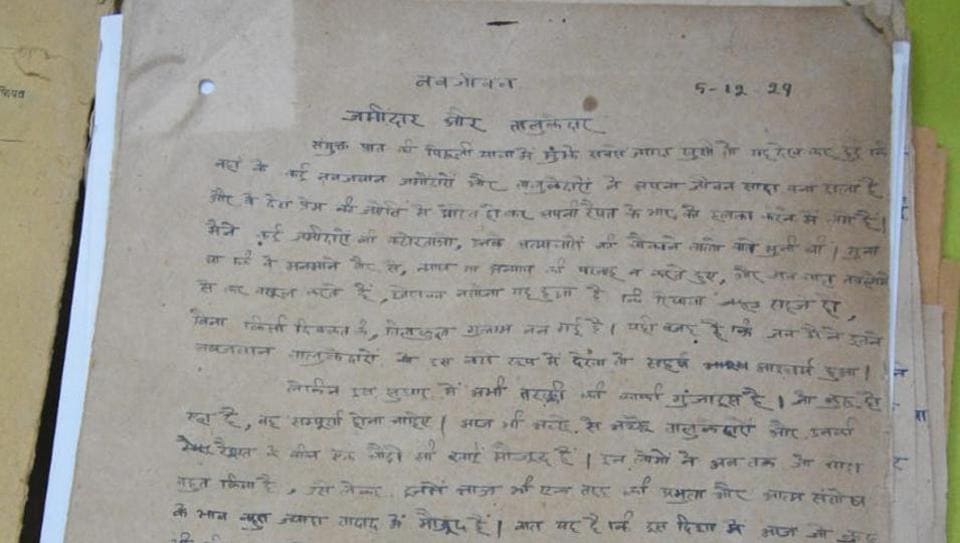
Regional archive officer Amit Agnihotri said the editorial titled Zamindar Aur Talukdar (landlord and aristocrat) dated December 5, 1929, is about Gandhi’s observations about growing patriotism among the masses.
“It is about how landlords started adopting simple living for the love of their country,” he added. The head of Allahabad University’s medieval and modern history department, Yogeshwar Tewari said Gandhi visited Allahabad (now Prayagraj) and neighbouring Pratapgarh district in 1929 to encourage people to participate in the freedom struggle. “Pandit Jawaharlal Nehru also did the same to spread awareness about the freedom struggle, which was beginning to gain momentum,” he added. Pratapgarh district magistrate Markandey Sahi handed over the editorial along with several other files and documents related to the country’s freedom struggle to the regional archive office in Prayagraj on July 25.
In the editorial, Gandhi wrote that he had heard tales of cruelty and excesses of landlords but he saw that some of them had adopted a simple style of living out of growing love for the country. He advised them to unburden people from taxes and begin living with them in the spirit of equality.
“I also appeal to the landlords to adopt the view of Japanese landlords who do not consider themselves owners... but act like patrons... and accord the same status to the people...”
The editorial was found inside a forgotten file in the record room, which also contained documents testifying to the increasing resentment among Indians against the British and how farmers refused to pay them taxes.