
 E-Paper



Dodder dread: Parasitic plant hollows out trees, but officials not alarmed
According to sources, the plant has damaged nearly 300 trees in two years in several localities

 Prefer HTon Google


South Delhi’s green cover is under threat due to various reasons, be it mindless chopping of trees by authorities or the carelessness of locals. There have been instances when pruning was not done in a scientific manner by the civic body. In many localities, residents have covered the area around tree trunks with concrete, hampering their growth. And, at some places, people have used nails to fix ad panels on tree trunks. All these activities have led to the deterioration of our green wealth and officials have failed to keep a check on them.
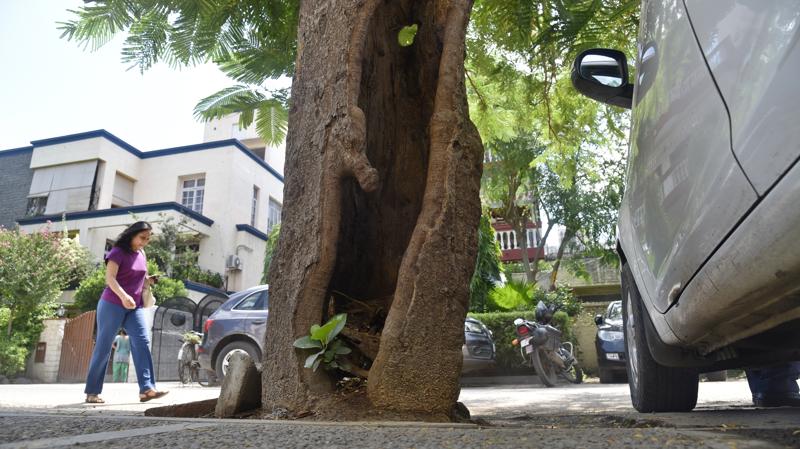
However, this time, trees in south Delhi are facing a unique problem. They are being attacked by ‘Lady’s laces’, the common name for dodder (Cuscuta) that might sound harmless. But, the deadly effects of this parasitic plant are beginning to make their presence felt on the city’s green cover. Sources say in the past two years, nearly 300 trees have fallen prey to dodder. The most affected areas are Defence Colony, Saket, Green Park and Hauz Khas.
“There used to be many trees of several species in the backlanes in South Extension-I, now the number has gone down drastically,” said Gourav Batra, a resident.
Dodder is characterised by its thin yellow leafless stems that creep upon its host tree and choke it to death. According to tree expert Vijay Dhasmana, the transference of the seedlings occurs the old-fashioned way, via the birds. Once a bird feeds on the dodder’s flower and tries to flush it out to on a different tree, the sticky matter attaches itself to the new tree. “Dodder might look like a sapless vine, but it is deadly for any tree it comes in contact with,” he said.
Once the dodder is attached, it wraps itself around the tree slowly while producing haustoria, a parasitic root that penetrates the host tree’s tissue to draw nutrition. This way, while the original root of the dodder dies, the plant continues to grow. Dodder also has the ability to decrease a host’s resistance to diseases. Dodder also hollows out the host tree.
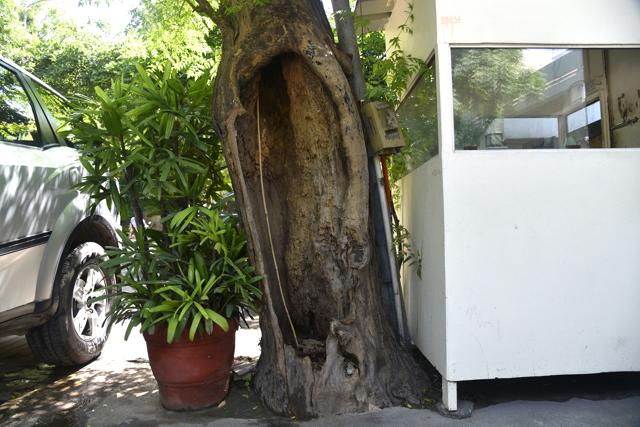
“Dodder experiences copious growth in tropical areas like Delhi. It has the ability to cover even tall trees. Many countries prohibit the import of dodder seed, so that crops are not contaminated and the flora is not affected,” said botany Prof R Chandran.
The removal process of dodder is also not simple. “The only way dodder can be removed is pruning. Dodder has a lot of medicinal value, but because of its lethal repercussion on the green cover, it must be removed completely,” Dhasmana said.
Gopi Gopalakrishnan, who works in Greater Kailash-II, complained to the forest and horticulture departments a month ago about dodder spreading in the trees. “It started from one tree but has now spread to two more. I called the tree helpline but no one answers. The departments keep shifting responsibility to each other. And, we are not allowed to prune the infected parts,” he said.
The authorities are aware of the problem but are not alarmed. KS Meena, deputy director (horticulture) of South Delhi Municipal Corporation said that trees and plants like mulberry, gulmohar and babul have a naturally shorter life span. The hollowness is a sign of decay and cannot necessarily be attributed to dodder. “There are hundreds of species of flora in Delhi, and, to pinpoint a reason for the death of a tree is not possible. However, if anyone notices the growth of dodder in their area, we will definitely take action,” he said.
He said the department has taken action in the past after complaints of dodder growth.


