
Sign in

States stare at drought as 59% of India get deficit rainfall, food output at the lowest

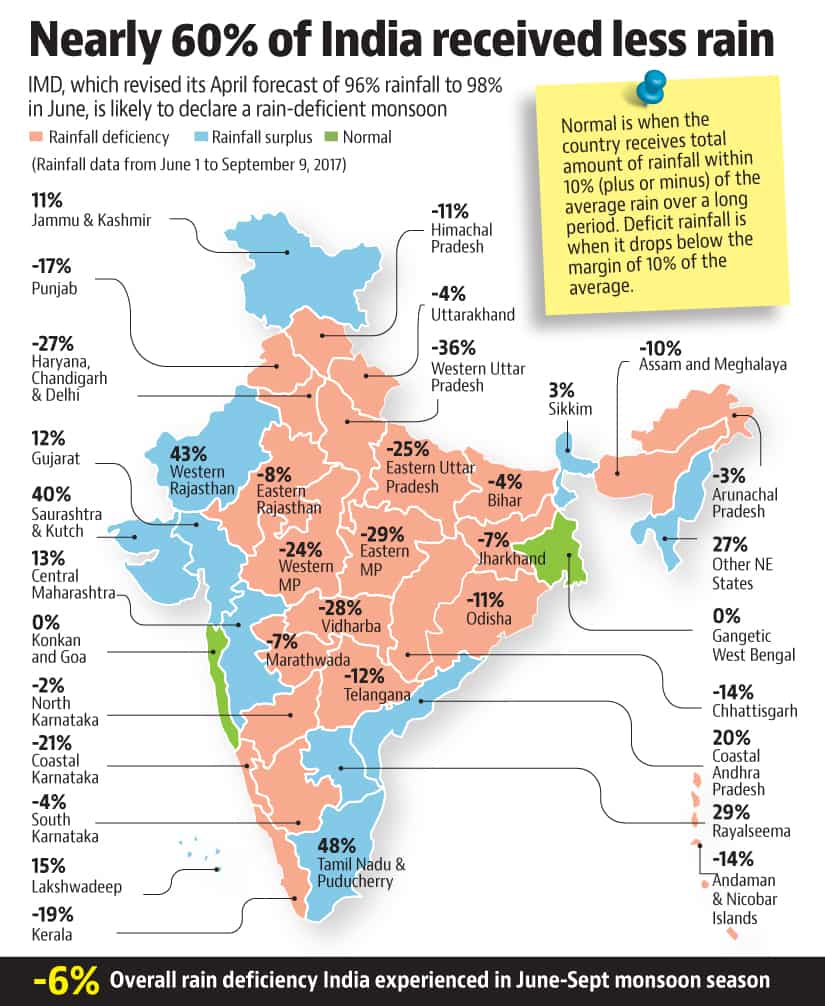
Although the overall deficit is 6%, India’s food bowl states of Haryana, Punjab, Uttar Pradesh and Madhya Pradesh received up to 36% less rainfall than the long-term average rainfall

Updated on: Sep 13, 2017, 24:29:57 IST
Hindustan Times, New Delhi | By
Share
Share via
  • facebook
  • twitter
  • linkedin
  • whatsapp
Copy link
  • copy link

Around 59% of India has received substantially less rainfall as compared to previous years, the India Meteorological Department (IMD) data shows, raising apprehension that poor agriculture output could adversely impact the economy.
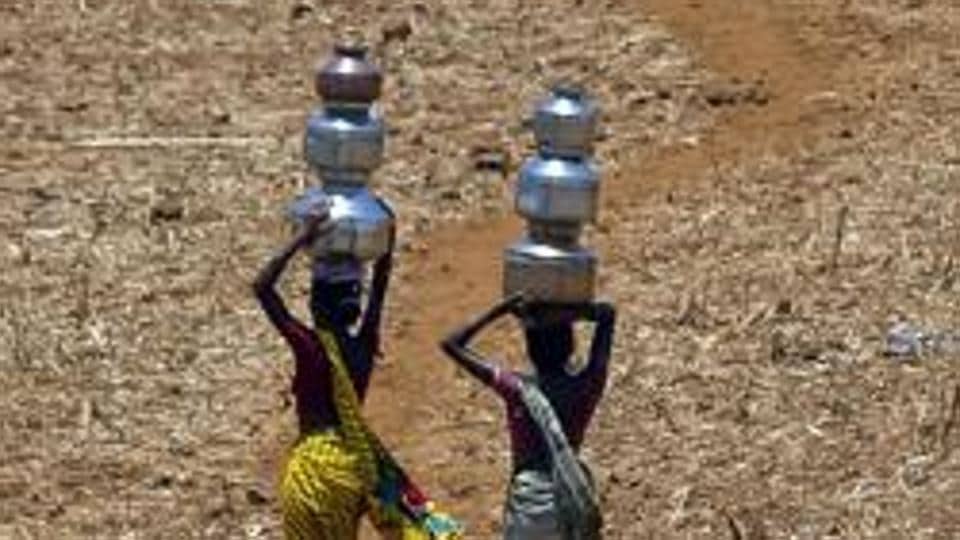
Women walk home after collecting drinking water from a well at Mengal Pada in Thane district in Maharashtra. (AP File Photo)

The latest economic growth, measured by the gross domestic product, grew by 5.7% in the first quarter of 2017-18 as compared to 7.9% in the same quarter a year ago — slowest since the National Democratic Alliance government came to power in May 2014.

The government had predicted in April that it expects the farm output growth to remain stable at 4% while setting a foodgrain production target of 273 million tonnes in 2017-18 crop year (July-June) amid expectation of a normal rainfall in June-September.

That did not happen as once again IMD’s prediction of a normal monsoon went wrong.
Article image

Although the overall deficit is 6%, India’s food bowl states of Haryana, Punjab, Uttar Pradesh and Madhya Pradesh received up to 36% less rainfall than the long-term average rainfall. These states account for almost half of the country’s food production.

In addition, large parts of agriculturally significant Maharashtra, Telangana, Karnataka and Kerala received less rainfall than previous years, and face drought for the third year in a row.

The rainfall distress is also visible on the crop sowing data from these states even though the agriculture ministry is hopeful the impact on overall production will not be high. Production of crops like soybean, cotton, oilseeds and vegetables would be less in October-November season.

“Farm production in Punjab, Haryana and western UP is not entirely dependant on monsoon,” a senior ministry official said, adding there can be some concerns in Karnataka and Kerala where rainfall has been scanty.

Chandigarh-based economist Devendra Sharma said scanty rainfall may reduce the farm growth this year by half as the area of impact is vast. “The impact on production will be huge,” he said, and added that the country’s agriculture sector was going through its “worst phase” and nobody was talking about it.

As the crisis looms large, the state governments are only just getting ready to tackle what may be another year of distress and misery for the poor farmers.

Madhya Pradesh, which has received up to 30% less rain, has constituted a committee under chief secretary Basant Pratap Singh to evaluate the extent of drought. Only four of the 51 districts in the state have received normal rainfall while in regions such as Bundelkhand, the deficiency is as high as 59%.

Rajasthan has set up a committee to examine the farmers’ demands of compensation and loan waiver.

Drought surveys have also been initiated in Karnataka and Kerala. Maharashtra has begun the process to pay compensation to its affected farmers.

Not much rainfall is expected in the remaining two weeks of the south-west monsoon as IMD has not forecasted any revival so far.

  • Chetan Chauhan
    ABOUT THE AUTHOR
    Chetan Chauhan

    Chetan Chauhan is the National Affairs Editor looking into all aspects of news and features from across India. A Chevening scholar with over three decades of experience in reporting and news management, Chetan has extensively covered all important aspects of the social sector, political economy, environment and climate change nationally and internationally. He did a journalism course at the Reuters Institute of Journalism in Oxford and Digital Media training at Nanyang Technological University in Singapore. He started as a reporter with The Statesman in 1996 and joined the Hindustan Times in 2000 in the metro bureau covering environment, crime and Delhi politics. He covered hot local news, from the Jessica Lal murder case to the rebellion of Delhi Congress MLAs against then Chief Minister Sheila Dikshit, to the replacement of toxic vehicle fuel with cleaner compressed natural gas (CNG) in the national capital. Some of his stories on air pollution became part of the Supreme Court’s landmark MC Mehta versus Government of India case in the National Capital Region (NCR), forcing the government to take corrective measures. As part of the national political bureau since 2004, he covered important central sectors such as environment, education, social justice, labour, rural development, water resources, renewable energy, agriculture, broadcasting and the Planning Commission for more than a decade producing several exclusive and investigative breaking stories. His specialisation is the environment, having covered at least a dozen United Nations global conferences on climate change, biodiversity and wildlife including climate summits in Paris, Copenhagen and Bali. He also covered India’s two five-year plans ---11th and 12th and reported on drafting and execution of right based laws such as Right to Education, Right to Information and rural job guarantee law, MG-NREGA, now being introduced in new format as VG-RAM-G Act. He has in-depth knowledge of social sector issues. He was one of the first to report on tigers vanishing from Sariska and Panna wildlife reserves in 2004 and 2008, respectively, leading to the setting up of the National Tiger Conservation Authority (NTCA) and the introduction of stringent penal provisions for poaching. He has written extensively on the rising human-animal conflict in India and the degradation of India’s biodiversity hotspots because of mining and other activities. Since 2004, Chetan has covered Parliament comprehensively and participated in training on the nuanced coverage of Parliament proceedings. He has travelled extensively across India to cover national and provincial elections since 1998, especially in the Hindi heartland states, considered India’s road to power. He writes a regular column for Hindustan Times, Ecostani, on important national politics, economy, Himalayan ecology and environmental issues. His other responsibilities include providing inputs for edits and edit page articles for the publication, apart from managing news flow from across India.Read More