
Sign in

Saving wetlands: Set up grievance cell within six weeks, HC tells state

The grievance redressal mechanism will receive complaints on wetland destruction through email, WhatsApp messages, toll-free numbers and online on a website.

Published on: Aug 17, 2016, 00:32:18 IST
Hindustan Times | By , Mumbai
Share
Share via
  • facebook
  • twitter
  • linkedin
  • whatsapp
Copy link
  • copy link

snehal.fernandes@hindustantimes.com
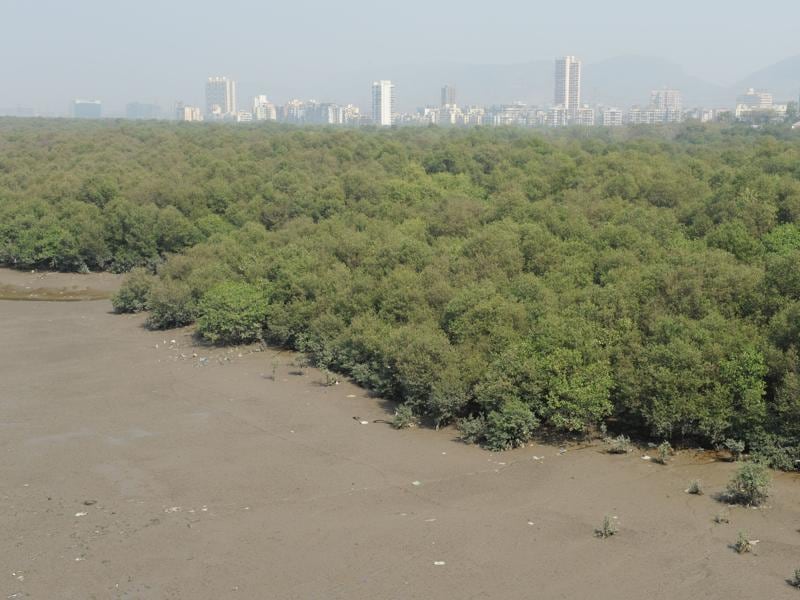
In March 2014, division bench of Justice VM Kanade and Justice Anil Menon impose an interim ban on reclamation and construction in wetland areas across the state. (HT PHOTO)

Taking note of the unabated destruction of wetlands even after the interim ban on their reclamation more than two years ago, the Bombay high court directed the state to create a grievance redressal mechanism within six weeks.

The grievance redressal mechanism will receive complaints on wetland destruction through email, WhatsApp messages, toll-free numbers and online on a website.

“Even if anonymous complaints are received giving full particulars of the violation, the same shall be acted upon,” read the order by a division bench of justice AA Sayed and justice Abhay S Oka.

In March 2014, division bench of Justice VM Kanade and Justice Anil Menon impose an interim ban on reclamation and construction in wetland areas across the state.

The bench said, “We hope that even the state government has understood the importance of maintaining and preserving the wetlands in the state.”

The court was hearing the contempt petition filed by non-government organisation Vanashakti.

It directed that a committee, which will create the grievance redressal mechanism, be formed within three weeks and monitor the order’s implementation. The committee will be headed by divisional commissioner of Konkan division.

“The divisional commissioner shall either create a separate website or use the website of his office to receive online complaints on the destruction of wetlands in breach of orders of this court. Arrangements shall be made to provide for uploading photographs,” read the order.

The bench said the commissioner will also have to ensure restoration of wetland after the committee’s receives complaints.

The committee will comprise a representative from non-governmental organisation Vanashakti who is the petitioner, senior revenue officers, senior police officers, representative of the Maharashtra Pollution Control Board and an expert member decided by the state government. All planning authorities within the Maharashtra Regional and Town Planning Act, 1966 in the districts of Konkan region will be represented on the committee.

In 2013, Vanashakti had filed a public interest litigation, stating rampant reclamation and destruction of wetlands and that Wetland Rules 2010 were not being implemented in Maharashtra.

OTHER DIRECTIONS

  • The state government has been directed to publicise the creation of the grievance redressal mechanism and the court’s interim orders in local newpapers, television channels and radio channels, among others.
  • Action taken will be reported on the especially created website or on the website of the divisional commissioner within two weeks of which the complaints are received.
  • The state has to ensure that a police officer is made responsible at taluka level to assist tehsildars and other revenue officers for taking action in case of violations.
  • Snehal Fernandes
    ABOUT THE AUTHOR
    Snehal Fernandes

    Snehal Fernandes is senior associate editor, who joined HT in 2006. She heads the Mumbai edition’s city reporting team that writes on civic and urban governance, transport and infrastructure, health, and education. She is also the National Science Editor. With a career spanning more than two decades, her expertise lies in writing on science and technology, space, environment, sustainable development, climate change, and nuclear energy. Her work consistently breaks down, and without oversimplyfying, science and research developments into an easy read for a broad audience. In 2009, she was among the very first journalist to report on the opposition to the Jaitapur nuclear power plant in Ratnagiri (Konkan) following the Indo- US civil nuclear agreement and consistently followed it with multiple stories from ground zero; wrote about the introduction and subsequent halt to the cultivation of genetically modified (BT) brinjal, and has interviewed Nobel laureates and award winning scientists. In 2012, she was awarded ‘The Press Club Award for Excellence in Journalism’ (Political category) for reports on the mining scam in Goa. Prior to HT, she wrote on education and transport at the Indian Express. She graduated in sociology from St Xavier's College, and firmly believes in the phrase by Karl Marx that ‘Religion is the opium of the people’. When she is not keeping a tab on the going-ons in Mumbai and the scientific world, you'll find her reading world news, or watching crime/espionage series or political dramas. She can repeatedly watch Kill Bill with the same interest as Planet of the Apes and Spiderman. For someone who was not remotely interested in dogs or cats, she loves every bit of her time with her two-year-old Indie cat Bunny.Read More