
 E-Paper



Photos: NASA bids adieu to Saturn probe Cassini after 20 years
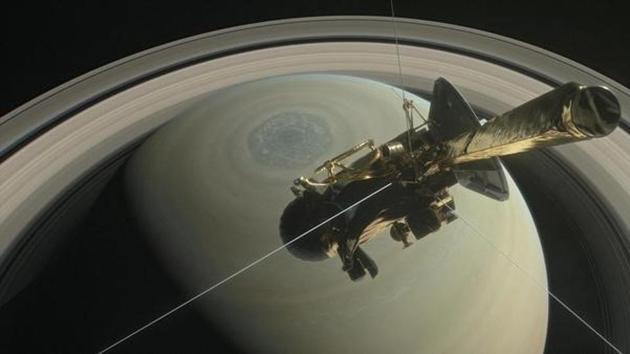
After two decades in space, NASA's Cassini spacecraft is nearing the end of its remarkable journey of exploration. Having expended almost every bit of the rocket propellant it carried to Saturn, operators are deliberately plunging Cassini into the planet to ensure Saturn's moons will remain pristine for future exploration.
Updated on: Sept 15, 2017 12:59 PM IST


Share via


Copy link

1/13
 View Photos in a new improved layout
Updated on Sept 15, 2017 12:59 PM
On Sept 15, 2017, NASA’s Cassini will plunge into Saturn fighting to keep its antenna pointed at Earth as it transmits its farewell. In the skies of Saturn, the journey ends, as Cassini becomes part of the planet itself. The mission is ending just one month shy of its 20th launch anniversary. (NASA/Handout via Reuters)
2/13
 View Photos in a new improved layout
Updated on Sept 15, 2017 12:59 PM
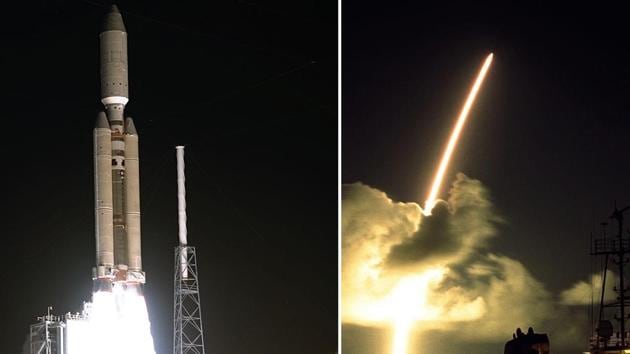
Cassini-Huygens was launched onboard a Titan IVB/Centaur and travelled towards Saturn for an in-depth exploration of its system by utilizing S-, X- and Ka-bands. It would swing by Venus, Earth and Jupiter for gravitational assistance. Launched in 1997, Cassini has been touring the Saturn system since arriving there in 2004, performing a detailed, up-close study of the planet, its rings and moons. (NASA)
3/13
 View Photos in a new improved layout
Updated on Sept 15, 2017 12:59 PM
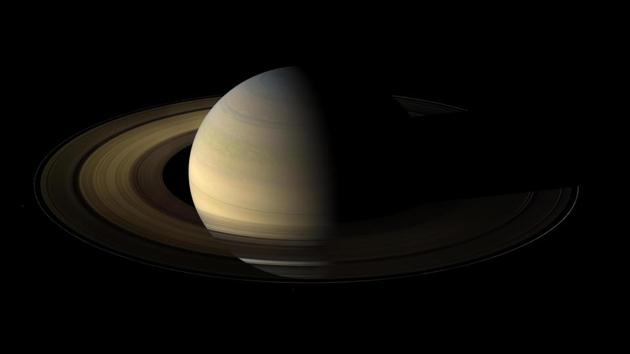
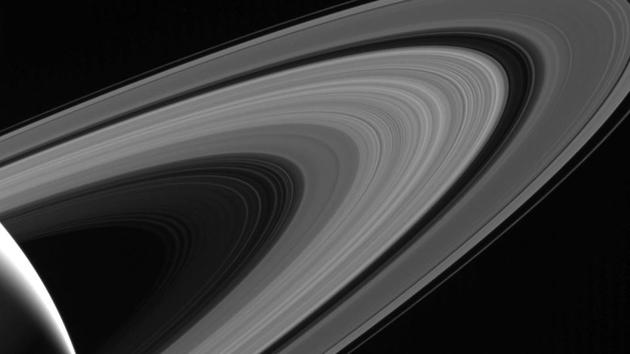
Of the countless equinoxes Saturn has seen since the birth of the solar system, this one, captured in a mosaic of light and dark, is the first witnessed up close by an emissary from Earth. This mission is a joint endeavour of NASA, ESA (the European Space Agency), and the Italian Space Agency -- is the first mission to orbit Saturn and explore its environs in detail. (NASA/JPL-Caltech/Space Science Institute/AP)
4/13
 View Photos in a new improved layout
Updated on Sept 15, 2017 12:59 PM
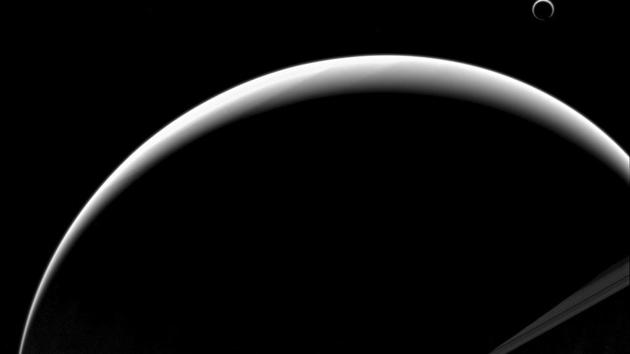
Titan’s crescent nearly encircles its disk due to the small haze particles high in its atmosphere scattering the incoming light of the distant Sun. By the end of the Cassini mission, the spacecraft will have observed almost half of a Saturn year, which is 29 Earth years long. (NASA/JPL-Caltech/Space Science Institute/AP)
5/13
 View Photos in a new improved layout
Updated on Sept 15, 2017 12:59 PM
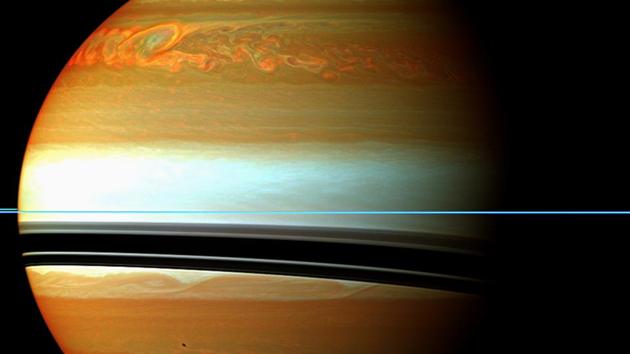
NASA’s Cassini spacecraft has tracked the aftermath of a rare massive storm on Saturn. These red, orange and green clouds (false colour) in Saturn’s northern hemisphere indicate the tail end of the massive 2010-2011 storm. (NASA/JPL-Caltech)
6/13
 View Photos in a new improved layout
Updated on Sept 15, 2017 12:59 PM
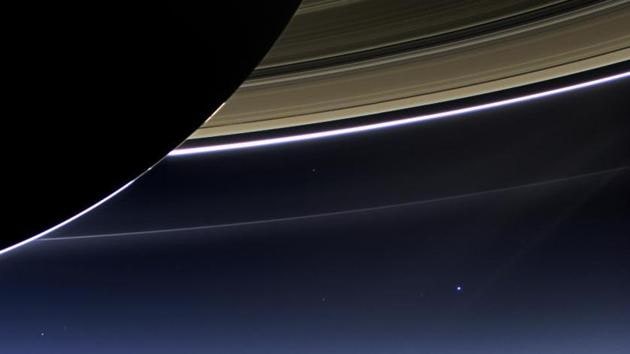
In this rare image taken on July 19, 2013, the wide-angle camera on Cassini spacecraft has captured Saturn’s rings and our planet Earth and its moon in the same frame. This is the only wide-angle footprint that has the Earth-moon system in it. Earth, which is 898 million miles (1.44 billion kilometers) away in this image, appears as a blue dot at center right. (NASA/JPL-Caltech/Space Science Institute)
7/13
 View Photos in a new improved layout
Updated on Sept 15, 2017 12:59 PM
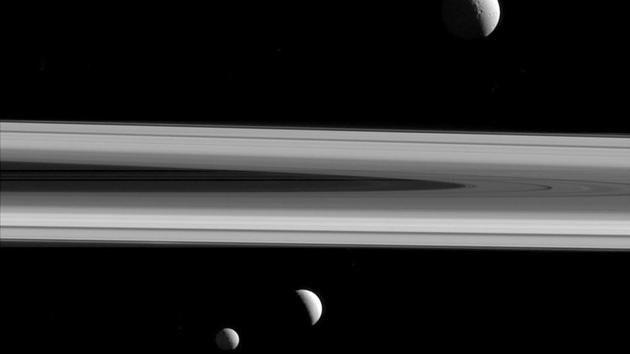
The three of Saturn's moons - Tethys (above), Enceladus (second left), and Mimas, seen from the Cassini spacecraft. (NASA/JPL-Caltech/Space Science Institute/AP)
8/13
 View Photos in a new improved layout
Updated on Sept 15, 2017 12:59 PM
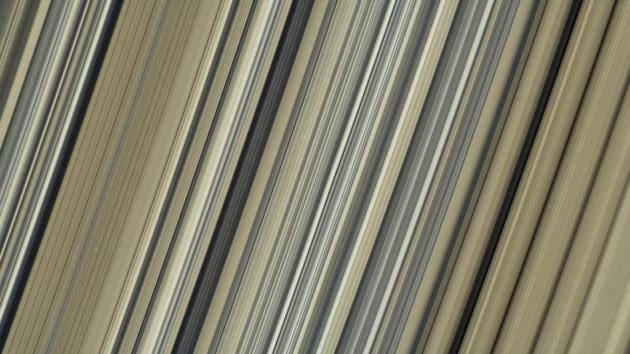
These are the highest-resolution colour images of any part of Saturn’s rings, to date, showing a portion of the inner-central part of the planet’s B Ring. The view is a mosaic of two images that show a region that lies between 61,300 and 65,600 miles (98,600 and 105,500 kilometers) from Saturn’s center. (NASA/JPL-Caltech/Space Science Institute)
9/13
 View Photos in a new improved layout
Updated on Sept 15, 2017 12:59 PM
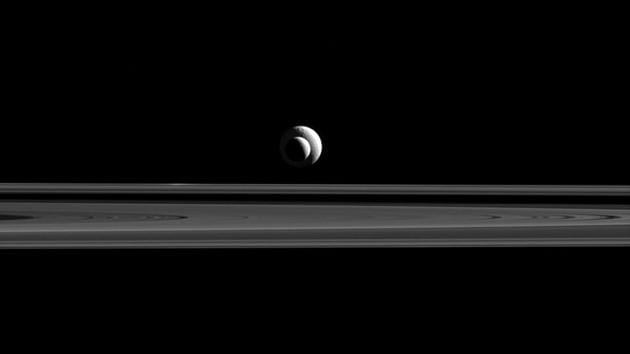
Like a cosmic bull’s-eye, Enceladus and Tethys line up almost perfectly for Cassini’s cameras. Since the two moons are not only aligned, but also at relatively similar distances from Cassini, the apparent sizes in this image are a good approximation of the relative sizes of Enceladus (313 miles or 504 kilometers across) and Tethys (660 miles or 1,062 kilometers across). (NASA/JPL-Caltech)
10/13
 View Photos in a new improved layout
Updated on Sept 15, 2017 12:59 PM
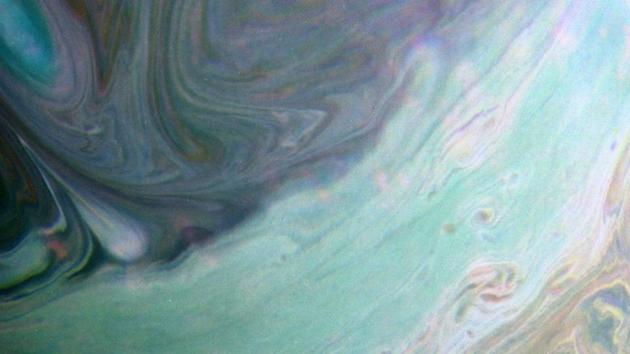
A false-color view of Saturn’s clouds. The Cassini orbiter and its two onboard cameras were designed, developed and assembled at JPL. The imaging operations center is based at the Space Science Institute in Boulder, Colo. (NASA/JPL-Caltech/Space Science Institute/Kevin M. Gill)
11/13
 View Photos in a new improved layout
Updated on Sept 15, 2017 12:59 PM
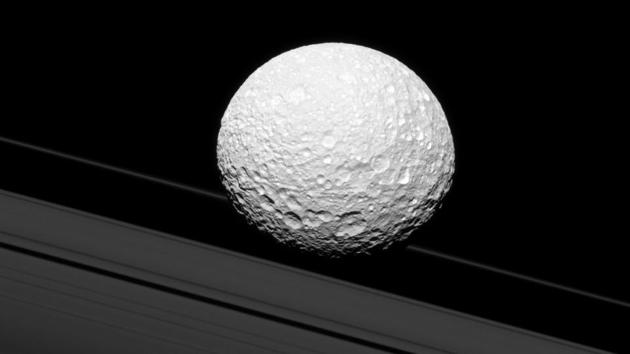
It may look as though Saturn’s moon Mimas is crashing through the rings in this image taken by NASA’s Cassini spacecraft, but Mimas is actually 28,000 miles (45,000 kilometers) away from the rings. There is a strong connection between the icy moon and Saturn’s rings, though. Gravity links them together and shapes the way they both move. (NASA/JPL-Caltech/Space Science Institute)
12/13
 View Photos in a new improved layout
Updated on Sept 15, 2017 12:59 PM
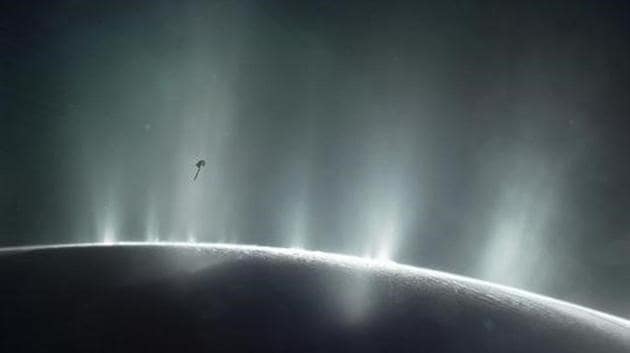
Dramatic plumes, both large and small, spray water ice and vapour from many locations along the famed “tiger stripes” near the south pole of Saturn’s moon Enceladus. The tiger stripes are four prominent, approximately 84-mile- (135-kilometer-) long fractures that cross the moon’s south polar terrain. (NASA/JPL-Caltech/Handout via Reuters)
13/13
 View Photos in a new improved layout
Updated on Sept 15, 2017 12:59 PM


