
 E-Paper





Follow the latest breaking news, major developments and agenda-setting stories from India and around the world with the newsdesk at Hindustan Times. Operating round the clock, the desk brings together experienced editors, reporters and correspondents to deliver fast, accurate and contextual reporting across subjects that influence public policy, governance, business, society and international affairs. The HT News Desk covers politics, elections, government policies, the economy, business and markets, science and technology, the environment, law and order, infrastructure, education, climate issues and geopolitics, while closely tracking developments across states, institutions and global capitals. The team also leads coverage of major breaking news events, policy announcements, court proceedings, natural disasters, public emergencies and significant international developments. Reports published by the newsdesk are based on information gathered from reporters on the ground, official statements, government agencies, court records, regulatory filings, recognised institutions and other authoritative sources. Stories undergo editorial scrutiny and verification processes to ensure accuracy, fairness and relevance, and are updated as events evolve and additional information becomes available. Whether covering a key political decision in New Delhi, an economic policy shift affecting millions, a landmark court ruling or a major global event, the HT News Desk aims to provide readers with reliable, fact-based journalism that delivers not only the latest developments but also the context and analysis needed to understand their wider implications.
 Trending News
Net neutrality sceptic Ajit Pai faces racial attack from fellow Indian-Americans
Pai’s opponents say his plan to repeal net neutrality provisions could give broadband providers unfair advantage and pose a danger to the internet.


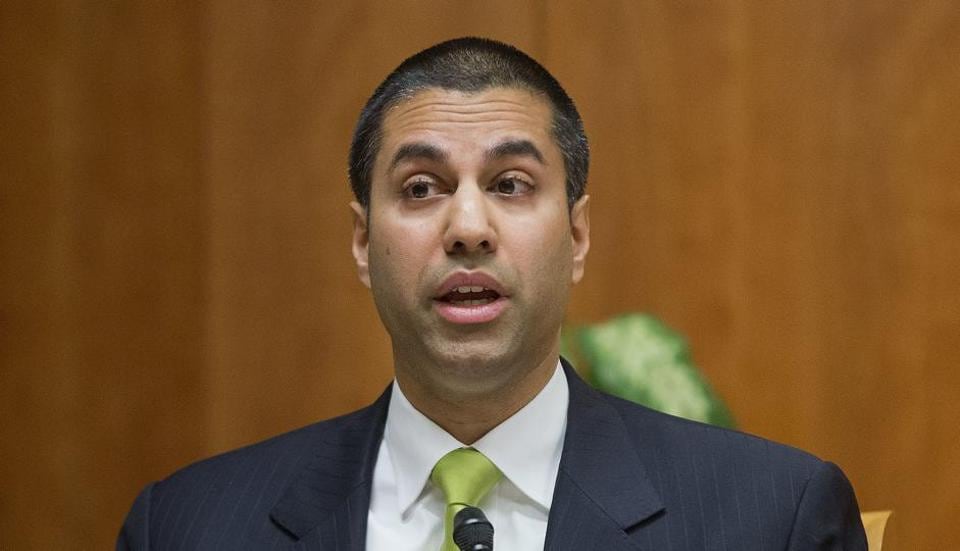
Ajit Pai, chairman of the Federal Communications Commission, has come under racist attacks for his plan to roll-back Obama-era regulation of Internet called “net neutrality”, and a lot of it from fellow Indian-Americans who have unleashed a string of barbs tied to his Indian origins.
“Ajit Pai is the type of Indian guy who eats dosa with a fork,” wrote Hari Kondabolu, an Indian-American comedian, on Twitter just days after Pai announced his plan.
Similar tweets by others called Pai the type of Indian who calls “chai … chai tea”, who “thinks Lassi is a dog (from Lassie the female star dog of a novel and a TV series)”, who says “Naan bread”, and whose favorite Amitabh Bachchan movie is the Great Gatsby (in which the Bollywood superstar had a short role)”.
On Sunday, after Indiaspora, an organisation of Indian Americans condemned the slight campaign “led by an Indian American comedian”, Kondabolu retaliated with another tweet. “Dear @AjayPaiFCC , I apologize for my tweets questioning your ‘Brown-ness’. You are not a disappointment to Indian Americans...but to all Americans. You can eat a pakora while destroying #NetNeutrality. You can wear a kurta while catering to corporate interests, #AjitPaiSucks”
“Net neutrality”, as enforced by an introductory law passed in 2015 by the Federal Communications Commission under the Obama administration, prevents internet service providers (ISPs) from slowing down, blocking or speeding up net connection; every website enjoys equal access and speed. Undoing it, critics argue, will allow ISPs to regulate net access, speed things up for those who pay and slow down those who don’t.
Pai has argued that is an irrational fear, which will be taken care of by free trade regulators who monitor market competition and will be monitoring ISPs, to catch those manipulating net access. And that freeing bandwidth from the control of bureaucrats would encourage private investments. His plan comes up for a vote at the commission on December 14, and is likely to go through given the 3-2 Republican majority there.
Pais hasn’t spoken about the attack from his community, but he did address those that came from net neutrality activists who showed up outside his home in Virginia state. They left behind signs naming his children and, one that said, “They (the children) will come to know the truth. Dad murdered democracy in cold blood.”
Read more: Net Neutrality: US FCC head Ajit Pai slams Hollywood, tech companies
“It was a little nerve-racking, especially for my wife,” Pai said on Fox News, and added in a statement later, “Internet regulation activists have crossed the line by threatening and harassing my family. They should leave my family out of this and focus on debating the merits of the issue.”
But the attacks from the Indian community were troubling enough for some, such as Indiaspora, which said in a statement it was “saddened” by the “personal and baseless attacks on Chairman Pai in which his Indian heritage is questioned”. And they reached out to other members and leaders of the community.
Shekar Narasimhan, a top Democratic strategist, weighed in as well in Pai’s defence.
“Irrespective of your political leanings, behavior and threats against individuals for their actions are unacceptable. We should have zero tolerance for hate and xenophobia whether it’s directed from the left or right,” Narasimhan said in a statement.


