Much has changed in the electricity sector in the last few years. Electricity generation capacity is now surplus after years of deficits, and the price of solar power has fallen by 70%. But one thing that has barely changed is the performance of the electricity distribution companies (discoms), which continue to bleed money. They also face operational challenges, despite some improvements in the reduction of losses (and, importantly, 100% electrification). There are now proposals to install 250 million smart meters across all users to try and radically improve the discoms. While a top-down push is important, unless there is bottom-up buy-in, such solutions will likely be under-effective, or worse, crowd out parallel or complementary efforts.
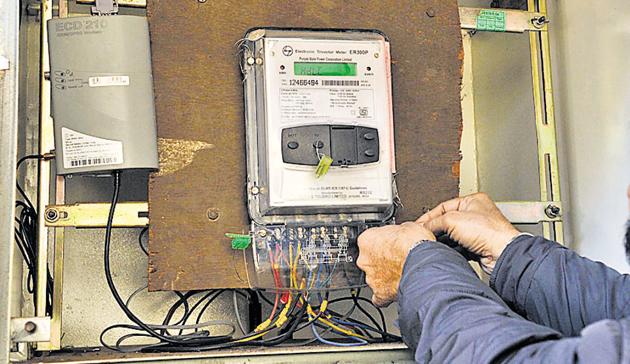
A Smart Grid is a transformation of the electricity grid where digital communications and control enable a more nimble, resilient, flexible, and efficient grid. It’s this last point that is pushing smart meters, which can be a tool for cutting down losses, which span under-billing, under-collection, and outright theft. Given the state of technologies and metering deployments across discoms, it’s inevitable to try and leapfrog to smart meters.
Smart meters could help improve detection of theft (a necessary but not sufficient condition for viable discoms), but they can’t accurately pinpoint all forms of theft alone. The two things really needed are on the ground action (vigilance) as well as analytics. Before discoms take the plunge in paying for smart meters, they have to ensure that vigilance improves through political will and analytics get incorporated in business practices regardless of the level of smart metering. Before asking for smart meters, planners should answer if utilities are harnessing the data they already have.
Prepaid meters are another major thrust. While this could help improve collection, one has to be willing to disconnect non-payers. Automation can make it easier, but it’s political will that’s needed for both automated and manual systems. Note that in a number of regions, the largest defaulter is the government itself. Most honest consumers actually prepay today through a deposit. Instead of the focus on prepaid, such functionality should be viewed as a subset of smart meters. We should also not implement prepaid meters in a standalone manner such as through a keypad for inputting payment codes. Not only is this inconvenient, utilities lose visibility of consumption and they can’t easily offer differential tariffs for users.
{{/usCountry}}Prepaid meters are another major thrust. While this could help improve collection, one has to be willing to disconnect non-payers. Automation can make it easier, but it’s political will that’s needed for both automated and manual systems. Note that in a number of regions, the largest defaulter is the government itself. Most honest consumers actually prepay today through a deposit. Instead of the focus on prepaid, such functionality should be viewed as a subset of smart meters. We should also not implement prepaid meters in a standalone manner such as through a keypad for inputting payment codes. Not only is this inconvenient, utilities lose visibility of consumption and they can’t easily offer differential tariffs for users.
{{/usCountry}}There are few arguments against making discoms smarter and the impending need for smart meters. But we should focus on not just “yesterday’s problems” such as billing and loss reduction, but also on tomorrow’s challenges such as renewable energy, electric vehicles, consumer choice and competition. This emphasises that different discoms have different drivers and expected functionalities from their smart systems.
Why did many earlier IT-driven discom projects not reach their potential or even languish? It was because of a lack of preparedness. This same challenge remains for blanket smart meter roll-outs. While volume makes smart metering hardware cheaper, the real challenge remains integration with existing (legacy) systems. Without solving this challenge, no drop-in solution can work well.
Smart meter roll-outs are not quite like LED bulb procurements. Meters are more of an ecosystem, probably closer to smart cities. Volumes and standardisation help, but only up to a point. There is also a new option of third party deployers who invest, and then take a monthly charge. This seems to help liquidity issues more than solvency issues, i.e. business model issues more than business case issues, and it could transfer some risk depending on the contract design. But the utility still pays, today in the order of ~100 per month (including GST). Is the value proposition greater than this? The average Indian household bill is around ~500 per month, and we can’t expect 20% efficiency gains to be revenue-neutral across India purely through smart meters.
There will be pockets and regions where high losses, high renewables, or something else drives more rapid deployment. The best way forward will be what some call “leopard spots” of deployment by geography — intensive deployment in selected areas, growing over time to cover the entire discom. This plan begins with a combination of most prepared discoms and highest urgency areas. This also gives utilities time to do their homework — finish standardising databases and billing platforms and GIS (digital mapping) efforts, not to mention enhance their staffing. Leadership continuity with political backing is another key ingredient for success. With this, even without smart meters, Haryana halved its losses in three years.
Smart meters fail when the technology and price points are off, but they succeed when consumers (and the utilities) ask for them. Instead of just looking at sticks like theft detection, we should also push carrots. These can include guaranteed zero load-shedding (with lifeline supply even during shortfalls), ability to easily integrate electric vehicles and renewables, as well as the potential to save money through time of day pricing.
Much of the focus has been on efficiency, but the real value proposition comes from a transformation, including one with dynamic pricing, and where consumers respond to incentives such as by shifting their loads to off-peak prices. These require awareness, incentives, and regulatory approvals, which will take time. Ultimately, smart meters are a valuable tool for improved discoms, but they are not a panacea for all ills. We should harness, but not rely on technology to solve what are fundamentally governance failures.