
 E-Paper



Ecostani | Jayant Chaudhary hopes that the NDA will help his party — and the BJP, too
The RLD has sensed a shift of Jat voters over to the BJP, and the saffron party would like Jayant to campaign in Jat-dominated areas. Both hope it’s a win-win

 Prefer HTon Google


Since Jayant Chaudhary, president of the Rashtriya Lok Dal (RLD), a party with influence among Jats in western Uttar Pradesh, announced that he would be part of Bharatiya Janata Party (BJP)-led National Democratic Alliance (NDA) giving a severe blow to INDIA bloc, the Samajwadi Party (SP) president Akhilesh Yadav has not spoken a word against him. Jayant had also not given any reason for leaving the SP-led alliance in UP saying that the Bharat Ratna for his grandfather and former prime minister Chaudhary Charan Singh has left him with “no choice” but to join the NDA.
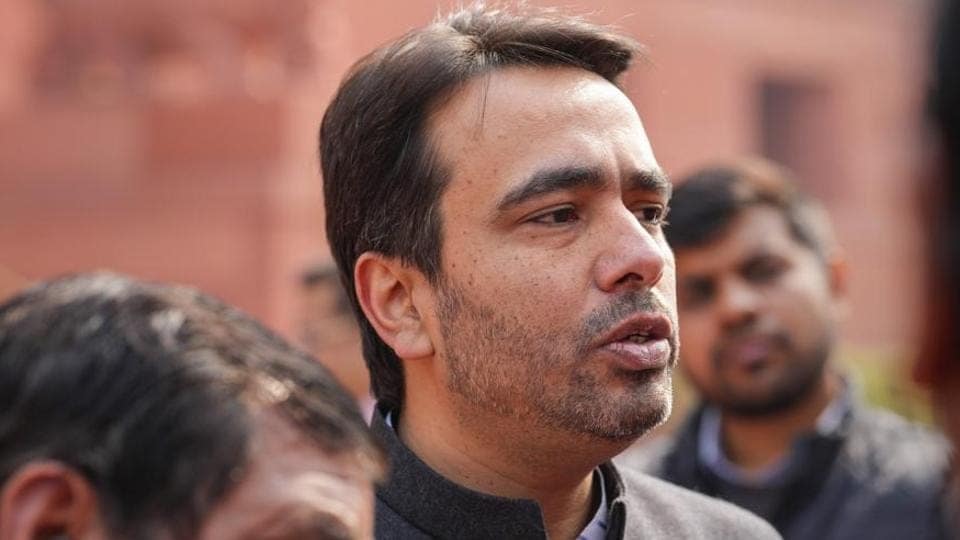
Born in 1978, Jayant graduated from Delhi University and did his Master's in Accounting and Finance from the London School of Economics. He made his political debut in 2009 when he won the Lok Sabha election from Mathura.
The Muslim-Jat vote bank initiated by grandfather Chaudhary Charan Singh and nurtured by father Ajit Singh, was eroded in 2013 in the wake of the Muzaffarnagar riots that saw about 50,000 Muslims displaced when Akhilesh Yadav was CM of Uttar Pradesh. In the 2014 Lok Sabha polls, the RLD lost all eight Lok Sabha seats it contested, including Baghpat (Ajit Singh’s loss) and Mathura (Jayant’s loss). The BJP, however, won all eight seats.
Jayant approached the Samajwadi Party for an alliance before the 2019 Lok Sabha polls. The election was significant on two counts as Akhilesh had brought in two parties, Bahujan Samaj Party and RLD, into an alliance. The two parties were Mulayam Singh’s arch-rivals in state and national politics. However, this grand alliance (Congress was part of it too) was unable to stop the BJP, which won 62 of the 80 Lok Sabha seats in UP. The alliance got 15 seats.
Jayant, who took over the party’s reins after his ailing father died in 2021, stuck with SP all along. But, the Bharat Ratna for Chaudhary Charan Singh wasn’t the only reason Jayant joined the BJP. In the past decade, the RLD’s vote base had eroded and the Jat community appeared to be firmly behind the BJP. The RLD had failed to win even a single seat in two Lok Sabha polls and in the 2022 assembly elections, the party won only eight of the 33 seats it contested. However, in the by-poll held that same year, Jayanat’s party was able to win from the Khatauli assembly election, which was the epicentre of the 2013 Muzaffarnagar communal riots. This was the first win for the opposition from the riot-hit area in years. This provided a boost to the RLD-SP alliance in the region, as they thought that farmers in western UP were shifting towards the alliance — something that was bolstered also by the farmer unrest.
However, with the consecration of the Ram temple by prime minister Narendra Modi, the BJP in Uttar Pradesh has received a clear electoral boost. No doubt, Jayant was feeling squeezed and uncertain. “He sensed that the Jat would vote for BJP and he may return empty-handed in the 2024 Lok Sabha polls. So, when the offer came to join the NDA, he accepted it with a condition of providing a route to leave the SP alliance,” said a farmer leader from western UP, who has been associated with Jayant’s party for a long time.
A senior BJP leader aware of the developments said that with the RLD with them, their worries in western UP are over. “Muslims alone cannot impact poll results in western UP. They matter only with the Jat or another community. So, Jayant joining the NDA alliance will ensure a clean sweep for the BJP,” the leader said.
With the alliance, Jayanat has tried to provide some much-needed oxygen to his party. The RLD president knew well that he would not get more than three seats to contest in the over-crowded NDA in UP even though SP was offering it seven seats. “Jayant knows that whatever seats he wins, he will with the NDA as compared to the alliance with SP,” said the farm leader quoted above.
On its part, getting Jayant will help BJP impact Jat voters in Haryana and Rajasthan, where the party has faced Jat resentment in previous polls. In the 2019 Haryana assembly poll, six months after the Lok Sabha elections were held that year, the BJP performed poorly in the Jat-dominated districts. In the December 2023 Rajasthan assembly polls, the Congress was almost at par with the BJP in Jat-dominated districts. The BJP would like Jayant to campaign for the alliance in these areas in Haryana and Rajasthan, even though the party’s experiment to get its ally in Haryana, the Jannayak Janata Party (JJP) led by Dushyant Chautala, to field candidates in the Jat dominated districts of Rajasthan came a cropper.
With the farmers’ protest starting again in Punjab, Haryana, western UP and parts of Rajasthan, it will be interesting to see whether Jayant joining the NDA will help the BJP gain the support of Jat voters for the 2024 Lok Sabha polls or not.
Chetan Chauhan, National Affairs Editor and a journalist for over two decades has written extensively on the social sector and politics with a special focus on the environment and political economy. He analyses the most important environmental story in the country this week


