Keeping in mind the vision of the Prime Minister of India, Narendra Modi, and allied to the theme for International Women’s Day, March 8, 2020 — I am Generation Equality: Realising Women’s Rights — it is imperative to take forward the momentum of empowerment of girls and women through education in all institutes. In particular, it is time to focus on the inclusion of female participation in higher education institutes and address a set of fundamental questions. Has the participation of women has increased over the years in higher education and, if not, what measures need to be taken to increase their participation? How far have we got in achieving sustainable development goals Target 4.3 ie, by 2030, to ensure equal access for all women and men to affordable quality technical, vocational and tertiary education?
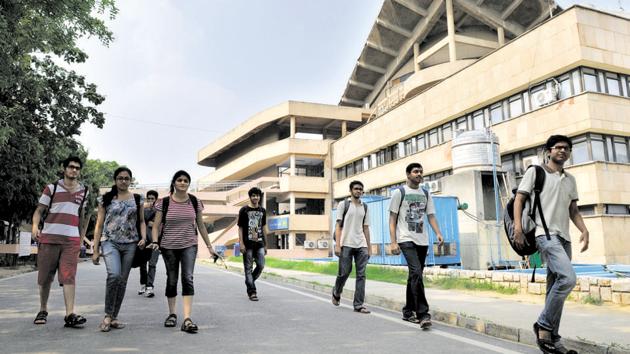
Consider the trends of female participation as per the All India Survey on Higher Education (AISHE) report, in the past six years from 2013-14 to 2017-18. We can clearly see that India has been able to deal with inequalities in higher education, which has resulted in a two-way expansion — in enrolment of female students in higher education along with enlarging the delivery system.
Women’s enrolment in higher education, which was less than 10% of the total enrolment on the eve of Independence, has risen to 48.6% in 2018-19. The total enrolment in higher education has grown considerably to 37.4 million, with 19.2 million male and 18.2 million female. Females per 100 male students have also increased significantly in central universities, deemed universities, and government-aided institutions.
But there is another side. The share of male students enrolled in engineering and technology is 71.1% compared to female enrolment, which is just 28.9%. The enrolment of females was lower in the Indian Institutes of Technology (IITs) and National Institutes of Technology (NITs) in comparison to the overall enrolment of women. Considering the low enrolment of females in the stream, the government decided to increase female enrolment from 8% in 2016 to 14% in 2018-19, 17% in 2019-20 and 20% in 2020-21 by creating supernumerary seats. The results are visible in real terms. The total number of women in NITs has grown from 14.17% in 2017 -18 to 17.53% in 2019-20 and from 8% in 2016 to 18% 2019-20 in IITs in the B.Tech programme.
{{/usCountry}}But there is another side. The share of male students enrolled in engineering and technology is 71.1% compared to female enrolment, which is just 28.9%. The enrolment of females was lower in the Indian Institutes of Technology (IITs) and National Institutes of Technology (NITs) in comparison to the overall enrolment of women. Considering the low enrolment of females in the stream, the government decided to increase female enrolment from 8% in 2016 to 14% in 2018-19, 17% in 2019-20 and 20% in 2020-21 by creating supernumerary seats. The results are visible in real terms. The total number of women in NITs has grown from 14.17% in 2017 -18 to 17.53% in 2019-20 and from 8% in 2016 to 18% 2019-20 in IITs in the B.Tech programme.
{{/usCountry}}In 2018-19, 43.82% of women were enrolled at the PhD level as opposed 40% in 2013-14. This was possible because of various measures taken by the government, such as women candidates being allowed a relaxation of one year for M.Phil and two years for PhD in the maximum duration, ie two to six years respectively as per the University Grants Commission (UGC), 2016. In addition, provisions have been made for women candidates to get maternity leave/child care leave up to 240 days, during the duration of the M.Phil/PhD.
Through these various initiatives of the government, there has been an overall increase in the enrolment of women in higher education. This has resulted in an improvement in the Gender Parity Index (GPI). The GPI has increased from 0.92 in 2013-14 to 1 in 2018-19.
In accordance with the rise in the enrolment of females in higher education, there is a need for a systemic expansion of the delivery system. A total of 993 universities, 39,931 colleges and 10,725 standalone institutions are registered on the AISHE portal. The number of female-only universities has increased from 11 to 16 from 2013-14 to 2018-19 and 10.82% of colleges are exclusively for girls.
Along with the expansion of infrastructure, in the past six years, gender equality has been encouraged in the recruitment and placement of both teaching and non-teaching staff in higher education institutes.
The total number of teachers in higher education has grown from 13,67,535 in 2013-14 to 14,16,299 in 2018-19. Out of the total teachers, 57.8% are male and 42.2% are female teachers, an increase of 4.35% in female teachers. At the all-India level, there are 73 female teachers per 100 male teachers in 2018-19 compared to 64 six years ago. The number of teachers at the university level is around 1.90 lakh, of which 36.65% are female as compared to 1.56 lakh teachers in 2013-14 (32%). Among non-teaching staff, the average number of females per 100 males is 49.
The notion of equality should not be just dictated by numbers but a culture of equality between the genders. Recently, I directed the UGC to conduct seminars on gender bias and stereotyping, gender equality and women’s rights in all colleges. Culture and theatre clubs in colleges and universities have been encouraged to hold nukkad natak, flash mobs and mime shows on women’s issues. I also emphasised that all colleges and universities must prominently display women’s helpline numbers at different places on campuses.
The celebration would not be complete if we don’t acknowledge the success of the women pioneers who are working in various universities. Professor Sahana Murthy has become the first Indian recipient of the AECT Robert deKieffer International Fellowship Award 2019 for her exemplary research in EdTech. Savita Abraham from IIT Madras along with her team innovated “FairKM”, a new algorithm that makes artificial intelligence less biased when processing data.
The equal participation of women in higher education will help India make a vital contribution to sustainable development. Along with the provision of equal access to education, quality and affordability must also be emphasised.