
 E-Paper



How much work is housework? Computing the value of unpaid labour
While there is increasing recognition of the value of housework, there is still a need for it to be seen as work of measurable economic value

 Prefer HTon Google


A Spanish court, in 2023, ordered a man to pay 200,000 euros to his ex-wife for the 25 years of unpaid domestic labour rendered by her. Earlier this week, the Karnataka high court noted that a wife staying at home and looking after the house and children could not be termed as ‘lazing off’ while increasing the maintenance being paid to her. The court acknowledged that the wife-mother worked round the clock to look after children, expenses and the house and dismissed the husband’s plea that she, being educated, could get gainful employment on her own.
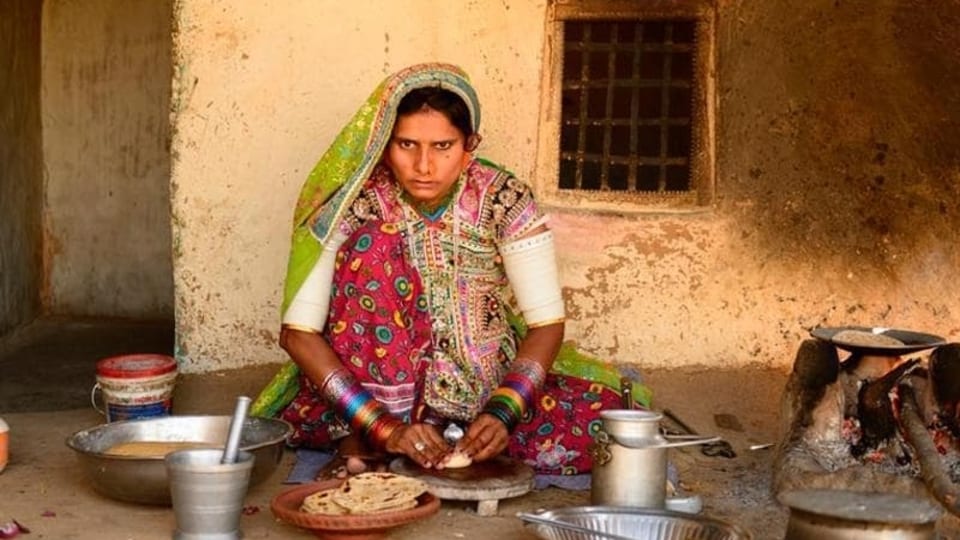
The order is a welcome step towards the recognition of care work and housework.
Women between 15-60 years of age spent 7.2 hrs a day on unpaid domestic work, compared to men who spent 2.8 hrs, per an analysis of the National Sample Survey Office’s (NSSO) Time Use Survey 2019 by the Indian Institute of Management, Ahmedabad. The study noted that even working women spent twice the amount of time on unpaid domestic work in comparison to wage-earning men.
Over the years, courts have evaluated housework primarily in matrimonial disputes and motor vehicle claims. Through these judgments, the courts are gradually working towards not only recognising but respecting the value of housework.
The first concrete steps towards evaluation came when the courts were asked to determine the compensation to be paid to claimants in accidents when a ‘housewife’ was killed. In 2001, in Lata Wadhwa and Ors v. State of Bihar, the Supreme Court while determining the compensation to be paid to families who had died in a large-scale fire during the 150th birth anniversary celebrations of Jamshedji Tata in Jamshedpur, set up a committee headed by ex-Chief Justice of India YD Chandrachud. The Chandrachud Committee, taking into consideration the multifarious services rendered by housewives, arrived at a modest estimation of ₹36,000 per annum as their notional income for housework and elderly women (62-72 yrs), ₹10,000 per annum. This judgment, in the absence of concrete data, became the foundation for the determination of compensation for women undertaking unpaid domestic work.
Ten years later, while determining the claim granted in an accident case Arun Kumar Agarwal v. National Insurance Co. Ltd 2010, the Supreme Court noted, “Household work performed by women throughout India is more than the US $612.8 billion per year. We often forget that the time spent by women doing household work as homemakers is the time that they can devote to paid work or their education. This lack of sensitiveness and recognition of their work mainly contributes to women's high rate of poverty and their consequential oppression in society, as well as various physical, social and psychological problems.”
The next change came in 2021, wherein the Supreme Court relied on the NSSO data to recognise the extent of unpaid domestic work undertaken by women and the gendered nature of the same. While calculating what would be the just compensation for a homemaker, the court noted that inflation should also be taken into consideration. It also noted that while determining compensation, it should take into consideration the wage she might have earned had she not stayed at home, and what it would cost to replace the homemaker with paid workers.
The same stance was re-affirmed this year by the Supreme Court in Arvind Kumar Pandey v. Girish Pandey while increasing compensation awarded by a tribunal. The court yet again noted the invaluable contribution of housework and noted it could not be monetised at a rate lesser than the minimum wage. The court increased the award of the tribunal from ₹2,50,000 to ₹6,00,000.
Recognising the contribution of the homemaker, the Madras high court last year noted, “In the generality of marriages, the wife bears and rears children and minds the home. She thereby frees her husband from his economic activities. Since it is her performance of her function which enables the husband to perform his, she is in justice, entitled to share in its fruits.” The court ruled that the wife was entitled to half the share of the properties acquired by the husband in his name.
While the courts have been progressive in recognising the value of unpaid household work, there still exists some inconsistency in matrimonial proceedings. In matrimonial proceedings, housework is often seen as part of the duties of a wife. In 2022, the Bombay high court while quashing a wife's complaint of cruelty, noted, “If a married lady is asked to do household work definitely for the purpose of the family, it cannot be said that it is like a maidservant.” This is in line with other judgments which have noted housework and care-work to be a duty of the wife.
However, in 2023, the Bombay high court dismissed the husband's claim of cruelty and noted that the burden of housework should be equally shared between the husband and wife; expecting it to be the sole responsibility of the wife reflected a regressive attitude. In this case, the husband had cited the wife's refusal to do housework after returning from work and choosing to speak to her mother on the phone as cruelty and a ground for divorce.
Similarly, the Karnataka high court’s recognition of the care work done by women is also significant. However, the court, while recognising the care work, did not recognise the woman as an unpaid worker but more akin to the altruistic selfless mother, who it noted was on a higher pedestal than a wife.
Taking note of the gendered nature of some judgments, the Chief Justice of India in 2023 released a ‘Handbook on combating Gender Stereotypes’. The handbook makes a specific reference to unpaid domestic labour and states that “Women who are homemakers perform unpaid domestic labour (such as cooking, cleaning, washing, household management and accounts) and care work (such as caring for the elderly and for children, helping children with their homework and extracurriculars). The unpaid labour performed by women not only contributes to the household’s quality of life but also results in monetary savings. Women who are homemakers contribute to the household to an equal (or greater) extent. Their contributions are often overlooked because men are conditioned to believe that such work is of limited value.”
The legal system often reflects the realities of society. While there is greater recognition of the fact that women are engaged in several unpaid domestic tasks, the same is often seen from the lens of gendered roles. It will still take time for housework to be seen as important work of measurable economic value and not as a duty or service rendered for love.
Parijata Bharadwaj, a lawyer and researcher based in New Delhi, co-founded the Jagdalpur Legal Aid Group that offered legal services to adivasis in Chhattisgarh. The views expressed are personal.


